
CAID: Beyond Topology—How Individual Beliefs and Broadcasting Drive Social Influence
Context-Aware Influence Diffusion in Online Social Networks
The paper introduces the Context-Aware Influence Diffusion (CAID) model, an agent-based framework that integrates individual context (experience-based beliefs) and interpersonal context (social ties). It demonstrates that influence propagation is significantly driven by topic-oriented belief alignment and broadcasting channels, achieving more realistic social network modeling beyond topological structures.
TL;DR
Modern influence diffusion research often treats users as empty nodes in a graph. The Context-Aware Influence Diffusion (CAID) model changes this by giving agents "memory" and "beliefs." By combining long-term individual context with external broadcasting channels (like mass media), CAID reveals why some ideas go viral while others die—it's not just who you know, but what you already believe.
Problem & Motivation: The "Empty Node" Fallacy
Most classic models, such as Independent Cascade (IC) or Linear Threshold (LT), focus on the pipes (the network links) rather than the water (the content) or the receptivity of the person at the end of the pipe.
The authors identify two critical gaps:
- Neglect of Experience: An individual's decision to adopt an idea is a cognitive process based on past experiences. If I love Rugby, I am more likely to share Rugby news regardless of who sends it.
- External Pressure: Most models ignore "broadcasting"—influences from outside the social network (TV, news, policies) that prime the entire network simultaneously.
Methodology: The CAID Framework
The CAID model introduces a sophisticated agent-based approach where each user possesses a "contextual profile."
1. The Individual Context
Instead of a binary state (Active/Inactive), agents have Topic-Oriented Beliefs. This formula simulates how beliefs are updated. Crucially, the authors include a Time Decay Function . This reflects a physical intuition: general news fades quickly, but "Sensational Events" (high ) stay in the individual's context for much longer.
2. Adoption Logic
The decision to adopt an influence is a trade-off () between social pressure (peer-to-peer) and internal alignment (individual context).
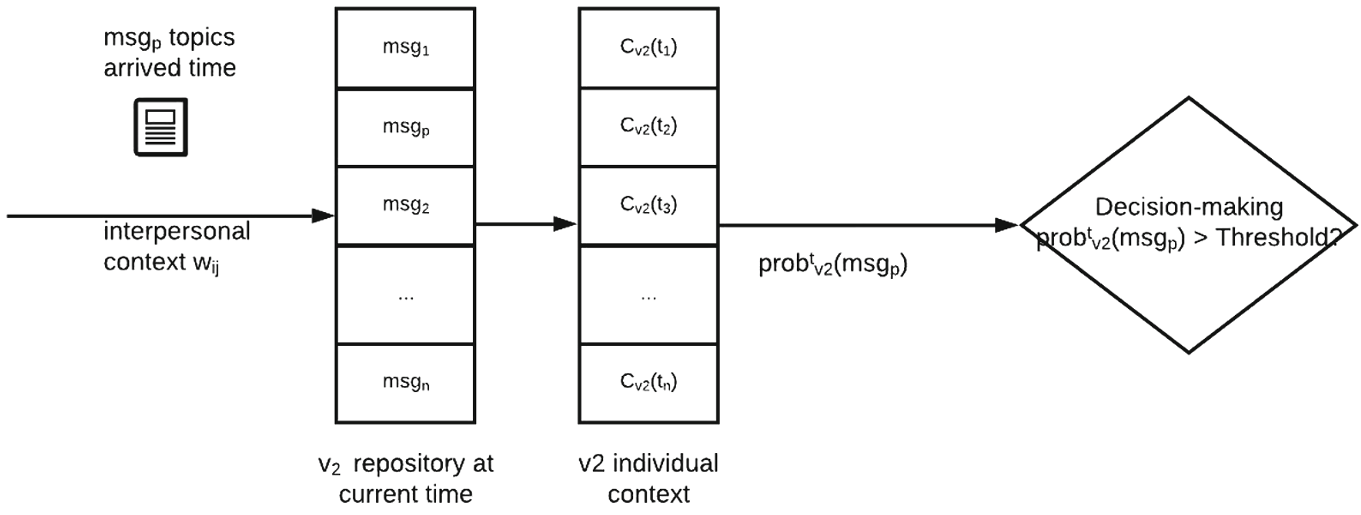 Fig 1: The microscopic view of how an agent processes an influence message based on context.
Experiments and Results
The authors validated CAID using the Ego-Facebook dataset, focusing on regional interest variations (New Zealand vs. Brazil).
Cultural Sensitivity
In Network 1 (New Zealand), "Rugby" influences achieved significantly higher Active Coverage compared to "Football," even on the same topological structure. This proves that network structure alone cannot predict diffusion—Individual Context is the decisive variable.
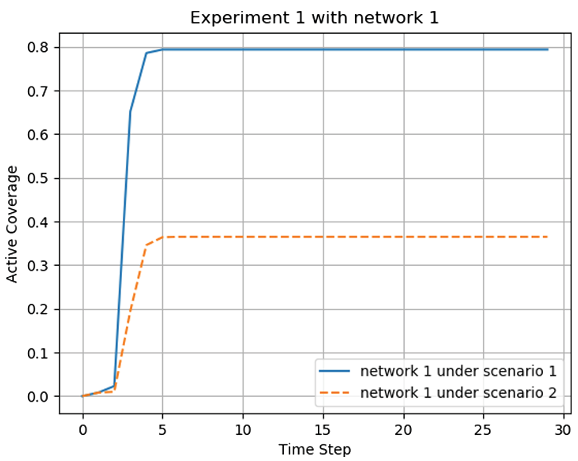 Fig 2 & 3: Comparison of adoption rates for Rugby and Football across different cultural contexts.
The Power of the "Broadcast"
One of the most striking findings is how a "Broadcasting Influence" acts as a catalyst. Even if it doesn't activate many people directly, it updates the Individual Context of the entire population, making them far more "flammable" to subsequent peer-to-peer influence on the same topic.
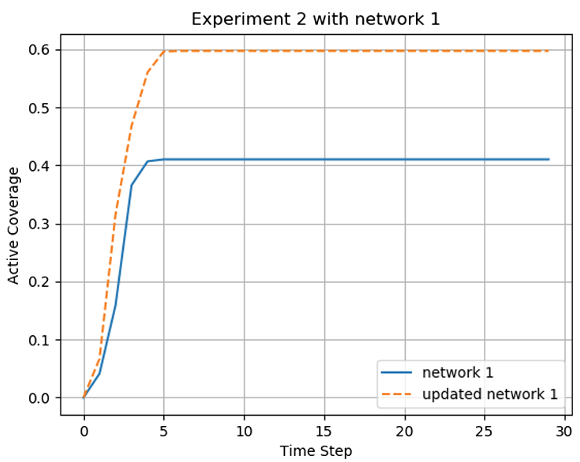 Fig 4: Accelerated influence diffusion after a broadcasting event primes the network.
Critical Insight & Conclusion
The CAID model represents a shift from Structural Determinism to Cognitive Contextualism. It treats the social network as a living organism where history matters.
Takeaway for the Future:
- Influence Maximization: To spread a message, don't just find "Influencers" (nodes with high degree). First, use broad channels to shift the "Individual Context" of the target group, then trigger specific nodes.
- Limitation: Currently, the model assumes topics are independent. In reality, beliefs are correlated (e.g., interest in "Climate Change" correlates with "Electric Vehicles"). Modeling these correlations is the next frontier for CAID.
Ultimately, this paper proves that to understand how ideas spread, we must look inside the agent as much as we look at the links between them.