
Toward Adaptive Healthcare: Building Context-Aware Systems for Safer Data Entry
Towards a Context Model for Human-Centered Design of Contextual Data Entry Systems in Healthcare Domain
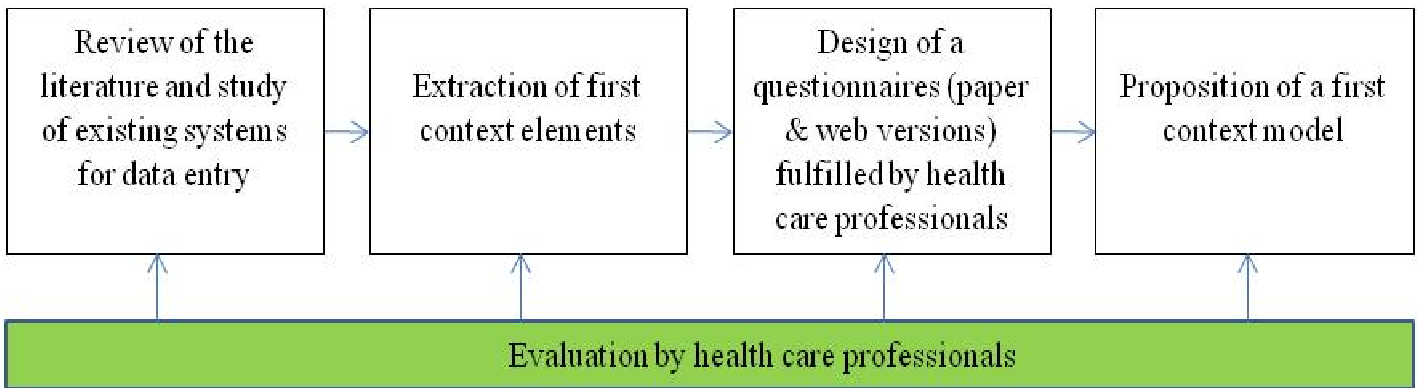
The paper proposes a specialized medical context model designed to enhance human-centered data entry systems in healthcare. By integrating literature reviews, system analysis, and physician-targeted questionnaires, the authors established the "AUTOS" framework-based model to reduce input errors and improve interaction efficiency across diverse medical environments.
Executive Summary
TL;DR: This research tackles the high-stakes challenge of medical data entry by proposing a multidimensional Context Model. By analyzing user profiles, environmental factors, and task-specific requirements, the authors provide a roadmap for designing "Human-Centered" interfaces that adapt to the physician's reality—whether in a quiet office or a chaotic emergency room.
Contextual Positioning: This work bridges the gap between theoretical Human-Computer Interaction (HCI) frameworks and the practical, life-critical requirements of the medical field. It acts as a structural bridge, moving beyond simple "digitization" toward "intelligent adaptation."
The Problem: Why Digital Transformation Stalls in Wards
The healthcare domain is plagued by the "rigidity" of data systems. Physicians often revert to paper because digital interfaces are cumbersome, distract from patient care, or fail in specific environments (e.g., voice recognition failing in a noisy operating room). The core issue is that designers often treat data entry as a vacuum, ignoring the Context of Use.
Methodology: The AUTOS Framework and Context Engine
The researchers didn't just guess what doctors needed; they used a participatory design approach. They categorized 133 descriptors into the AUTOS pyramid, a framework originally used in high-reliability sectors like aeronautics.
1. The Five Dimensions of Context
- User: What is the physician's expertise? Are they a specialist or a nurse?
- Artifact (Device): Is it a handheld tablet, a voice-controlled system, or a fixed workstation?
- Task: Is this a routine prescription or a critical emergency update?
- Organization: Does the hospital have robust Wi-Fi? How do teams communicate?
- Situation (Environment): What are the noise and light levels? Is the user mobile?
2. The Context Engine Architecture
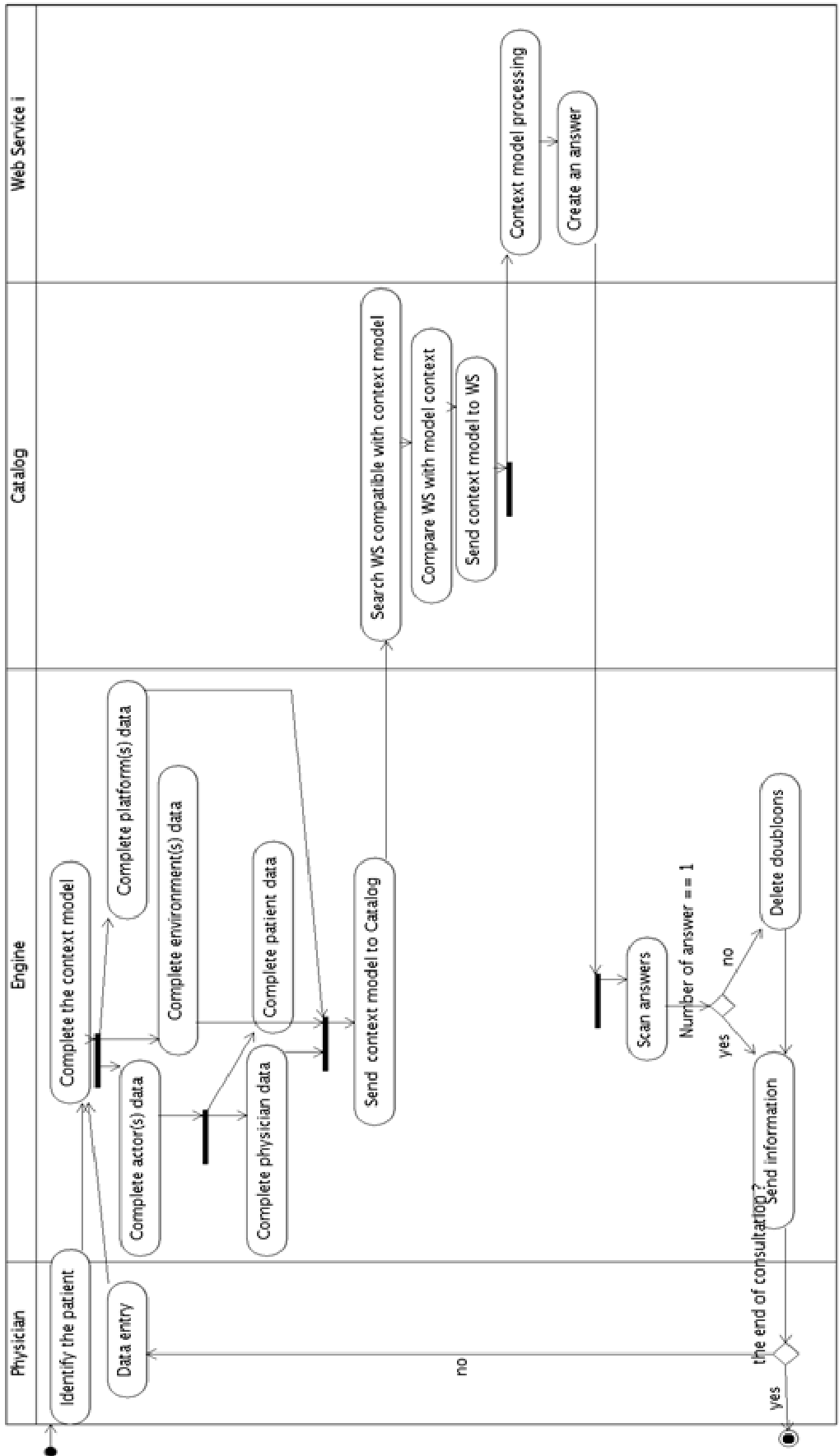
The paper proposes a distributed system where a Context Engine acts as the brain. It perceives the current state (e.g., "Physician is mobile," "Noisy room," "Emergency state") and dynamically calls upon specific Web Services, such as an iconic language dictionary, to simplify the interface.
Insights from Professionals
Through extensive questionnaires, the authors quantified the "chaos" of medical environments. For instance, noise levels vary dramatically, affecting the viability of voice-to-text systems.
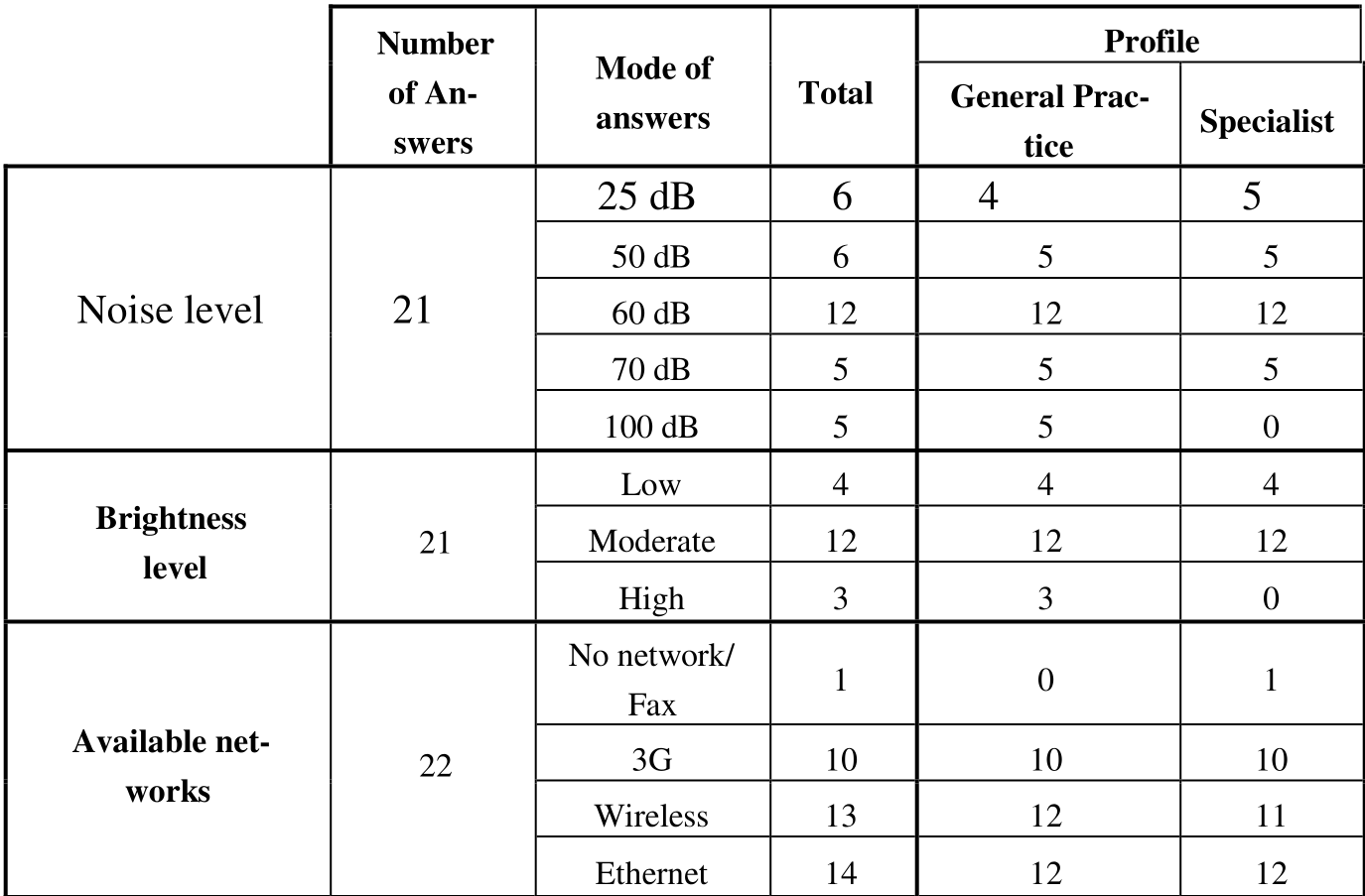 Table 1 illustrates the variability in noise, light, and network availability that an adaptive system must navigate.
Case Study: The "Smart" Ward Round
The paper concludes with a compelling scenario: A doctor doing rounds.
- Detection: The system senses the doctor is mobile (Smartphone/Tablet) and on the ward Wi-Fi.
- Adaptation: It switches the interface to an iconic language (VCM). Instead of reading blocks of text, the doctor sees a "Mr. VCM" silhouette with icons representing heart or kidney status.
- Emergency Override: A "Play/Pause" button allows the doctor to freeze the current session during an emergency, instantly switching the context to the new crisis without losing progress.
 The visualized interface prioritizes quick-glance icons over dense text, reducing cognitive load during patient interactions.
Critical Analysis & Conclusion
Takeaway
The genius of this work lies in its refusal to offer a "one-size-fits-all" app. Instead, it offers a Meta-Model. By defining the attributes of context first, developers can build systems that are "plastic"—flexible enough to change form based on where they are used.
Limitations & Future Work
While the conceptual model is robust, the paper focuses primarily on the identification of attributes. The next hurdle is the automated, real-time capture of these attributes (e.g., using sensors for noise or location) without adding new burdens to the healthcare staff. Future iterations will likely integrate AI to predict the user's "Intent" as a new contextual layer.
Final Thought
In the life-critical world of medicine, context isn't just a technical detail—it's safety. This model moves us one step closer to a world where technology serves the doctor, rather than the doctor serving the software.