
UCF ER: Boosting Emotion Recognition Through Context-Sensitive Learning
Context-Sensitive Single-Modality Image Emotion Analysis: A Unified Architecture from Dataset Construction to CNN Classification
This paper introduces a novel context-sensitive single-modality framework for image emotion recognition, featuring the creation of the UCF ER dataset. The authors propose a unified CNN architecture (VGG16 and ResNet50) that classifies images based on an emotion-context matrix, significantly outperforming existing benchmarks in visual emotion analysis.
TL;DR
Recognizing emotions in images is inherently difficult because "Joy" at a wedding looks different from "Joy" at a sports event. This paper introduces UCF ER, the largest strongly-labeled dataset that pairs emotions with specific contexts. By training CNNs to recognize these specific emotion-context pairs and then "decontextualizing" the output, the authors achieved a massive leap in accuracy, moving from the previous SOTA of 58.3% to 76.6%.
Background: Why Context Matters
Emotion recognition is typically treated as a simple N-way classification task (e.g., "Is this image Happy or Sad?"). However, the visual features of an emotion are highly dependent on the scene. Prior works often ignored this "contextual noise" or tried to filter it out. The authors of this paper argue the opposite: Context is not noise; it is a vital signal. By explicitly labeling context, they provide the model with a richer map to navigate the complex manifold of human affect.
Methodology: The Emotion-Context Matrix
The core innovation lies in the Dataset Construction Funnel and the Unified Architecture.
1. Dataset Construction (UCF ER)
The authors didn't just search for "Happiness." They used WordNet to find synonyms and combined them with common contexts (e.g., Happiness + Pregnancy, Happiness + Graduation) to create an emotion-context matrix of 190 unique classes.
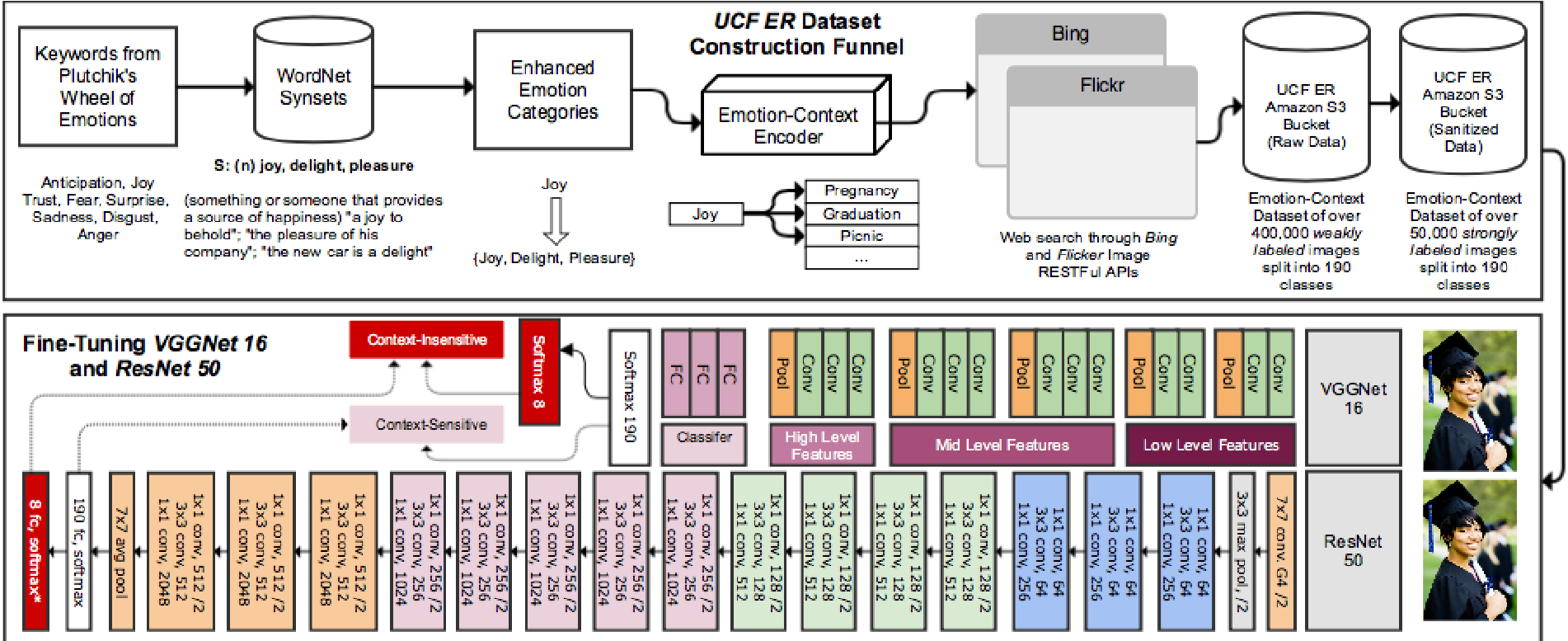 Fig 1. The UCF ER Construction Funnel and Fine-tuning workflow.
2. The Decontextualization Layer
To compare their work with traditional emotion classifiers, the authors introduced a clever architectural tweak. They trained the model on 190 classes but added a layer that maps these probabilities back onto the 8 primary Plutchik emotions. This allows the model to leverage the "nuance" of context during weight updates while providing a standard emotion label as the final output.
Experimental Results
The researchers fine-tuned VGG16 and ResNet50 models. The jump in performance when moving from "Weakly Labeled" (noisy web data) to "Strongly Labeled" (expert-verified UCF ER) was staggering.
| Model | Dataset | Accuracy |
|---|---|---|
| Prior SOTA (You et al.) | You et al. | 58.3% |
| Fine-tuned ResNet 50 | UCF ER (Strongly Labeled) | 76.6% |
| Fine-tuned ResNet 50 | You et al. (Cross-test) | 67.9% |
The confusion matrix below demonstrates that the model performs exceptionally well at distinguishing between high-arousal emotions, though some overlap remains between related categories like Fear and Surprise.
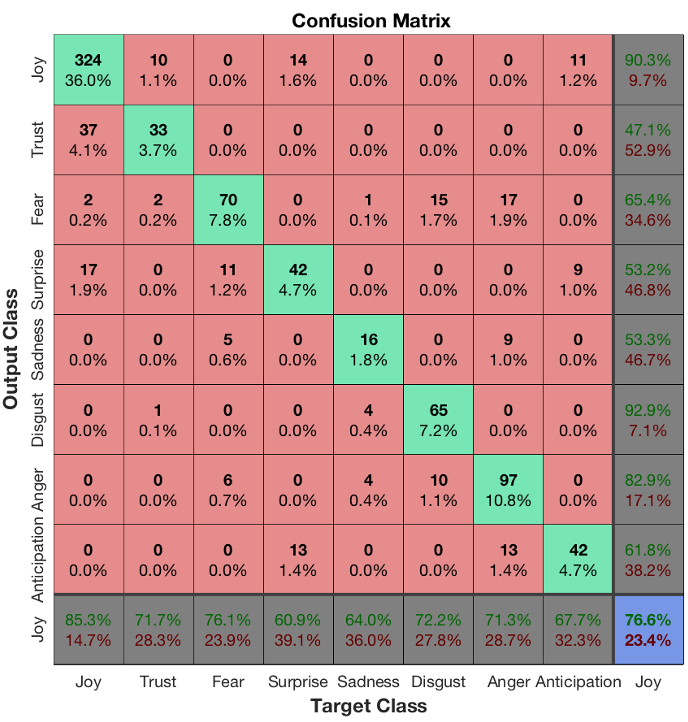 Fig 2. Confusion Matrix for ResNet 50 on the UCF ER Dataset.
Critical Insight & Conclusion
The success of this work highlights a fundamental principle in Deep Learning: Task decomposition improves performance. By breaking the abstract concept of "Joy" into concrete scenarios like "Joy at a Picnic" vs. "Joy at Work," the CNN is able to learn more localized and accurate feature representations.
Takeaway: This research effectively proves that context is a cornerstone of visual affect. Future work in visual sentiment analysis should move away from generic labels and toward situational awareness. While the current model is single-modal, the UCF ER dataset provides a robust foundation for future multi-modal and generative AI research involving human emotions.