
Facebook Continuance: Beyond the Initial Hype to Long-Term Retention
The Continuance of Online Social Networks: How to Keep People Using Facebook?
This study investigates the determinants of user continuance intention on Facebook by integrating Expectation Disconfirmation Theory (EDT) with the Uses and Gratifications (U&G) framework. The authors propose a research model where user satisfaction, driven by the disconfirmation of specific motivations, serves as the primary predictor of sustained platform usage.
TL;DR
Why do people stay on Facebook long after the novelty wears off? This study applies Expectation Disconfirmation Theory (EDT) to reveal that user retention is not driven by meeting new people, but by how well the platform exceeds expectations in maintaining offline contacts, entertainment, and information seeking. Satisfaction acts as the critical bridge between these fulfilled needs and the intention to keep using the site.
Problem & Motivation: The Post-Adoption Challenge
In the hyper-competitive landscape of social networking, initial adoption is easy, but "locking in" members is the real battle. Most prior research focused on why people join Facebook, but the authors argue that the "post-adoption" phase is governed by different psychological mechanics.
The core insight here is that users aren't just looking for "perceived usefulness" in a vacuum; they have specific social gratifications in mind. If the experience of using the platform surpasses their pre-use expectations (Positive Disconfirmation), they feel satisfied and stay. If it falls short, they churn.
Methodology: The Core Research Model
The authors identified four primary "Uses and Gratifications" (U&G) specific to Facebook and integrated them into the EDT framework. This allowed them to measure not just if a user was satisfied, but why—based on which specific motivation was most effectively fulfilled.
The Research Architecture
The model posits that satisfaction is the central mediator. It is fueled by four types of disconfirmations:
- Maintaining Offline Contacts: Keeping up with people known in real life.
- Meeting New People: Striking up virtual-first friendships.
- Information Seeking: Staying current on trends, music, and events.
- Entertainment: Killing time and having fun.
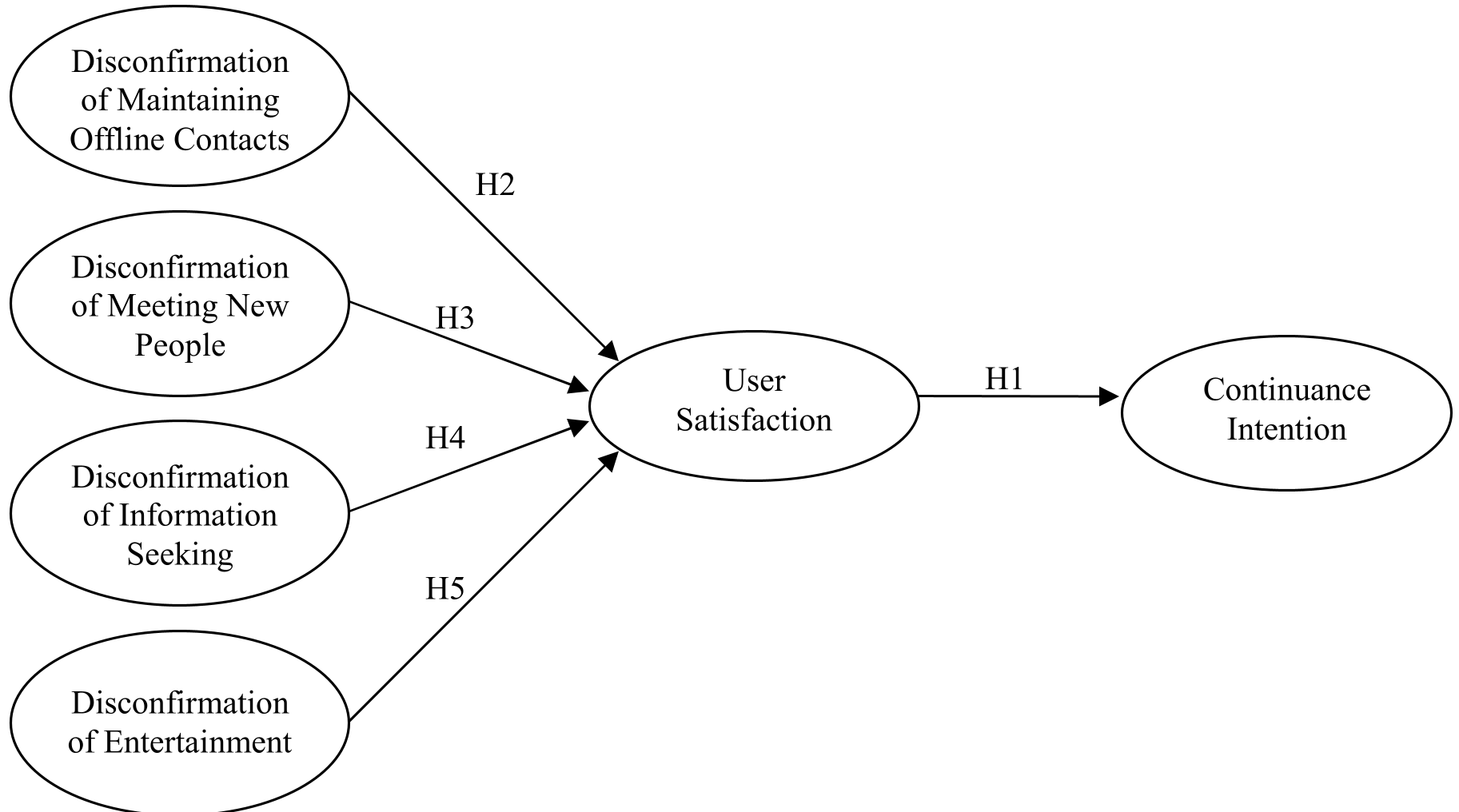 Figure 1: The theoretical framework linking motivations to satisfaction and continuance intention.
Experiments & Results: What Actually Matters?
Using a sample of 125 users and Partial Least Squares (PLS) analysis, the study produced several striking findings:
- Satisfaction is King: With a path coefficient of 0.596, satisfaction is the overwhelming driver of why people continue to log in.
- The Power of Social Maintenance & Fun: Maintaining offline contacts (β=0.309) and Entertainment (β=0.356) were the strongest contributors to satisfaction.
- The "New Friends" Paradox: Interestingly, the disconfirmation of "Meeting New People" had no significant effect on satisfaction. This highlights a fundamental truth about Facebook's DNA: users value it as a "social anchor" for existing relationships, not as a discovery engine like Tinder or LinkedIn.
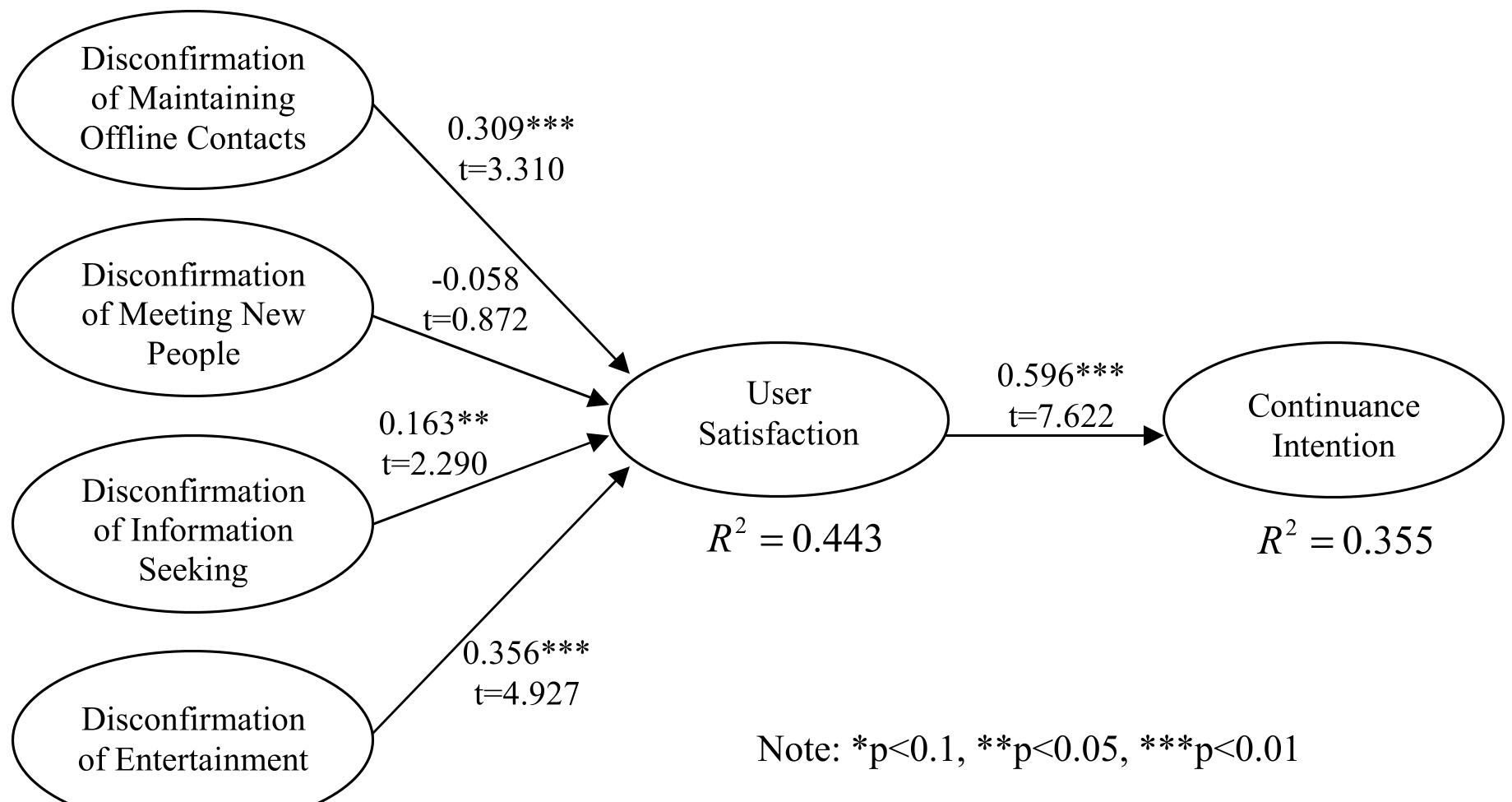 Figure 2: Empirical results showing significant paths and explanatory power ().
Critical Analysis & Conclusion
The Takeaway for Practitioners
For product managers and designers in the SNS space, the message is clear: Exceeding expectations in core social maintenance is more valuable than feature bloat. If a platform was built to help people talk to their friends, making that experience "better than expected" is the most direct path to retention.
Limitations & Future Outlook
While the study provides a robust look at the psychological mechanics of Facebook in the late 2000s, it has limitations:
- Geographic Focus: The study was limited to Hong Kong users, primarily students.
- Explanatory Scope: The model explains 35.5% of continuance intention. While significant, it suggests other factors—like switching costs, social pressure, or habitual behavior—also play a major role.
As social media evolves into the era of AI-driven feeds, the fundamental "expectation vs. reality" check described in this paper remains the cornerstone of user loyalty.