
Turning Smartphones into Data Hubs: A Move Toward Infrastructure-Free Offloading
Contract Mechanism and Performance Analysis for Data Transaction in Mobile Social Networks
This paper proposes an infrastructure-free mobile data offloading method using a contract-based auction mechanism. By leveraging the hotspot functionality of smartphones, users with redundant data (sellers) can trade with those who have exhausted their monthly plans (buyers) through mobile social platforms.
TL;DR
As mobile data traffic explodes, researchers are looking beyond expensive Wi-Fi towers. This paper introduces a peer-to-peer data transaction system where users sell unused data via hotspots. By modeling this as a socially-aware auction, the system ensures sellers get paid fairly and buyers find the best "deals" without crashing the network.
The "Data Paradox" and Why Infrastructure is Failing
We've all been there: one person has 10GB of unused data at the end of the month, while their friend is throttled to 2G speeds. Current offloading solutions rely on Wi-Fi and Small-Cell Base Stations (SBSs). However, these are expensive to build and create massive interference in crowded areas.
The authors identify a missed opportunity: Personal Hotspots. By treating data as a tradable commodity within Mobile Social Networks (MSNs), we can offload traffic without adding a single piece of hardware.
Methodology: Auctions Meet Social Science
The core of this paper lies in two innovative models:
1. The Successive Auction Markov Model
Unlike "one-off" bids, this paper models the auction as a continuous process. A seller opens a hotspot and waits for a "considering time." If a new bid arrives, they wait; if not, they accept. This is modeled using a discrete Markov chain where states represent the current bid price.
2. Socially-Aware Mobility
The breakthrough is how bidders choose which seller to join. The authors argue that simply picking the "strongest friend" leads to congestion. Instead, they propose a model based on:
- Tie/Partial Strength: Measuring how much two users overlap in social circles.
- Value Strength: The "extra value" a stranger or weak tie might bring.
- Betweenness Centrality: Prioritizing sellers who act as central bridges in the network to balance the load.
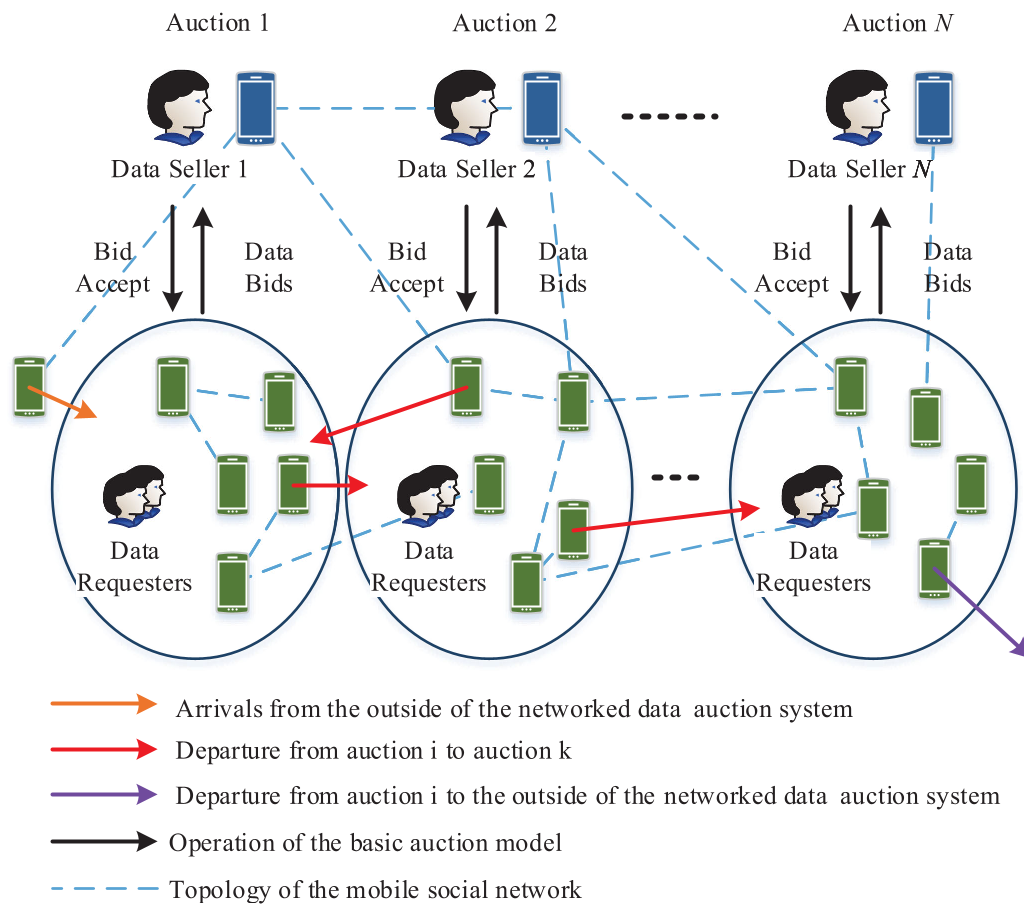 Figure 1: The Networked Data Transaction and Mobility Model.
Experiments: Real-World Validation via Flickr
To test the theory, the authors used a dataset from Flickr, treating its social topology as the playground for their data market.
Key Findings:
- Load Balancing: By introducing "Betweenness" into the transition rule, the system prevents a few popular users from being overwhelmed by bidders.
- Increased Income: Sellers saw a measurable boost in income per unit time because the "considering time" was optimized against the arrival rate of socially-influenced bidders.
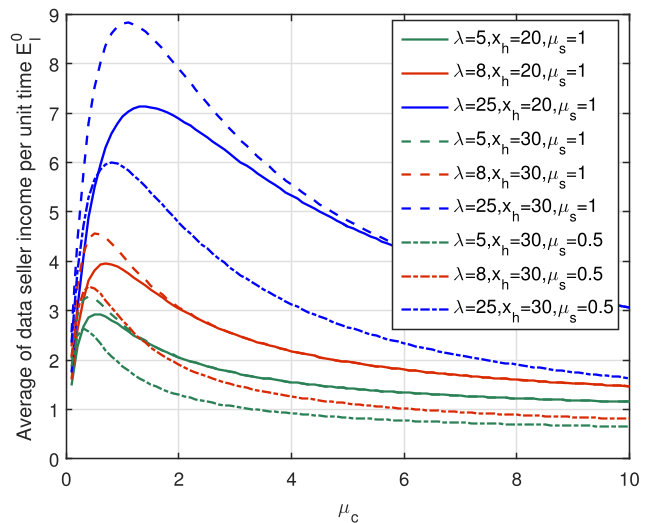 Figure 2: Analysis of seller income under different bid arrival rates and social strengths.
Critical Insight & Future Outlook
The genius of this work is the realization that weak ties—socially distant connections—are often better for network efficiency than strong ties. This mirrors economic theories (like Granovetter’s "The Strength of Weak Ties") but applies it to Wi-Fi signal distribution.
Limitations: The model assumes users are honest and uses Poisson arrivals, which may not capture the "bursty" nature of real-world data usage.
The Future: As 6G moves toward even more decentralized architectures, this "Uber-for-Data" model provides a robust mathematical foundation for how we might share bandwidth in the decade to come.
Final Takeaway
By combining Contract Theory with Social Graph Centrality, we can turn a social network into a distributed cellular provider, making the most of every megabyte.