
Contrail: Reclaiming Privacy in the Age of Mobile Social Networks
Contrail: Decentralized and Privacy-Preserving Social Networks on Smartphones
This paper introduces Contrail, a decentralized communication platform for privacy-preserving social networks on smartphones. It utilizes a cloud-based relay infrastructure combined with edge-side content filters to achieve SOTA-level trade-offs between user privacy and mobile resource efficiency.
Executive Summary
TL;DR: Contrail is a decentralized platform designed to run social networks directly on smartphones without a central authority having access to user data. By combining edge-based content filtering with cloud-based asynchronous relays, it solves the "triangle of pain" in mobile computing: Privacy, Battery Life, and Connectivity.
Academic Positioning: This work bridges the gap between decentralized social networking (like Diaspora) and mobile systems research. It moves beyond theoretical P2P models to a pragmatic architecture that acknowledges the limitations of 3G/4G networks and mobile hardware.
The Privacy Problem: The Centralized Trap
Current social applications (Facebook, Flickr, etc.) require a "God-mode" server. Users must upload all photos, locations, and status updates to a corporate silo. This creates a massive privacy risk where data can be sold, leaked, or seized.
Previous decentralized attempts failed on mobile because:
- Synchronicity: Two phones are rarely online at the exact same time to swap data.
- Bandwidth Waste: P22 "gossip" protocols consume too much data.
- Battery Exhaustion: Constant polling and processing drain the device in hours.
Methodology: Privacy at the Edge, Efficiency in the Cloud
Contrail’s genius lies in its Content-Based Filtering paradigm. Instead of "pushing" everything to a server, the receiver installs a filter on the sender's device.
1. Sender-Side Filters
If Alice wants to know when her child leaves a specific geofence, her phone installs a filter on the child's phone. The child's phone only uploads data to the cloud if and only if the coordinates trigger the filter.
- Privacy: The cloud relay only sees encrypted "blobs" and metadata; it never sees the actual content or the logic of the filter.
- Efficiency: No data is transmitted if the filter doesn't match.
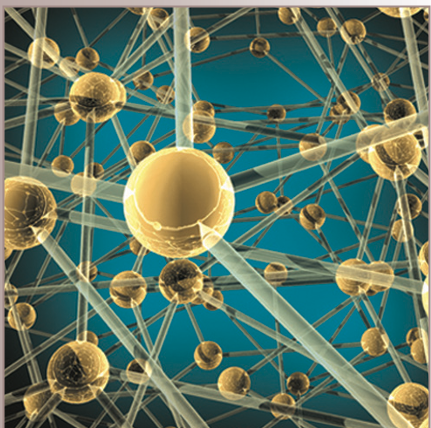 Figure 1: High-level overview of the Contrail universe involving edge devices and cloud-based relays.
2. Cloud Relays & Asynchronous Decoupling
To solve the connectivity problem, Contrail uses a stateless cloud relay. If the recipient is offline, the relay stores the encrypted message.
- Semantic Efficiency: Contrail allows "Obsolescence." If a child sends 10 location updates while the parent is offline, the relay deletes the first 9, saving the parent's bandwidth and battery by only downloading the latest state.
Performance Evaluation
The researchers implemented Contrail on Windows Azure and tested it against real-world constraints.
Scalability and Latency
Contrail scales horizontally. By adding more Azure worker roles, the system maintains a stable latency of ~78ms for over 1,000 simultaneous clients. The internal overhead of the Contrail layer is a mere 5-10ms, meaning the bottleneck remains the physical network (3G/LTE), not the platform architecture.
 Figure 2: Performance metrics showing linear scalability and latency management.
Battery Optimization
One of the most critical metrics for mobile users is battery life. Contrail’s filtering prevents "vampire drain" caused by unnecessary radio wake-ups.
- 0 msgs/min: 6.49 hours
- 60 msgs/min: 3.95 hours This proves that even under high-load social interactions, the device remains functional for a reasonable duration compared to standard centralized apps.
Critical Analysis & Takeaways
Contrail demonstrates that Decentralization != No Servers. Instead, it redefines the role of the server as a "dumb pipe" (relay) while keeping the "brains" (filters and logic) on the user's device.
Limitations:
- The system still relies on a cloud provider for availability, which means metadata (who talks to whom) might still be visible to the provider.
- Complex social graphs (like Facebook's "friends of friends" comments) require application-level repushing, which increases architectural complexity for developers.
Future Impact: Contrail’s use of content-based publish/subscribe for mobile sets a blueprint for modern Local-First software and Self-Sovereign Identity (SSI) applications. It proves that we can have a rich social experience without sacrificing our digital autonomy.