
Greenhouse Control 2.0: Leveraging Telegram for Scalable IoT Agriculture
Control and Command Of Several Greenhouses Via Telegram Messenger
This paper presents an IoT-based system for the remote monitoring and control of multiple experimental greenhouses using the Telegram Messenger platform. By integrating ESP8266 microcontrollers with a suite of environmental sensors and the Telegram Bot API, the authors achieved a collaborative, low-cost management interface that surpasses traditional SMS-based systems.
TL;DR
This paper introduces an innovative approach to smart agriculture by replacing antiquated SMS-based remote control with a Telegram Messenger bot-driven architecture. By utilizing the ESP8266 microcontroller and the Telegram Bot API, researchers created a low-cost, secure, and highly collaborative system to monitor and command greenhouse environments (temperature, CO2, humidity) from any smartphone worldwide.
Background & Motivation: Moving Beyond SMS
For years, remote greenhouse management was synonymous with GSM-SMS modules. While functional, these systems are essentially "islands"—they are expensive to scale, limited by character counts, and typically support only one-to-one communication.
The authors identify a critical gap: Collective Management. Modern farming requires team-based monitoring. By moving the control layer to a social platform like Telegram, the research transforms a binary "User-Machine" relationship into a "Group-Machine" interaction, allowing for real-time data sharing among hundreds of stakeholders simultaneously.
Methodology: The Architecture of a Social Bot
The system is built on a modular hardware-software stack that bridges physical sensors with cloud messaging.
1. The Hardware Core
The brain of the operation is the Wemos D1 Mini (ESP8266). Chosen for its native Wi-Fi support and Arduino compatibility, it acts as a local server that:
- Polls the BME280 sensor for atmospheric data.
- Monitors CO2 levels via the MH-Z19 NDIR sensor.
- Triggers physical actions through power relays.
2. The Semantic Bridge (Telegram Bot API)
Instead of building a standalone app, the authors utilized Telegram’s Bot API. The microcontroller communicates with Telegram’s servers via HTTPS. When a user sends a command like /Meteo or /Action_ON, the bot parses the instruction and triggers the corresponding GPIO pin on the ESP8266.
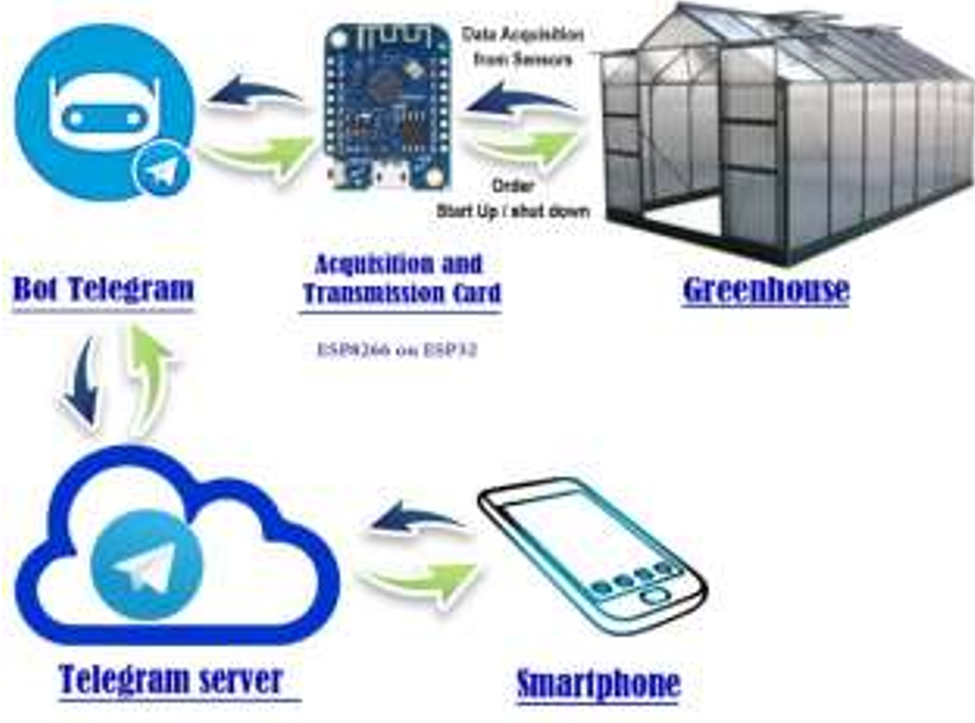 Figure 1: The architecture showing the flow from Telegram App to the Microcontroller.
3. Safety First: The Security Layer
To prevent unauthorized access, the system implements a White List filter. Every Telegram message contains a unique User ID; the microcontroller cross-references this ID before executing any command, ensuring only authorized personnel can toggle critical systems like water pumps or heaters.
Experiments and Results: Efficiency and Scale
The implementation was validated using an experimental greenhouse setup. Key findings include:
- Cost-Efficiency: By utilizing free cloud infrastructure (Telegram) and low-cost sensors, the authors built a professional-grade monitoring node for under $40.
- Instant Alerting: The system demonstrated the ability to push data automatically to newsgroups when thresholds are exceeded (e.g., Temperature > 30°C), facilitating immediate human intervention.
- Multi-Bot Scalability: The software allows for group chats where multiple bots (each representing a different greenhouse) can reside, creating a decentralized command center.
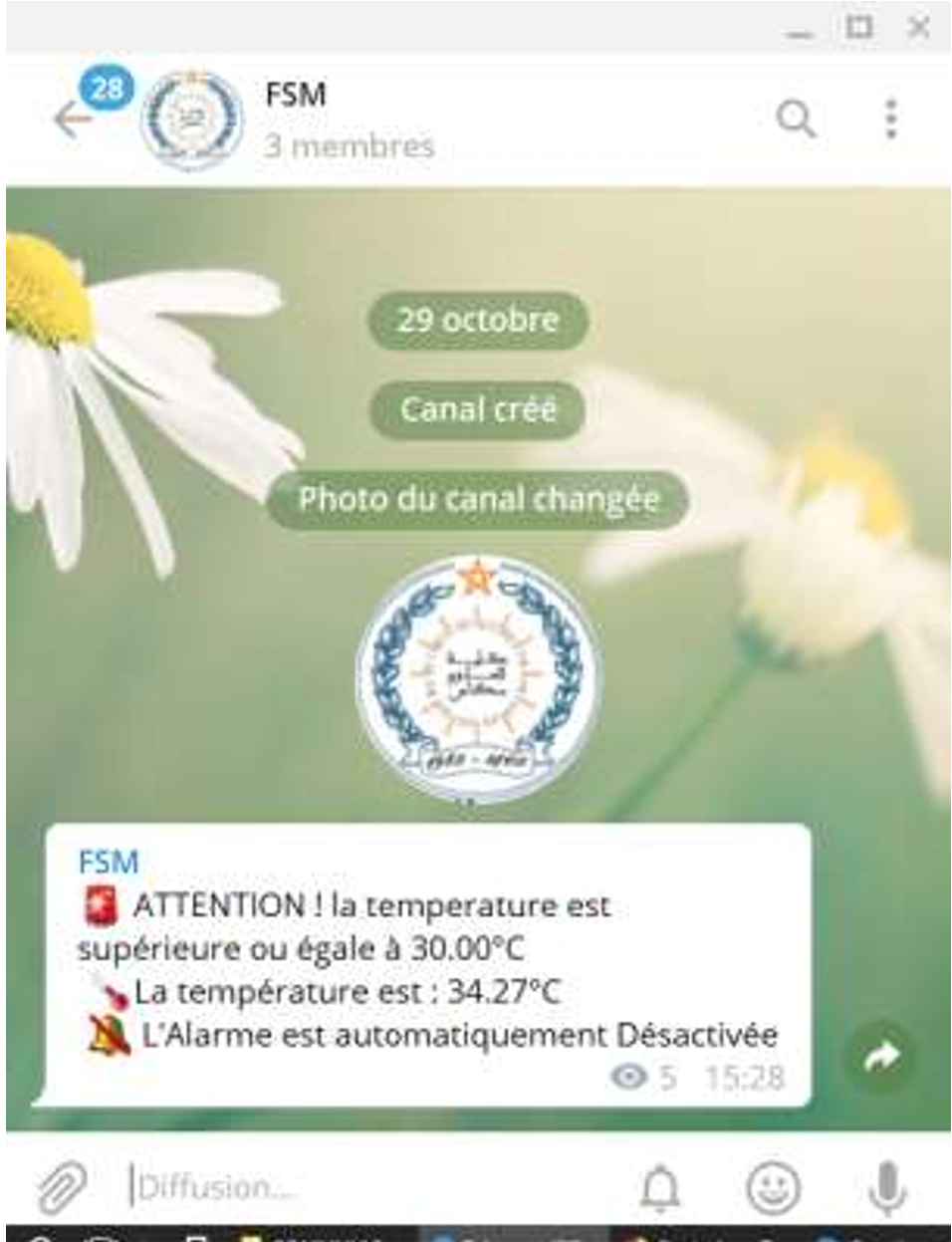 Figure 2: Real-time alert notification within a Telegram group chat.
Critical Analysis & Conclusion
The true value of this work is not just in the hardware, but in the democratization of IoT. By using a familiar UI (a messaging app), the learning curve for greenhouse workers is virtually eliminated.
Takeaway: The transition from SMS to social-platform APIs represents a significant shift in IoT design—prioritizing human-centric interfaces and group collaboration over proprietary apps.
Future Outlook: While the current work focuses on Wi-Fi, the next step in this technical lineage would be integrating LoRaWAN for long-range connectivity in rural areas where Wi-Fi is unavailable, while still maintaining the Telegram interface as the primary user gateway.