
Controlling the Collective: Sparse Leadership in Multiscale Social Dynamics
Control of multiscale model for social dynamics
The paper introduces a multiscale model for social dynamics (e.g., crowd motion, opinion formation) using measure theory and generalized Wasserstein metrics. It develops a centralized sparse control framework for the Cucker-Smale model and proves that uniform boundedness of measure supports implies "flocking" (consensus) in a multiscale setting.
TL;DR
How do you steer a crowd or influence a social network by only talking to a handful of people? This paper by Piccoli and Rossi provides a rigorous answer. By integrating Measure Theory with Sparse Control, the authors prove that a centralized controller can enforce global consensus (flocking) by acting on a minimal number of agents. Crucially, they extend this to a multiscale framework using a Generalized Wasserstein Metric, allowing the model to handle populations that change in size over time.
Problem & Motivation: The Gap Between One and Many
Modeling social dynamics generally falls into two camps:
- Microscopic: Tracking every individual (e.g., the Cucker-Smale model). Great for detail, but computationally explosive as populations grow.
- Macroscopic: Treating the crowd as a fluid/density. Efficient for millions, but loses the "agent-level" intuition needed for specific interventions.
The "Holy Grail" is a Multiscale Model that handles both. However, prior attempts using the standard Wasserstein distance () faced a mathematical dead-end: they couldn't compare states where the "mass" (number of agents) changed. If one person leaves the room, the standard distance becomes undefined.
Methodology: Sparsity and Generalized Metrics
1. The Sparse Control Paradigm
The authors borrow a page from Compressed Sensing. To stabilize a system, they don't apply force to everyone. Instead, they minimize a control cost based on an -norm:
This mathematical choice forces the controller to be "sparse"—it will naturally choose to apply a strong correction to a single "outlier" agent rather than tiny corrections to everyone.
2. Bridging Scales with Generalized Wasserstein Distance
To allow for varying masses, the paper employs the Generalized Wasserstein Distance ().
- Transport Cost: The cost of moving mass from to .
- Mass Cost: The cost of adding or removing mass.
By minimizing a mix of these costs, the model can compare a discrete group of 100 agents to a continuous probability density, even if the total population fluctuates.
3. The Multiscale Cucker-Smale Model
The core dynamics follow a generalization of the Cucker-Smale equation:
abla_{x} \cdot (v \mu_{t}) + \lambda abla_{v} \cdot (F [ \mu_{t} ] \mu_{t}) = 0$$  This equation describes how the density of "opinions" or "positions" ($\mu$) evolves as agents interact and try to align their velocities (consensus). ## Experiments & Results: The Path to Consensus The authors establish two landmark results for this multiscale framework: * **Discrete Sparse Feedback**: They prove that a feedback control $u^\circ$ that targets only the agent with the "maximal disagreement" (the most radical outlier) is sufficient to lead the entire system to consensus. * **Flocking Equivalence**: In the continuous/multiscale limit, they prove that if the spatial diameter of the group stays bounded (the group doesn't fly apart), they will **inevitably** reach a consensus in velocity (flocking). The paper proves the existence of a limit measure $\mu^*$, showing that over time, the complex dynamics settle into a "rigid translation" where everyone moves in harmony. 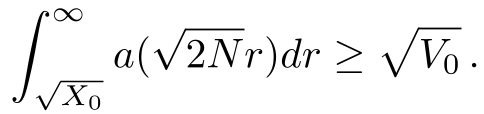 *The condition above defines the "Consensus Region"—the basin of attraction where social alignment is guaranteed.* ## Critical Analysis & Conclusion ### Takeaway The genius of this work lies in its **scalability**. By using measure-theoretic tools, the control strategies developed for 10 agents can be theoretically applied to 10 million. It provides a mathematical justification for "targeted interventions" in social and biological systems. ### Limitations * **Centralization**: The controller needs global knowledge of all agents to pick the "best" one to control. In real-world social networks, this level of oversight is rare. * **Deterministic Nature**: The model doesn't fully account for "Black Swan" events or irrational agents who might actively resist consensus in ways not captured by the Cucker-Smale alignment rule. ### Future Outlook This framework opens the door for **Hybrid Control Strategies**, where a mix of individual-based leadership and density-based "nudging" (like environmental design) can be used to manage crowd safety or mitigate the spread of misinformation.