
Beyond the Screen: Mastering the Trade-off Between Social Visibility and Identity Anonymity
Controllable Information Sharing for User Accounts Linkage across Multiple Online Social Networks
This paper presents a dual framework for cross-platform social identity management: an advanced User Accounts Linkage Inference (UALI) method and the first Information Control Mechanism (ICM). UALI utilizes iterative learning and "quasi features" to link accounts across Google+, Twitter, and Foursquare, while ICM solves a visibility-maximization optimization problem to protect users from such linkage using k-linkage anonymity.
TL;DR
In an era where our digital shadows are cast across multiple Online Social Networks (OSNs), privacy is no longer just about what you hide, but how your public data connects you. This paper introduces a powerful new inference method (UALI) that links accounts with 85% accuracy using just 0.5% training data, and more importantly, proposes the first Information Control Mechanism (ICM) to help users stay visible while remaining un-linkable.
The Hidden Risk: Why "Public" is Dangerous
Users often treat LinkedIn, Twitter, and Facebook as isolated islands. However, third parties use "Social Media Screening" to merge these identities. Prior work in User Identity Linkage (UIL) often hit a wall: they either needed private data (which attackers don't have) or had low precision. The researchers here realized that attackers don't need your private data; they only need to look at who your neighbors are to build a "quasi-profile" of you.
The Attack: Iterative UALI & Quasi-Features
The core innovation of the User Accounts Linkage Inference (UALI) is the concept of Quasi Features.
- The Intuition: If your friend on Twitter is linked to their Google+ account, that connection becomes a bridge.
- The Process: UALI uses an iterative learning loop. It starts with a few known links, identifies "potential" crossing accounts who share common neighbors, and uses AdaBoost to refine the matching function.
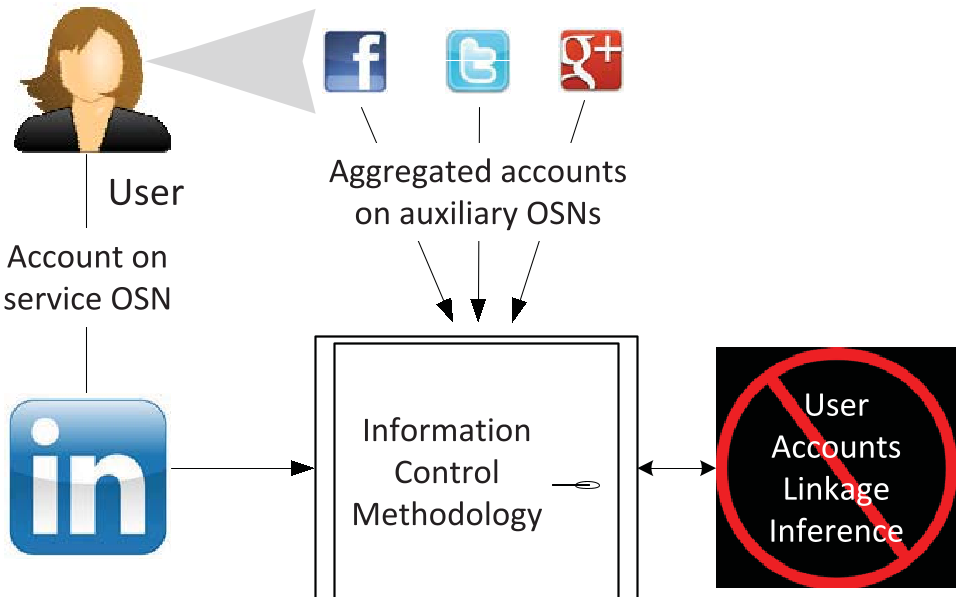 Figure 1: The dual workflow of the proposed system: Attacking via UALI and Defending via ICM.
The Defense: Controllable Information Sharing (ICM)
Recognizing that users want to be found by friends but not by malicious linkers, the authors propose k-linkage anonymity.
The Optimization Challenge
The Information Control Mechanism (ICM) is framed as a optimization problem: Maximize visibility while ensuring your account cannot be distinguished from at least other accounts on an auxiliary network.
The paper proves this is NP-hard via a reduction from the Maximum Clique problem. To solve it, they developed the CAL (Controllable Accounts Linkage) algorithm, a greedy approach that uses three priority queues (for features, distinctive users, and non-distinctive users) to decide which specific public information pieces (like location or a specific friend) should be hidden.
Experimental Battleground
The researchers tested their methods on real-world data from Twitter, Google+, and Foursquare.
1. Attack Performance
UALI demonstrated that social networks are incredibly leaky. Even with a tiny fraction of known links, the system creates a high-precision map of crossing users.
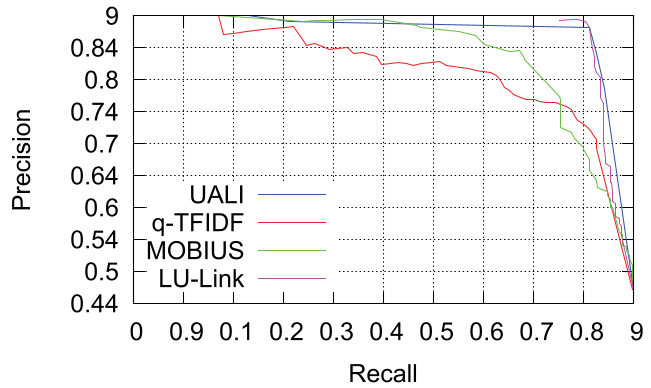 Figure 2: UALI vs. SOTA methods. Notice the consistent lead in both precision and recall.
2. Defense Efficiency
The CAL algorithm showed that privacy doesn't have to mean digital invisibility.
- Optimality: CAL's visibility results were within 0.4% of the mathematically perfect (but computationally expensive) ILP solution.
- Visibility: For most users, 80% to 100% of their information remained public while still achieving k-anonymity.
Critical Insight: The "Friend" Liability
One of the most striking findings is the role of neighborhood connections. In Google+ and Twitter, connections are rich features for linkage. In Foursquare, because the friend count is generally lower, users have less "quasi-feature" protection, making the protection percentage drop but also making the user harder to link initially.
Conclusion & Future Outlook
This work shifts the paradigm of social media privacy. It suggests that in the future, social platforms should not just offer "Public/Private" toggles, but algorithmic "Privacy Advisory" tools. These tools would warn a user: "If you list 'San Jose' and follow these three people, your Twitter will be linkable to your anonymous Reddit account."
While the paper focuses on k-anonymity, the next frontier will involve applying these control mechanisms to Differential Privacy and Generative AI models that might subconsciously leak crossing-user patterns.
Academic Key Terms
- k-Linkage Anonymity: A state where an account is indistinguishable from at least others based on a specific matching score.
- AdaBoost (Decision Stump): The chosen classifier that proved most effective at weighting diverse, sparse social features.
- Gap-Preserving Reduction: The mathematical proof used to demonstrate the computational complexity of the ICM problem.