
Linked Earth: Solving the Scientific Data Silo through Controlled Crowdsourcing
A Controlled Crowdsourcing Approach for Practical Ontology Extensions and Metadata Annotations
This paper introduces a "Controlled Crowdsourcing" approach for ontology development and metadata annotation, realized through the Linked Earth Framework. It combines a consensus-based core ontology with a dynamic, expert-led crowdsourcing platform to allow real-time metadata property extensions in the paleoclimate domain.
TL;DR
Integrating diverse scientific data often fails because standards move too slowly for the scientists who need them now. Linked Earth introduces a "Controlled Crowdsourcing" model that allows researchers to create new metadata terms on-the-fly as they upload data, which are later refined by an editorial board into a formal ontology.
The "Rigidity Trap" in Scientific Metadata
In fields like Paleoclimatology, data comes from incredibly diverse sources: tree rings, ice cores, coral samples, and lake sediments. Each sub-discipline has its own "idiosyncratic" terminology.
The Problem: Most ontology frameworks assume a rigid separation between creation, release, and use. By the time a standard committee agrees on a term, the scientist has already moved on, often leaving their data in an unreachable, non-standardized silo. The "Controlled Crowdsourcing" approach flips this: it enables Incremental Vocabulary Development.
Methodology: The Socio-Technical Bridge
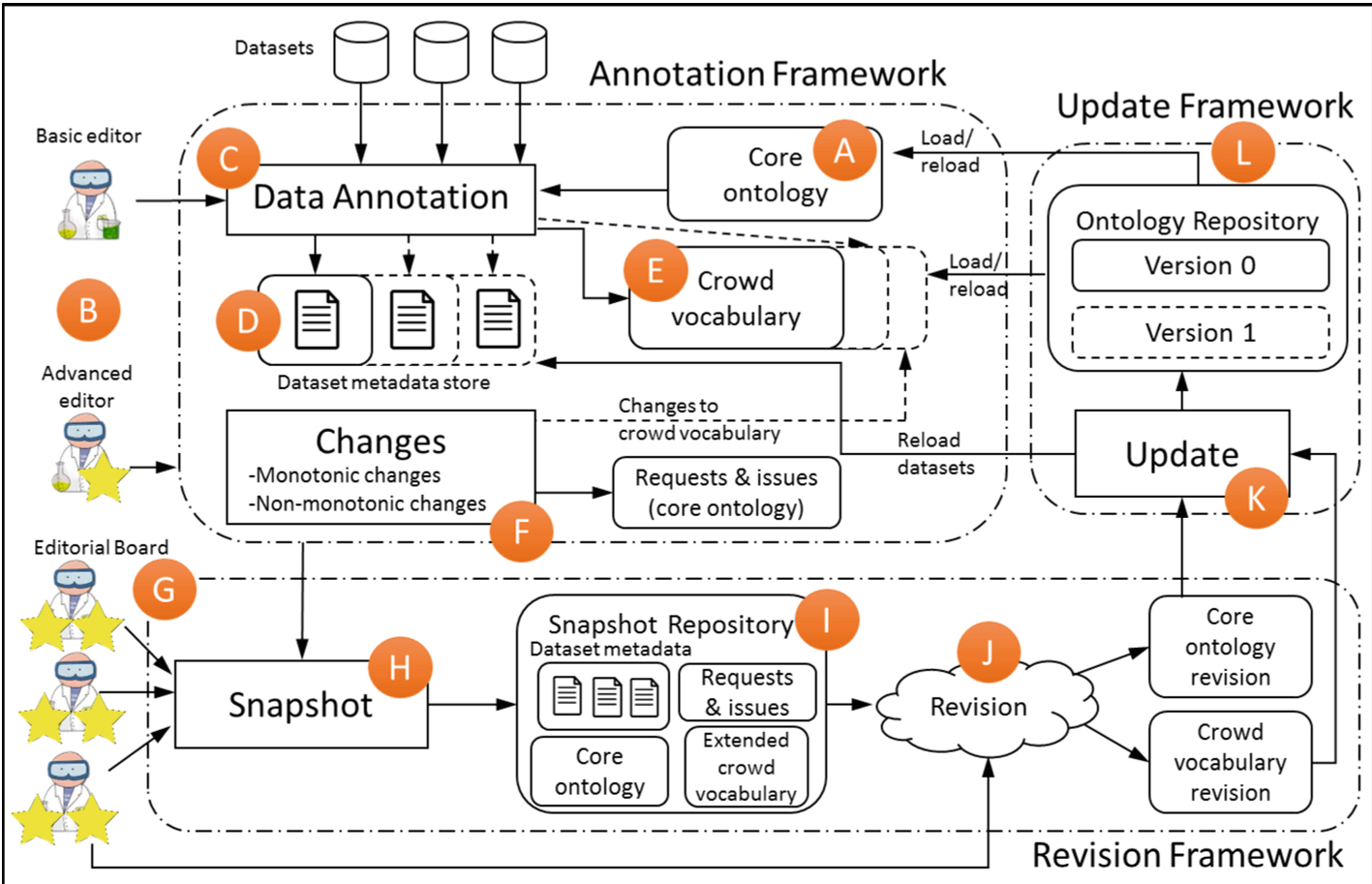
The Linked Earth Framework is not just a piece of software; it is a governance model. It operates on three distinct levels of evolution:
- Annotation & Crowdsourcing: Using a Semantic MediaWiki interface, experts (the "crowd") annotate their data. If a specific property (e.g., "coring technology") doesn't exist in the core ontology, they simply create it. This new term is immediately available for others to reuse.
- Editorial Revision: Not every "crowd" term is a good one. A board of domain editors monitors these new terms, organizing them into Working Groups to decide which should be promoted to the "Core Ontology."
- Ontology Evolution: When the core ontology is updated, the system semi-automatically migrates existing metadata to the new version, ensuring the database doesn't break as the language evolves.
Core Ontology vs. Crowd Vocabulary
The authors started with a "Core Ontology" based on high-level standards like PROV-O and SSN (Semantic Sensor Network). This provides the structural skeleton. The "Crowd Vocabulary" acts as the muscles—growing dynamically to fill in specific measurement types, instruments, and inferred variables.
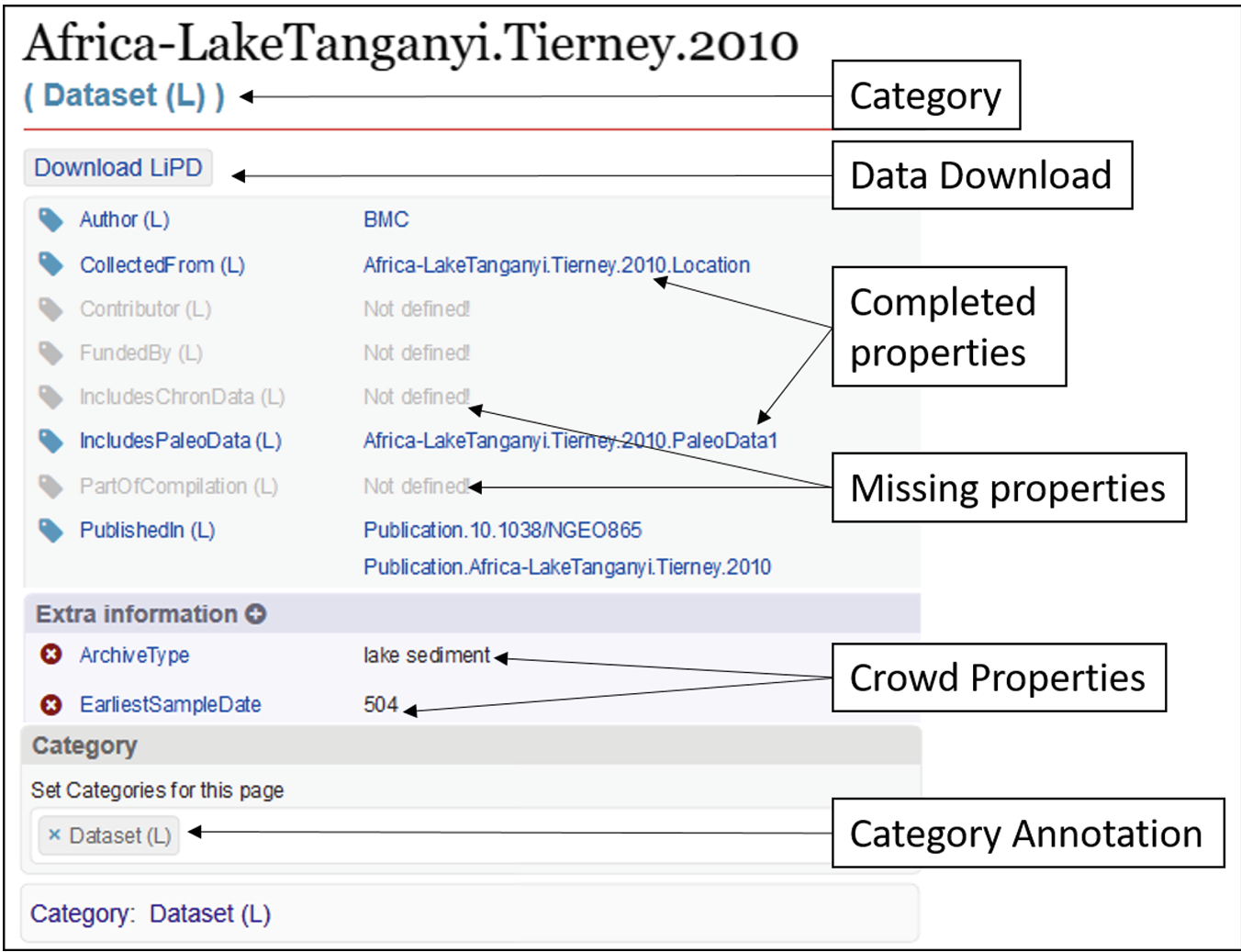 Above: The interface allows users to fill standard fields (marked 'L') while adding 'Extra Information' that contributes to the evolving crowd vocabulary.
Results and Community Impact
The deployment within the paleoclimate community (PAGES 2k) demonstrates real-world scalability:
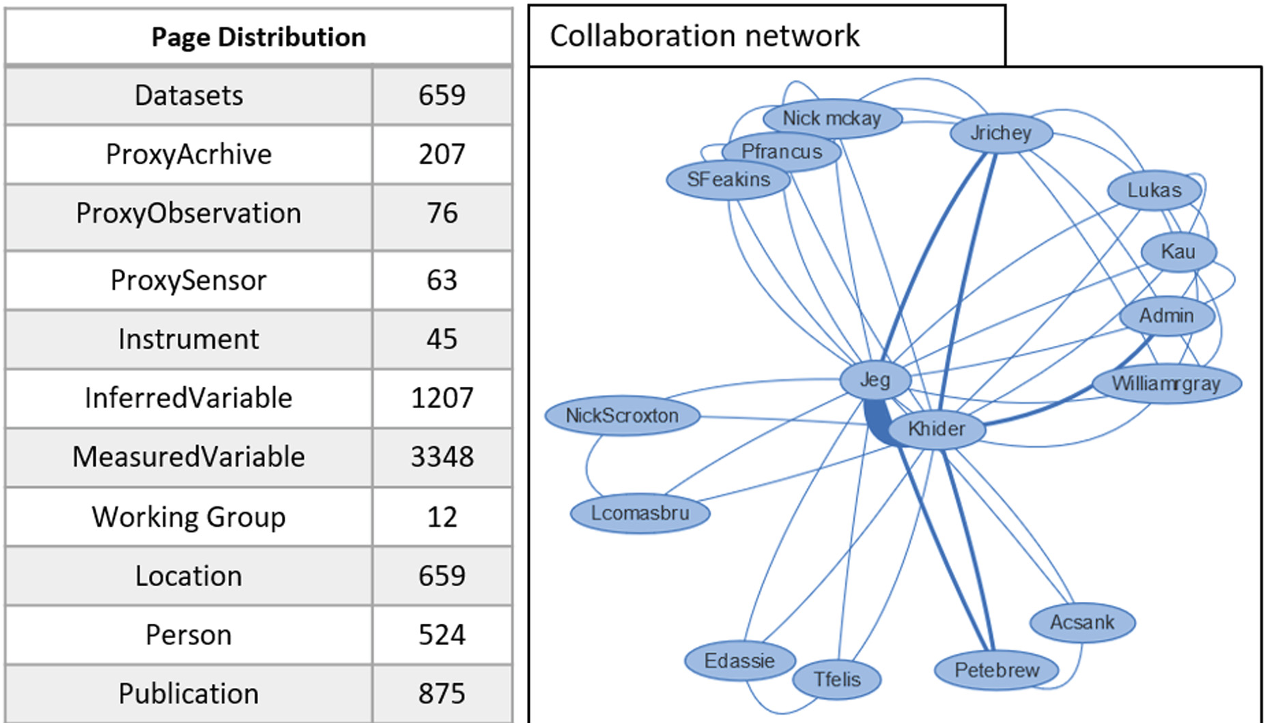
- Data Volume: 692+ datasets integrated.
- Engagement: 50+ active contributors across 12 Working Groups.
- Network Effect: Analysis of the contributor network shows that editorial board members act as "central hubs," facilitating consensus across different scientific sub-domains.
Critical Analysis & Future Outlook
The genius of this work lies in recognizing that expert users are the best source of metadata, but they lack the training to be ontology engineers. By abstracting the complexity (RDF/XML) behind a wiki interface, the authors lowered the barrier to entry.
Limitations:
- Editorial Bottlenecks: While crowd-creation is fast, the final "merging" to the core ontology requires manual oversight, which could become a scaling bottleneck if the user base grows to thousands.
- Consistency: Proliferation of synonymous terms in the crowd vocabulary requires constant "gardening" by advanced editors.
Takeaway: The transition from "Static Standards" to "Living Ontologies" is essential for modern, data-driven science. Linked Earth provides a blueprint for how other heterogeneous fields—like neuroimaging or ecology—can finally unify their data without waiting for a committee that never meets.