
The Dark Side of Connectivity: How Fear and Guilt Dictate Knowledge Sharing on Mobile Apps
Coping with fear and guilt using mobile social networking applications: Knowledge hiding, loafing, and sharing
This study investigates the impact of negative emotions—specifically fear and guilt—on knowledge behaviors within Mobile Social Networking Applications (MSNAs). Integrating Coping Theory and Regulatory Focus Theory, the research identifies how "self-referenced" and "other-referenced" fear lead to knowledge hiding and loafing, while guilt acts as a prosocial driver for sharing.
TL;DR
While Mobile Social Networking Applications (MSNAs) like LINE and WhatsApp are designed to facilitate collaboration, they are and equally effective at facilitating knowledge hiding and loafing. This research reveals that our choice to share or withhold information isn't just about logic—it's a psychological coping mechanism driven by self-referenced fear and social guilt, modulated by our individual "Regulatory Focus."
Beyond the "Bright Side": The Motivation Crisis
For years, technology research has operated under a pro-innovation bias, assuming that if we build better tools, people will naturally share more. However, MSNA environments often trigger high-stakes social stressors.
The author argues that we must look at Coping Theory. When faced with a stressful social environment, users don't just "use the app"; they "cope with the app." This leads to two distinct paths:
- Avoidance Coping: Knowledge hiding and Knowledge Contribution Loafing (KCL).
- Approach Coping: Proactive knowledge sharing.
Methodology: Mapping the Emotional Landscape
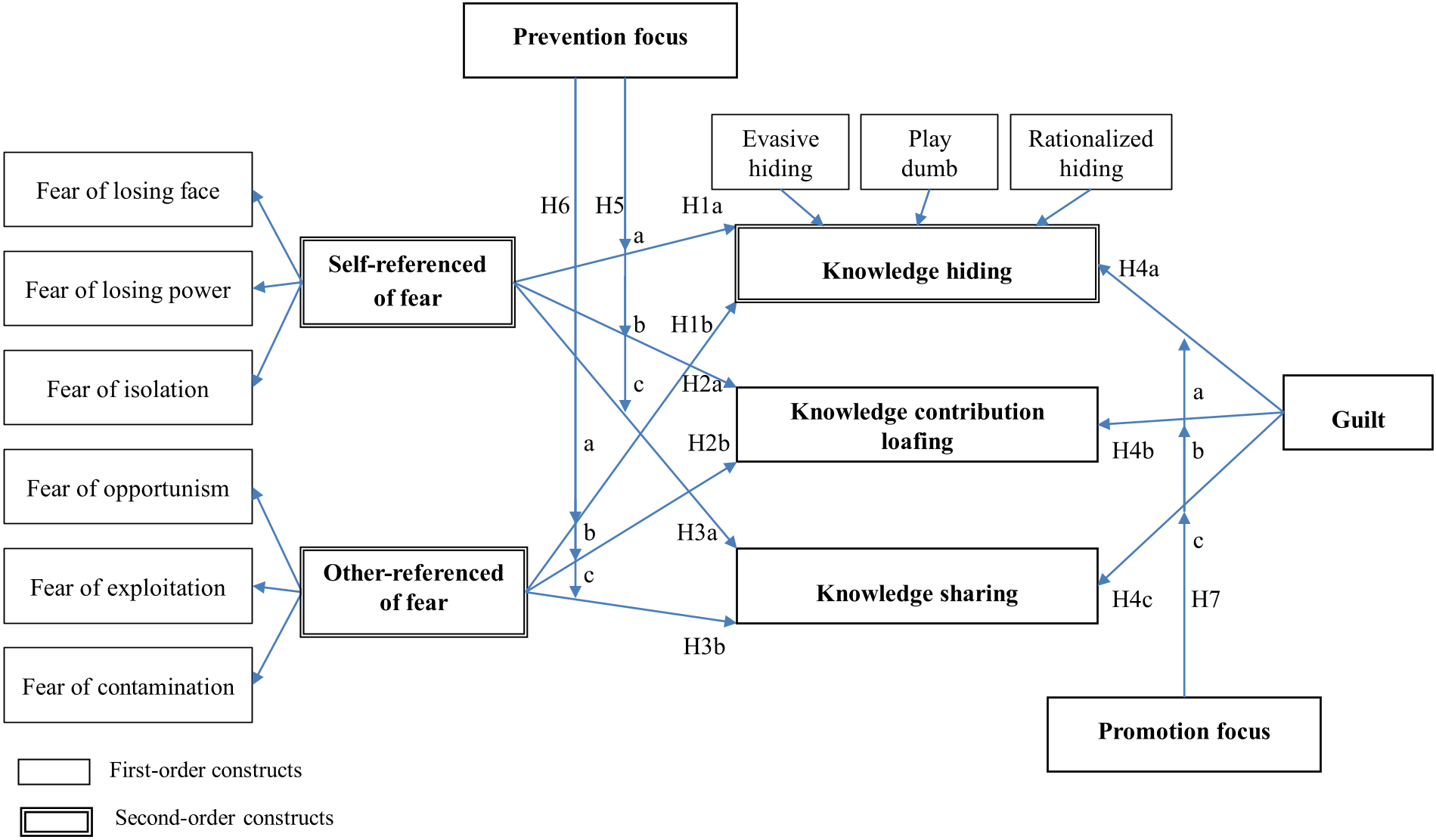
The study breaks down negative emotions into a sophisticated taxonomy:
- Self-Referenced Fear: A fear focused on the self (Losing face, losing power, or being isolated).
- Other-Referenced Fear: A fear focused on others (Fear of being exploited, fear of others' opportunism, or "contamination" of one's reputation by others' incompetence).
- Guilt: The moral engine that drives us to "make amends" for not contributing.
The researcher tested this model using a sample of 496 active LINE users, employing Partial Least Squares (PLS) to validate the structural paths.
Key Findings: Why We Hide
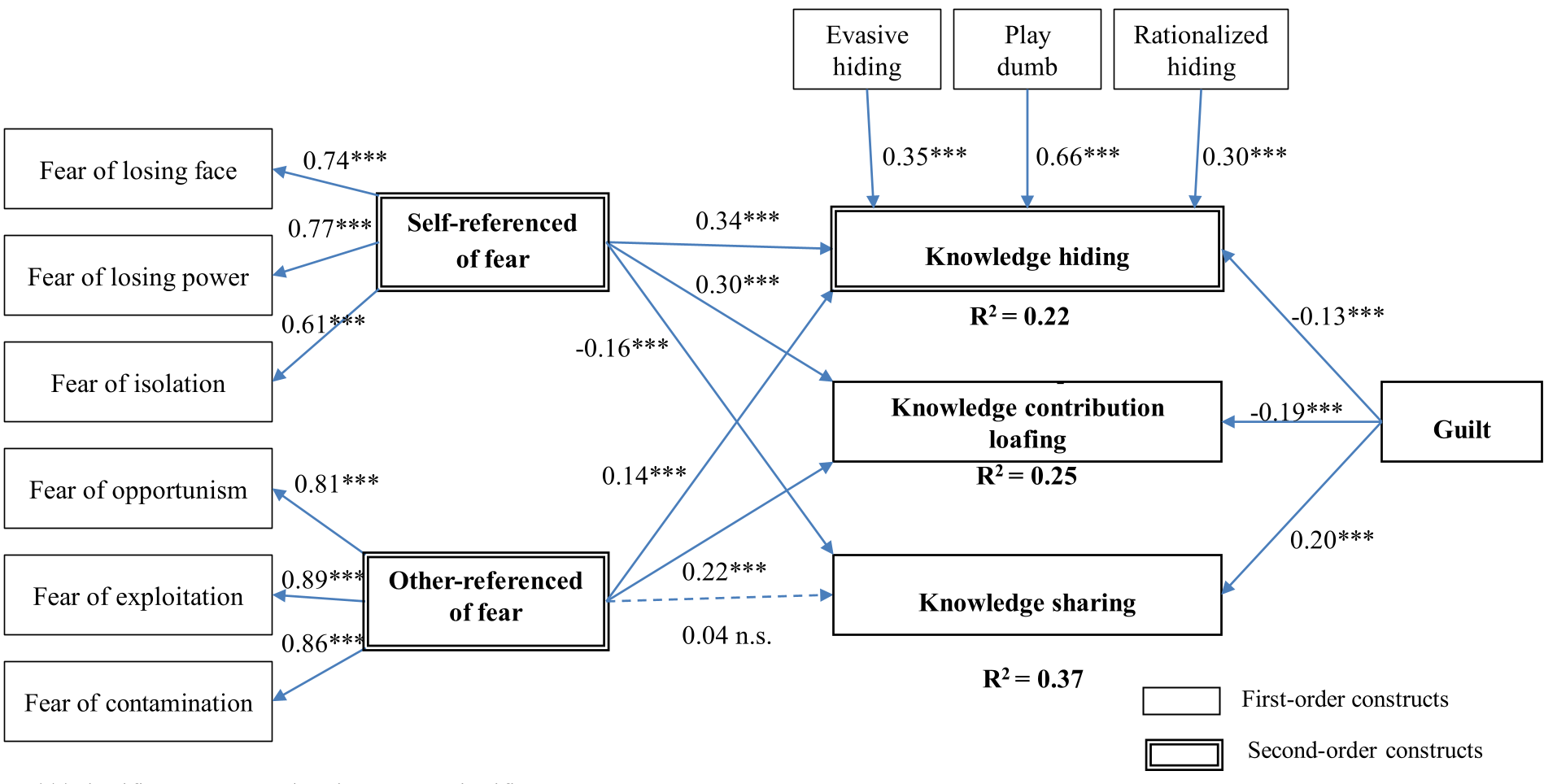
The results confirm that fear is the primary driver of the "dark side" behaviors:
- Power & Face: Self-referenced fear is a massive predictor of knowledge hiding. If someone fears they will lose their "unique value" or "expert status" (Power) by sharing, they will use MSNA features—like turning off read receipts or pretending they didn't see a message—to "play dumb."
- The Guilt Paradox: Guilt is actually a "helpful" negative emotion. It acts as a corrective force. Users who felt guilty about not contributing were significantly more likely to engage in Approach Coping (Sharing) to reduce their psychological discomfort.
The Moderator: Regulatory Focus
Perhaps the most insightful part of the study is how Promotion vs. Prevention focus changes the game:
- Prevention-Focused People: These individuals seek safety and duty. When they feel Other-Referenced Fear (e.g., they think others will steal their ideas), they are much more likely to hide knowledge to protect themselves.
- Promotion-Focused People: These individuals seek growth and achievement. For them, Guilt is a powerful motivator. If they feel they've failed the group, they will over-compensate by sharing more knowledge to align with their "ideal self."
Critical Insight & Practical Takeaway
This paper serves as a warning to managers: Technology alone cannot fix a culture of silence.
If your team is "playing dumb" in the group chat, it may not be a lack of skill; it's likely a Fear of Losing Face.
- To reduce hiding: Leaders must create a "psychologically safe" environment where making mistakes isn't ridiculed, reducing self-referenced fear.
- To increase sharing: Highlighting the beneficial impact of sharing can trigger the healthy guilt (or promotion focus) required for members to contribute actively.
Conclusion: In the digital age, our mobile apps have become sophisticated tools for hiding as much as they are for helping. Understanding the emotional "Why" is the only way to unlock the "How" of true collaboration.