
NTCRA: Bridging the Gap Between Technical Expertise and Merging Authority in GitHub PRs
Core-reviewer recommendation based on Pull Request topic model and collaborator social network
The paper introduces NTCRA (Social Network and Topic Model-based Core-Reviewer Recommendation Algorithm), a framework designed to identify "core reviewers" (collaborators) for Pull Requests (PRs) on GitHub. It combines Latent Dirichlet Allocation (LDA) for PR topic modeling with an improved PageRank/HITS-based social network analysis to recommend developers who have both the relevant technical expertise and the administrative authority to merge or refuse code.
TL;DR
In the fast-paced world of Open Source Software (OSS), submission is only half the battle; the "bottleneck" is the review process. NTCRA (Social Network and Topic Model-based Core-Reviewer Recommendation Algorithm) is a novel solution that doesn't just find people who know the code, but identifies core collaborators who have the authority to actually merge it. By combining LDA topic modeling with a social influence network, it achieves over 70% precision in recommending the right "Core Reviewer."
Deep Dive: The Problem of "Dead-End" Recommendations
Most existing recommendation systems focus on "Expertise"—finding users who have touched similar files before. However, the authors identify two critical flaws in this paradigm:
- The Authority Gap: Recommending an external contributor might get you a good code review, but they can't click the "Merge" button. The PR stays in limbo until a core collaborator looks at it anyway.
- The "Active User" Trap: Pure expertise-based models tend to recommend the same 2-3 "rockstar" developers repeatedly, leading to burnout and system-wide delays.
Methodology: The Fusion of Topics and Influence
The NTCRA framework operates on two distinct logical planes:
1. The Technical Plane (Topic Modeling)
Using Latent Dirichlet Allocation (LDA), NTCRA extracts latent themes from a PR's title and description. It builds a Topic-Collaborator Relation Matrix, mapping which core developers historically work on which technical topics. To keep the system efficient for real-time use, the authors introduced a fast topic-distribution calculation for new PRs that avoids retraining the entire LDA model.
2. The Social Plane (Collaborator-PR Network)
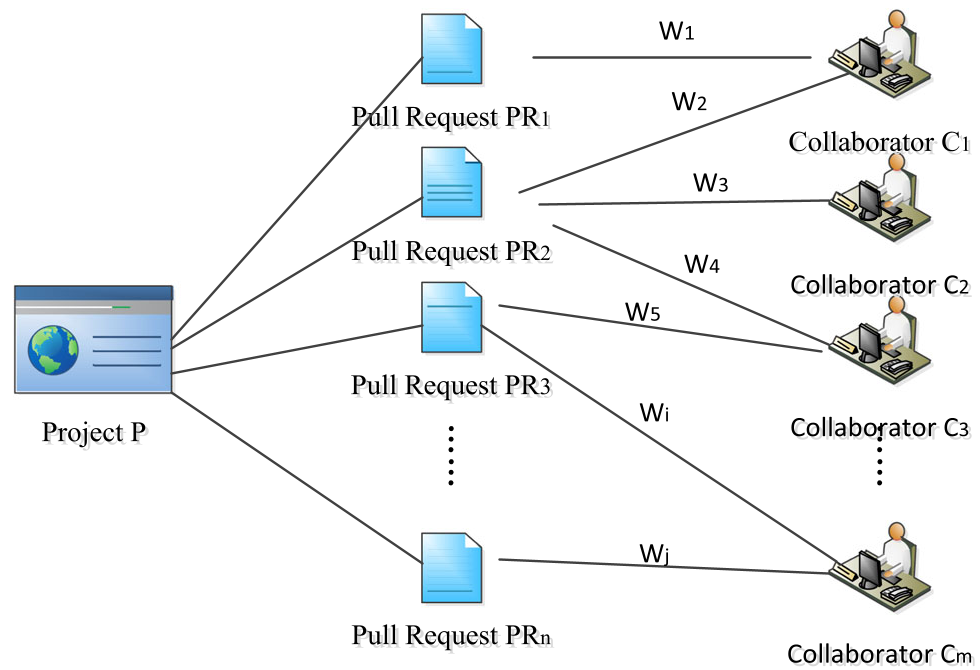
As shown in the architecture, the system builds a heterogeneous network consisting of two types of nodes: Collaborators and Pull Requests.
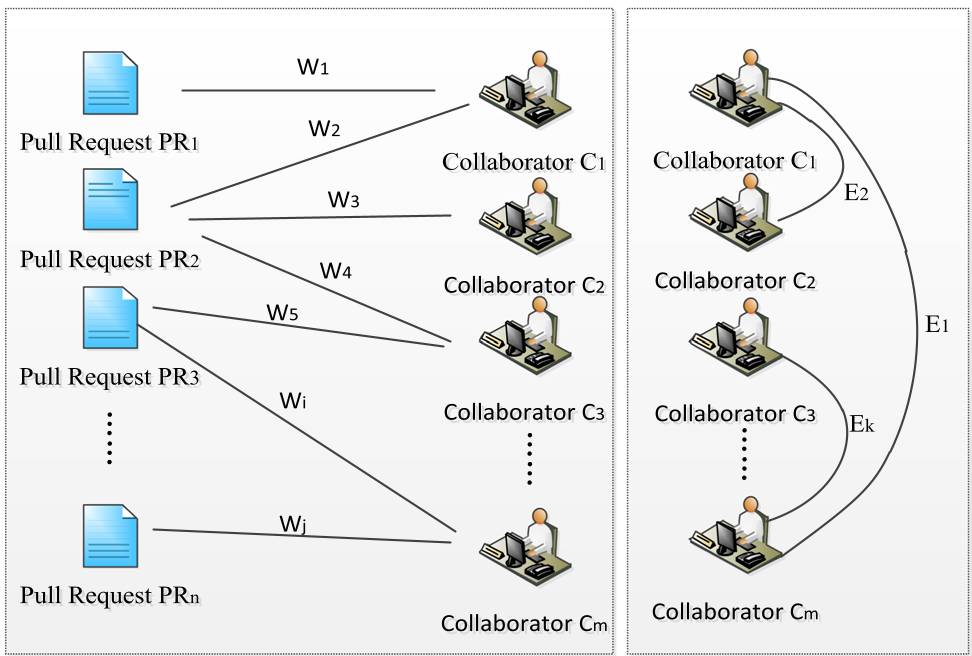
The "Secret Sauce" lies in the Influence Calculation. The algorithm splits the network into a Review Network (modeled via HITS) and an Interest Network (modeled via PageRank). This allows the system to transfer "authority scores" between collaborators and PRs, ensuring that hidden "influential" developers are recognized even if their raw review count isn't the highest.
Experiments & Results: Stability and Precision
The authors tested NTCRA on three diverse datasets: fastlane (Large), coala (Medium), and mopidy (Small).
- Precision vs. Expertise: The "Influence" metric consistently outperformed "Expertise" (raw review quantity). By reducing the authority gap, the system ensured that the recommended reviewers could take immediate action.
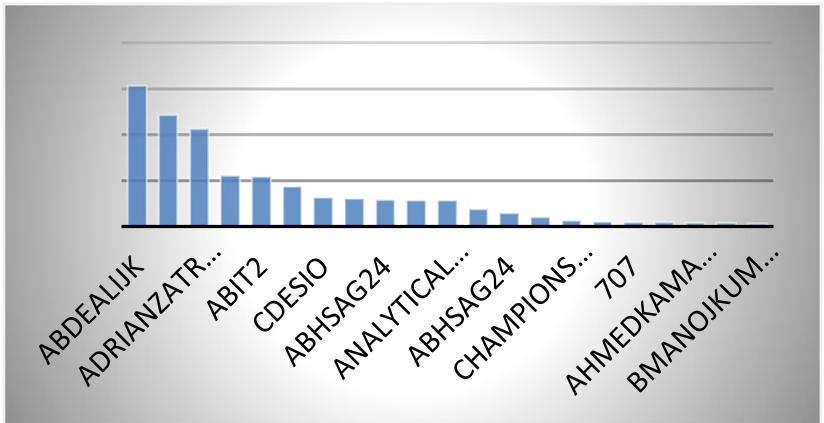
- Balancing the Load: As shown in the "Influence vs. Expertise" rank charts, NTCRA successfully smoothed out the distribution. Expertise was heavily skewed toward a few individuals, whereas "Influence" provided a more balanced pool of candidates.
- Performance Stability: A key finding was that the number of topics (K) (ranging from 10 to 40) had a negligible impact on precision. This suggests that the model is robust and doesn't require hyper-sensitive tuning to be effective in different project environments.
Critical Analysis & Conclusion
NTCRA represents a shift from "Who knows this?" to "Who can fix this and merge it?".
Takeaways
- Holistic Modeling: High-quality recommendations require both content analysis (What is the PR about?) and structural analysis (Who is the developer in the social hierarchy?).
- Influence > Expertise: Counting history is not enough. Modeling the network of co-reviews provides a more nuanced view of the real "core" team.
Limitations
The main drawback noted is a low Recall rate (around 50%). This occurs because the model currently recommends only the top-scoring individual, while many real-world PRs require consensus from multiple collaborators. Future iterations could benefit from a "Top-K" recommendation strategy or by incorporating temporal factors (e.g., who is currently active/online).
Ultimately, this work moves us closer to a truly automated "Review Concierge" for GitHub, which could significantly lower wait times for external contributors and improve the health of open-source ecosystems.