
From Health Fear to Economic Anxiety: A Text Mining Deep Dive into Parisian Twitter during COVID-19
Study of Coronavirus Impact on Parisian Population from April to June using Twitter and Text Mining Approach
This study employs a Text Mining and Infoveillance approach to analyze the social impact of COVID-19 on the population of Paris, France, between April and June 2020. By processing approximately 1.5 million tweets and correlating them with Google Trends, the research identifies a significant transition in public concern from health-related fears to economic anxieties.
TL;DR
During the critical window of April to June 2020, as France moved to "flatten the curve," the public discourse underwent a radical transformation. This study analyzes 1.5 million tweets from Paris to prove that as the immediate biological threat of COVID-19 receded, it was replaced by a more persistent fear: a looming economic recession.
The Motivation: Watching the "Invisible" Crisis
While epidemiologists were busy tracking R-values and hospital beds, a secondary crisis was brewing in the minds of the public. Traditional health metrics are "lagging indicators"—they tell us what happened a week ago. This research treats Twitter as a real-time sensor to capture "leading indicators" of social unrest, mental health decline, and economic anxiety.
The authors' core insight was that the pandemic's impact isn't just a power law of infection; it’s a shifting landscape of human concern that directly influences the success of public health policies.
Methodology: Mining the Parisian Pulse
Following the CRISP-DM (Cross-Industry Standard Process for Data Mining) framework, the researchers filtered the noise of the internet to focus strictly on the Paris metropolitan area.
- Data Collection: Filtering by geography (50km radius) and language (French) over a three-month period.
- Frequency Dynamics: Analyzing not just what was said, but when. The study found a distinct publication pattern where interaction peaked at 6 AM and stayed high through the noon, but decreased after 7 PM—a digital reflection of lockdown routines.
- Cross-Validation: By mapping Twitter volume against Google Trends, the authors identified a "Sync-and-Fade" phenomenon: public interest in the virus itself dropped even while the virus was still present.
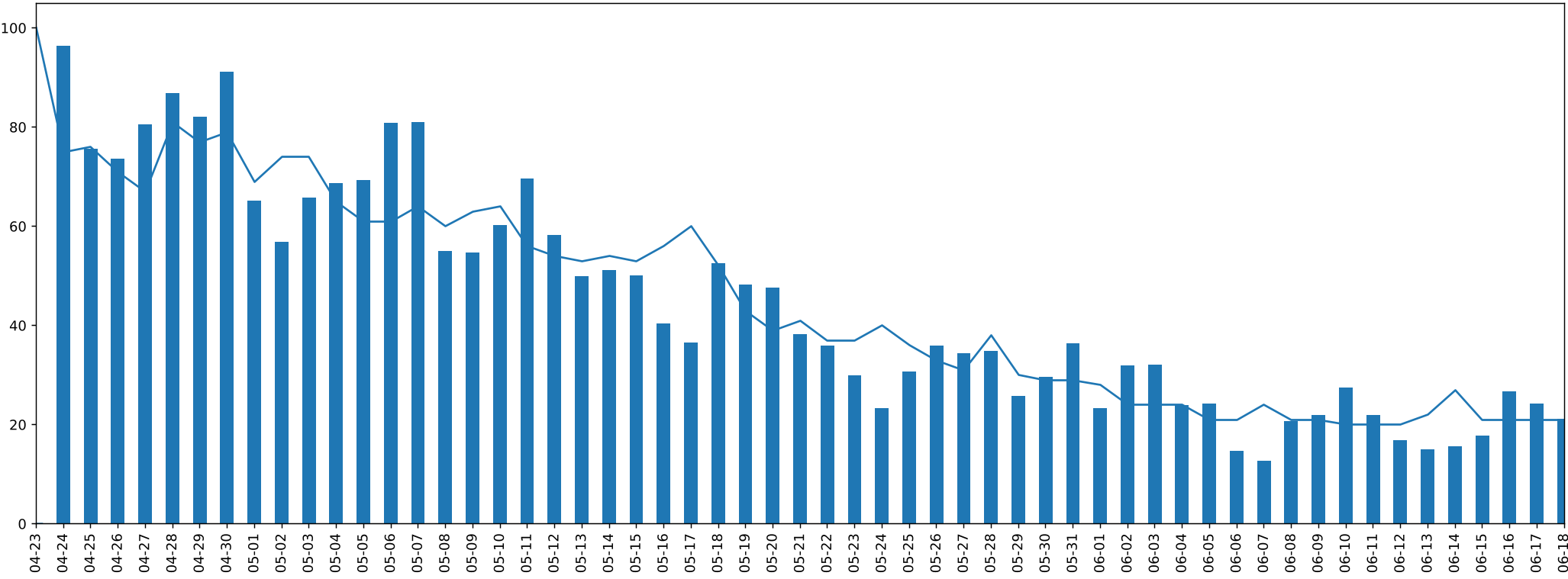 Fig 4. The divergence between publication volume and search interest highlights the "fatigue" effect in the population.
The Core Shift: The Vocabulary of Crisis
The most compelling evidence lies in the transition of the Word Clouds.
- Phase 1 (April/May): Dominant terms included "lutter" (fight), "tue" (kills), and "Parisien." The focus was on the biological battle.
- Phase 2 (June): Suddenly, the lexicon shifted. Terms like "pleine crise" (full crisis), "crise économique," and "recession" began to crowd the latent space.
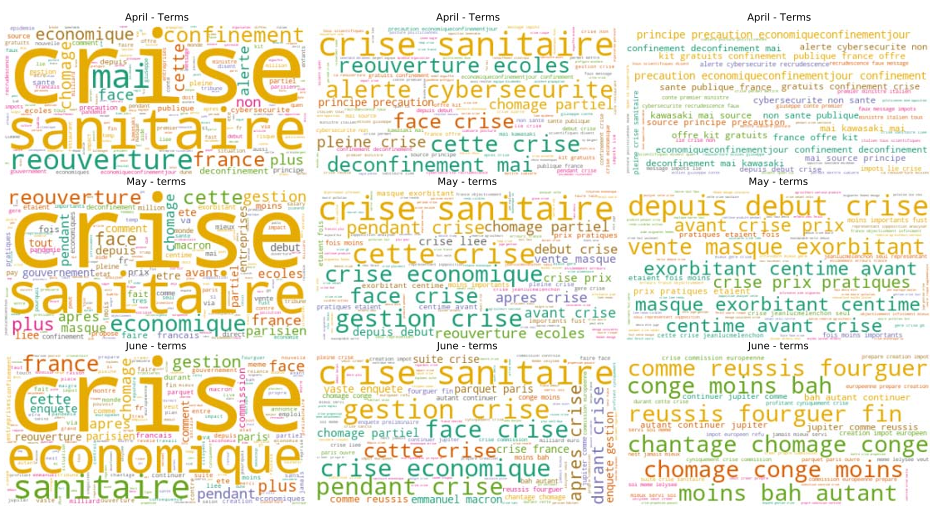 Fig 7. The emergence of 'Crisis' as the central theme in late Spring 2020.
Experimental Results: The Data Speaks
The study processed a massive volume of 1,496,375 tweets. The key quantitative finding is the decreasing pattern of pandemic-related publications. As France achieved "constant control" (evidenced in Fig 1 of the paper), the "Infodemic" shifted its shape.
- Temporal Evidence: Interaction valleys started appearing around 1-2 PM in May and June, suggesting a return to some semblance of "normal" work-from-home or lunch routines, even as anxiety remained high.
- Socio-Economic Correlation: The paper cites that unemployment and "indicators of precariousness" were the best predictors for mortality, and the Twitter data reflected this reality as residents of Paris began discussing job loss and store closures more than the virus's symptoms.
Critical Analysis & Takeaways
This paper serves as a valuable case study in Infoveillance. It demonstrates that during a global catastrophe, the "enemy" in the public eye changes as fast as the viral load in the population.
Limitations:
- Selection Bias: The study relies on Twitter, which skews towards a younger, more tech-savvy demographic and may not represent the elderly population most affected by the virus.
- Depth of Sentiment: While the paper tracks frequency, it lacks a deep sentiment analysis (positive vs. negative) which could further refine the "levels of fear."
Future Outlook: The methodology suggests that public health agencies shouldn't just be medical—they must be multidisciplinary. Collaborative efforts between economists, sociologists, and data scientists are required to manage the "Chain Effect" of a pandemic where a health shock inevitably triggers a social and economic landslide.