
OMSVM: Boosting Credit Rating Accuracy via Ordinal Pairwise Partitioning
A corporate credit rating model using multi-class support vector machines with an ordinal pairwise partitioning approach
This paper introduces OMSVM (Ordinal Multi-class Support Vector Machine), a novel classification model specifically designed for corporate credit rating. By integrating an Ordinal Pairwise Partitioning (OPP) strategy, the model effectively incorporates the inherent rank-order of credit ratings (e.g., A1 > A2 > A3), achieving SOTA accuracy in bond rating tasks.
TL;DR
Predicting corporate credit ratings is not just a classification task—it's an ordering task. Traditional AI models often fail by treating "AAA" and "B" as unrelated categories. This paper introduces OMSVM, a streamlined Support Vector Machine approach that leverages the natural rank of credit ratings. It achieves higher accuracy than standard Neural Networks and SVMs while using 50% fewer internal classifiers.
Context: The Ordinality Gap
In the world of debt markets, credit ratings (like A1, A2, B, C) are ordinal. An A1-rated bond is inherently "better" than an A2 bond. However, most Multi-class SVM (MSVM) techniques—developed for nominal tasks like image recognition—discard this hierarchy.
The authors argue that by ignoring this "hidden information," prior models like standard Backpropagation Neural Networks (BPN) or One-Against-All SVMs lose predictive power and suffer from structural inefficiencies.
Methodology: The OPP Strategy
The core innovation is the Ordinal Pairwise Partitioning (OPP). Instead of comparing every class against every other class (which is computationally expensive), the authors propose two smarter partitioning logic:
- One-Against-The-Next: Focuses on the boundary between adjacent ranks (1 vs 2, 2 vs 3, etc.).
- One-Against-Followers: Compares a specific rank against all ranks below it (1 vs 2,3,4; 2 vs 3,4; etc.).
These are processed through Forward or Backward reasoning chains. For example, in a "Forward" approach, the model first asks: "Is this company an A1?" If not, it moves to the next check. This mirrors the logic of a human credit analyst.
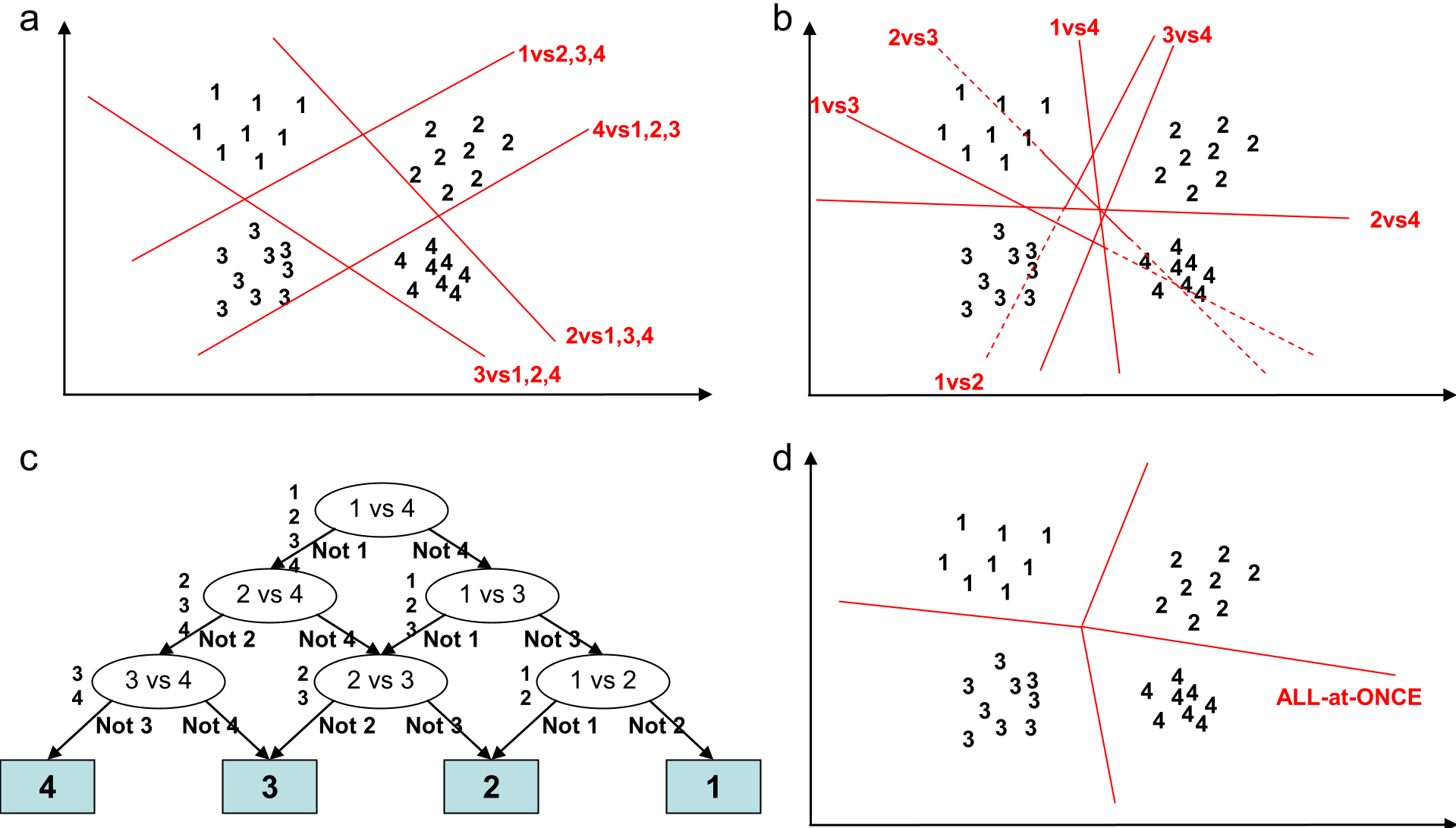 Figure 1: Conceptual differences between standard MSVM and the proposed ordinal approach.
Experiments & Results
The study utilized financial data from 1,295 Korean manufacturing companies, selecting 14 key financial ratios (e.g., Interest Coverage, Cash Flow to Total Assets) as inputs.
Performance Comparison
The results were conclusive:
- OMSVM (Proposed): 67.98% Accuracy
- DAGSVM: 67.29% Accuracy
- ANN (Neural Networks): 65.66% Accuracy
- MLOGIT (Logistic Regression): 65.43% Accuracy
- MDA (Statistical): 63.10% Accuracy
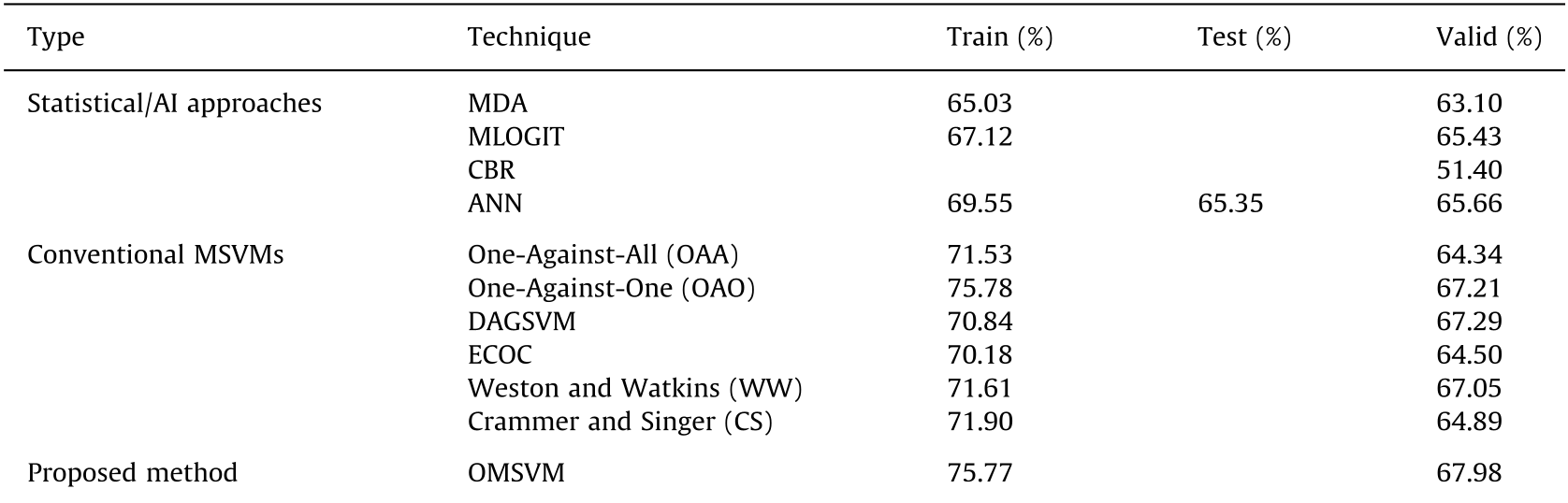 Table 1: Comparison of average hit-ratios across different algorithms.
Why does OMSVM win?
- Structural Integrity: By focusing on the ordinal sequence, the model focuses its "margin" on the most critical boundaries.
- Efficiency: While a standard One-Against-One model for 4 classes requires 6 classifiers, OMSVM only requires 3.
- Robustness: Unlike Neural Networks that target empirical risk (training error), SVMs target structural risk, making them less prone to overfitting on small financial datasets.
Critical Insight: SVM vs. ANN in Ordinal Tasks
An interesting finding in the paper is that while both SVMs and ANNs benefit from ordinal partitioning, SVMs are better at handling "One-Against-Followers."
Neural Networks are often sensitive to disproportionate sample sizes. When you group multiple "lower" classes together, the dataset becomes unbalanced, confusing the ANN. SVMs, however, only care about the Support Vectors at the boundary, making them much more robust to data imbalance inherent in hierarchical partitioning.
Conclusion
The OMSVM model proves that in financial forecasting, inductive bias matters. By encoding the "knowledge" of ordinality into the model architecture itself, we get a system that is both faster and more accurate. This approach holds significant potential for other fields like medical triage (severity levels) and customer CRM (profitability tiers).
Future Directions: The next step for this research involves using Genetic Algorithms (GA) to automatically tune the SVM hyperparameters ( and kernel bandwidth ), potentially pushing the accuracy beyond the 70% threshold.