
Diagnosis of Corporate Insolvency: Harnessing Massive News Articles for Real-Time Credit Risk
Diagnosis of Corporate Insolvency Using Massive News Articles for Credit Management
This paper presents an unstructured text-based prediction system for corporate insolvency using massive news articles for a South Korean national bank. The core method utilizes a rule-based automatic tagger for labeling large datasets and an ensemble machine learning approach (SVM, Gradient Boosting, etc.), achieving a SOTA accuracy of 92.1% (AUC 0.96) and a 50% hit ratio in real-world candidate prediction.
TL;DR
Predicting corporate bankruptcy has historically been a game of "looking in the rearview mirror" using financial statements. This paper introduces an automated, unstructured text-based system developed for a South Korean national bank. By processing millions of news articles via a specialized rule-based tagger and an SVM-based ensemble, researchers achieved 92.1% accuracy and demonstrated that news sentiment can catch early warning signs of insolvency that traditional numbers often miss.
The "Laggard" Problem in Credit Management
Traditional early warning systems (EWS) are built on structured data—balance sheets, cash flow statements, and debt ratios. While reliable, this data is periodic and reactive. By the time a financial report reflects a crisis, the company may already be beyond saving.
The author's insight: News articles contain the "smoke" before the "fire." Lawsuits, management changes, and industry downturns appear in the media long before they manifest in a fiscal year-end report. However, processing this "big data" is notoriously difficult due to:
- Labeling Bottlenecks: Manually reading 1 million articles to train a model is impossible.
- Linguistic Complexity: Korean (Hangul) features complex agglutination and contextual ambiguity that standard NLP tools often struggle to parse.
Methodology: From Raw Text to Insolvency Probability
The researchers did not just throw a BERT model at the problem. Instead, they built a robust, "industrial-grade" pipeline consisting of specialized refinement and diagnosis stages.
1. The Automatic Tagger & Sentiment Dictionary
To solve the labeling problem, the team developed a Rule-based Tagger. Instead of human experts, this program uses a handcrafted "Sentimental Dictionary" containing:
- Financial Keywords: Positive (e.g., price range restriction lifting) vs. Negative (e.g., imprisonment, financial difficulty).
- Emotional Words: Bullish vs. Encountering obstacles.
- Important Words: Extracted via TF-IDF to capture domain-specific terminology.
 Fig. 1: The entire process from multi-source news collection to final insolvency diagnosis.
2. Feature Engineering & Machine Learning
The team used KoNLPy (specifically the Mecab library) for Korean morphological analysis. They selected 2,000 document features and optimized them down to 700 using Recursive Feature Elimination (RFE). They settled on Support Vector Machines (SVM) and Gradient Boosting after finding that Deep Learning lacked the interpretability required for the banking sector.
Experimental Results: High Stakes Performance
The system was tested against a huge dataset: ~500k articles for bankrupted companies and ~600k for normal ones.
| Method | Algorithm | Accuracy | AUC |
|---|---|---|---|
| Man-made selection | SVM | 70% | 0.77 |
| Heuristic selection | SVM | 77% | 0.85 |
| RFE (700 features) | SVM | 92.1% | 0.96 |
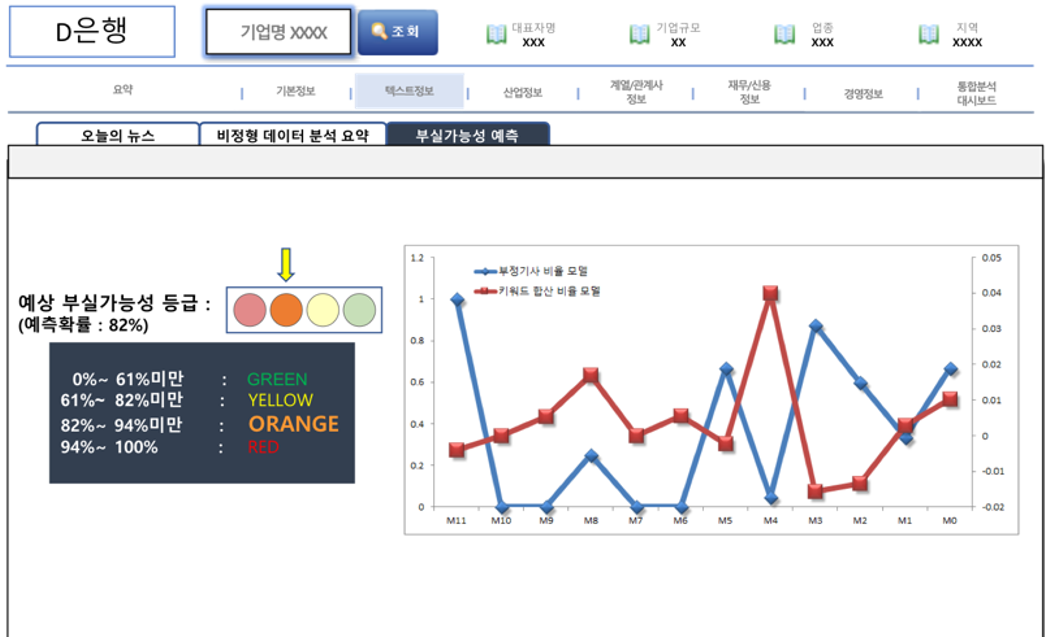 Fig. 2: Distribution of sentiment labels across bankrupted (left) vs. normal (right) entities.
Real-World Impact: The 50% Hit Ratio
The true test was a deployment in December 2017. The system flagged 26 companies as being at high risk for insolvency. When cross-referenced with traditional structured data analysis, 13 of these candidates were exact matches. In the context of "normal" borrowers (where the frequency of bankruptcy is naturally low), a 50% hit ratio for a text-based system is considered a massive success for preemptive risk management.
Critical Insight & Future Outlook
While the technical results are impressive, the paper concludes with a refreshing dose of realism regarding the limitations of AI in finance:
- Data Coverage Bias: Large caps have thousands of articles; SMEs might have zero. This creates a "silence" that the model can't interpret.
- Reliability vs. Explainability: Financial institutions demand logic. An AI saying "it's 95% likely to fail" is useless unless a bank clerk can explain why to a borrower.
- Hangul Nuance: The ambiguity of subject-predicate relations in Korean remains a hurdle for pure machine learning.
Takeaway: This work proves that while text mining isn't a replacement for financial analysis, it is an indispensable "radar" that provides the temporal edge necessary for modern credit stability.