
ERAS: Bridging the Gap Between Code and Emotion in Spanish Learning Environments
A Corpus for Sentiment Analysis and Emotion Recognition for a Learning Environment
This paper presents the development of the Educational Resources Assessment System (ERAS) and a corresponding Spanish-language corpus for Sentiment Analysis and Emotion Recognition in programming education. It introduces a specialized dataset categorized by learning-centered emotions (frustration, boredom, excitement, engagement) and evaluates various ML classifiers, identifying Bernoulli Naive Bayes as the top performer with 76.77% baseline accuracy.
TL;DR
Researchers have developed the Educational Resources Assessment System (ERAS) to capture how students feel while learning to code. By building a first-of-its-kind Spanish corpus labeled with learning-specific emotions like frustration and engagement, the study paves the way for Intelligent Tutoring Systems (ITS) that don't just teach—they empathize.
Background: Beyond "Happy" or "Sad"
In the world of AI education, recognizing that a student is "angry" isn't as helpful as recognizing they are frustrated by a specific recursion exercise. Existing Sentiment Analysis (SA) tools are often general-purpose and English-centric. The authors of this paper identify a critical vacuum: the lack of Spanish-language resources that focus on learning-centered emotions, which are the true drivers of information retention and cognitive success.
Methodology: The ERAS Framework
The researchers developed a multi-stage pipeline to transform raw student opinions into a structured dataset for machine learning.
1. Data Collection (ERAS)
Students interact with programming learning objects (videos, text, images). After consuming the content, they provide a textual opinion and tag it with one of five emotions: Frustrated, Bored, Neutral, Excited, or Engagement.
2. The Sentiment Analysis Module
The authors compared several classical Machine Learning architectures. The process follows a standard but robust NLP pipeline:
- Pre-processing: Normalization, tokenization, and stemming of Spanish text.
- Weighting: Generating a TF-IDF matrix (Term Frequency-Inverse Document Frequency) to quantify the importance of specific pedagogical terms.
- Classification: Testing algorithms including SVM, KNN, and Naive Bayes.
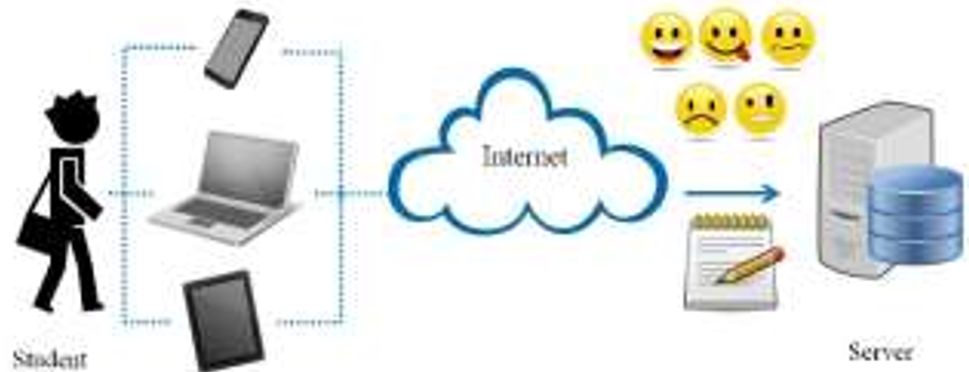 Figure 1: The ERAS system loop—from student interaction to emotion registration.
Experimental Insights & SOTA Comparison
The study evaluated six different classifiers. Interestingly, the Bernoulli Naive Bayes (BNB) emerged as the most robust, particularly for handling text features.
| Classifier | Accuracy (TASS) |
|---|---|
| Bernoulli NB | 76.77% |
| SGDC Classifier | 76.69% |
| SVC | 75.79% |
| KNN | 68.46% |
However, the transition from general text (TASS) to the niche educational corpus was challenging. The accuracy dropped to 40.70% on the newly created dataset.
The "Positivity Bias" Problem
A key finding of the research was the extreme imbalance in student feedback. Students were overwhelmingly positive (754 vs. 97 negative comments).
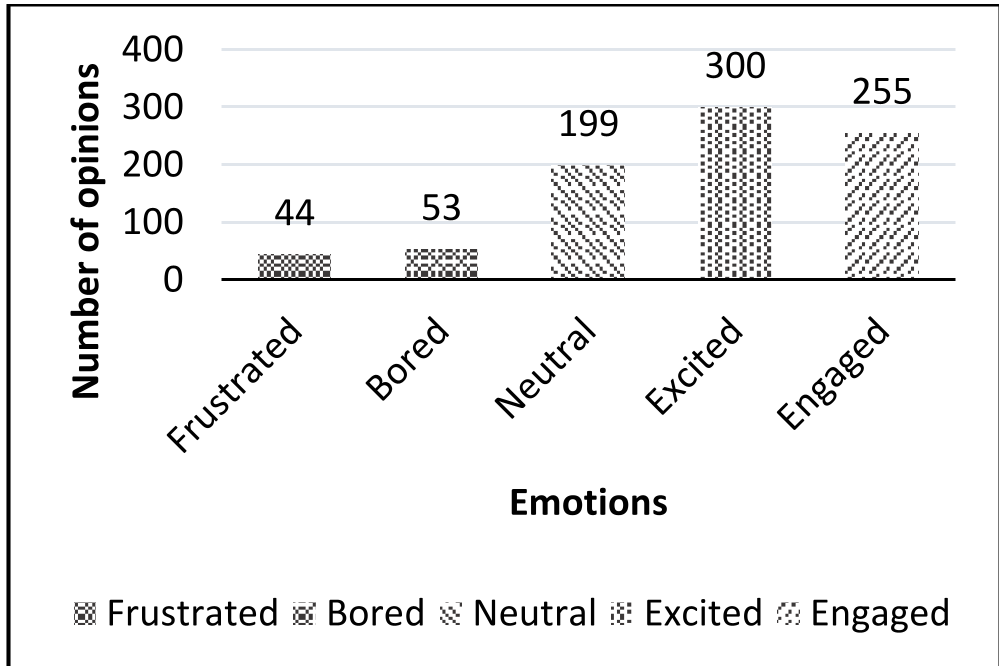 Figure 2: The distribution reveals a heavy bias towards positive emotions like Engagement and Excitement.
The authors argue that this "neutral/excited" tendency is an obstacle for training robust AI. To build a truly intelligent system, we must "induce students to write negative comments" to capture the nuances of where learning breaks down.
Critical Analysis & Future Outlook
This work serves as a foundational step for Spanish-speaking Intelligent Learning Environments (ILE). While the current accuracy on the internal corpus is modest, the methodology proves that we can quantify subjective learning experiences.
- The SOTA Edge: Unlike general sentiment tools, this approach explicitly links emotions to specific learning formats (Video vs. Image-Text), allowing teachers to see exactly which resources cause frustration.
- Limitations: The corpus size remains small (851 entries), and the gender imbalance (45 male vs. 8 female) might introduce demographic bias in linguistic expression.
- The Next Leap: Integration with actual Intelligent Tutoring Systems will allow for real-time pedagogical adjustments—switching a video to a text format if the system detects the student is becoming "bored" or "frustrated."
Takeaway
The future of AI in the classroom isn't just about better content; it’s about better listening. By focusing on Spanish learning-centered emotions, ERAS provides the raw data needed to make digital tutors as perceptive as human ones.