
Beyond the Screen: Decoding Perception of Exclusion in Online Social Networks
An application of corresponding fields model for understanding exclusion in online social networks
This study investigates the perception of digital exclusion in online social networks (OSNs) by applying the "Corresponding Fields Model." Using Structural Equation Modeling (SEM) on data from 480 Turkish undergraduates, it validates how socio-cultural and economic factors determine exclusion, achieving a substantial explained variance (R² = 0.78).
TL;DR
Is having an internet connection enough to belong in a digital community? This study argues "no." By analyzing 480 university students, the research discovers that Insecurity and Cultural Mismatch are far more influential in making students feel "excluded" than their actual technical skills. It validates a holistic model where digital exclusion is a mirror of social exclusion.
Background: More Than Just a Digital Divide
The "Digital Divide" was once a simple question of who has a computer. Today, in an era where smartphones are ubiquitous, the question has shifted to Digital Exclusion. Even when students are "online," they may feel ignored, misunderstood, or unsafe. This research positions itself at the intersection of psychology and sociology, using the Corresponding Fields Model to explain why some students thrive in online learning environments while others remain on the periphery.
The "Why": Why Some Users Fade into the Background
The author identifies a critical gap: existing literature often measures digital exclusion indirectly (through ICT skills or participation rates) rather than measuring the feeling of being excluded directly. The research intuition suggests that being excluded in the physical world (socially, economically, or culturally) has a direct "correspondence" to one's online experience.
Methodology: The Four Predictors
The study proposes a structural model where four key factors lead to the Perception of Exclusion in online Social Networks (PESN):
- Access Barriers: Lack of time or social permission (e.g., parental disapproval).
- Insecurity: Anxiety regarding privacy policies and the misuse of personal data.
- Usage Competencies: Technical and operational skills.
- Cultural Mismatch: A disconnect between the user's cultural values and the prevailing norms of the OSN.
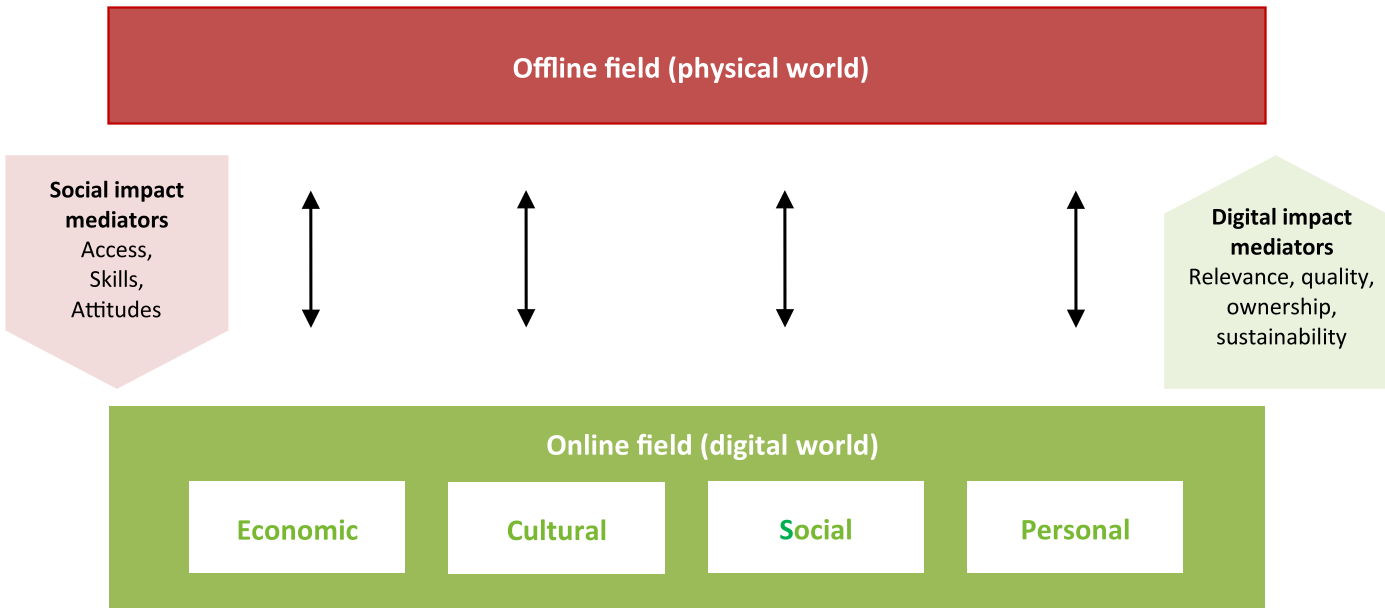 Fig 1: The hypothesized relationship between predictors and perceived exclusion.
Key Findings: The Power of Insecurity
The results from the Structural Equation Modeling (SEM) provided a striking hierarchy of influence:
- Insecurity (Path = 0.91): By far the most dominant factor. If a student fears for their privacy, they self-exclude.
- Cultural Mismatch (Path = 0.73): Students from high-context cultures (who value face-to-face cues) often feel excluded in text-heavy, "faceless" OSN environments.
- Access Barriers (Path = 0.45): Still relevant, but less so than psychological factors.
- Usage Competencies (Path = -0.08, Not Significant): Surprisingly, technical skill level did not significantly predict feeling excluded. In the modern age, OSNs are intuitive enough that "not knowing how to use it" is rarely the reason for exclusion.
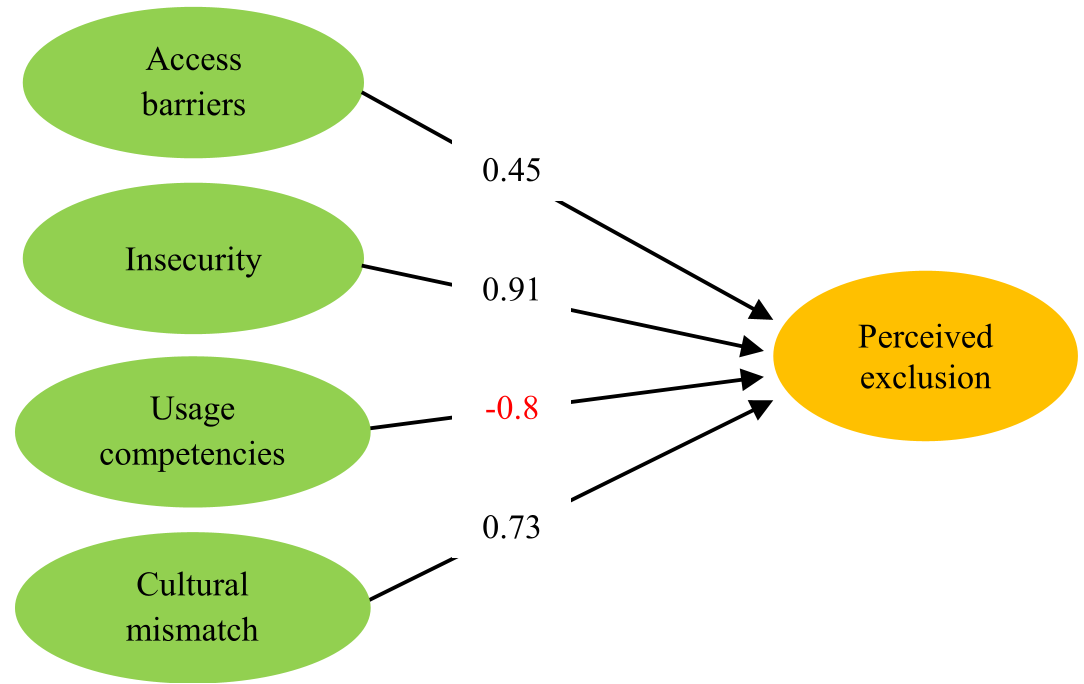 Fig 2: Final Structural Model showing standardized values and explained variance (R² = 0.78).
Critical Insight: The "Competency" Myth
The most profound takeaway for educators and tech developers is the insignificance of Usage Competencies. We often spend vast resources on "Digital Literacy" training, assuming that teaching technical skills will bridge the divide. However, this study suggests that trust (Security) and belonging (Cultural Match) are the true gatekeepers of digital inclusion.
Conclusion and Future Outlook
This work confirms that the digital world is not a "neutral" space. It is a field shaped by the same socio-cultural forces that govern our offline lives.
Limitations: The study relies on self-reported data from a Turkish undergraduate population, which may carry cultural bias (specifically regarding social desirability). Future Work: Developers should look toward "Culture-Inclusive" design—creating OSN features that respect high-context communication and offer robust, transparent privacy controls to lower the "Insecurity" barrier.
Final Takeaway: To include someone in a digital network, do not just give them a manual; give them a safe and culturally resonant space.