
CORUS: Bridging the Gap Between Anecdotes and Evidence via Blockchain
CORUS: Blockchain-Based Trustworthy Evaluation System for Efficacy of Healthcare Remedies
This paper introduces CORUS, a blockchain-integrated crowdsourcing system designed for evaluating the efficacy of healthcare remedies (e.g., functional foods, dietary supplements). By leveraging Hyperledger Fabric, cloud computing (AWS), and a hierarchical cryptocurrency reward mechanism, CORUS provides a trustworthy, scalable alternative to traditional, costly clinical trials.
TL;DR
Evaluating the real-world effectiveness of dietary supplements and healthcare devices usually falls into a "gray area"—too expensive for clinical trials, yet too important to be left to subjective word-of-mouth. CORUS is a new system from KAIST researchers that uses Hyperledger Fabric and Crowdsourcing to create a transparent, immutable, and incentivized platform for healthcare remedy evaluation. It turns "Citizen Science" into a rigorous, verifiable research tool.
The "Trust Gap" in Citizen Science
The core motivation behind CORUS stems from a dual failure in the current healthcare ecosystem:
- The Cost Barrier: Strict clinical trials are the gold standard, but their massive budgets and long timelines make them inaccessible for evaluating daily health products like functional foods.
- The Integrity Barrier: While "Citizen Science" (gathering data from the public) is a cheaper alternative, it’s plagued by administrative bias and data fabrication. If an administrator can alter the database to favor a specific remedy, the results are scientifically worthless.
CORUS solves this by removing the human element of "trust" and replacing it with cryptographic proof.
Methodology: The Architecture of Trust
The authors built CORUS on three pillars: Hyperledger Fabric (HF), a Hierarchical Reward System, and Cloud Scalability.
1. Dual-Channel Blockchain Design
To prevent bias, data must be "blind" while a study is in progress but "public" once it concludes. CORUS achieves this through a sophisticated channel architecture:
- Private Channel (RC): Every new research project gets its own isolated channel. Data entered here is immutable but restricted to participants to prevent early results from biasing new entries.
- Public Channel (PC): Once the trial ends, the smart contract triggers a data migration, pushing the blocks to a public ledger for global verification.
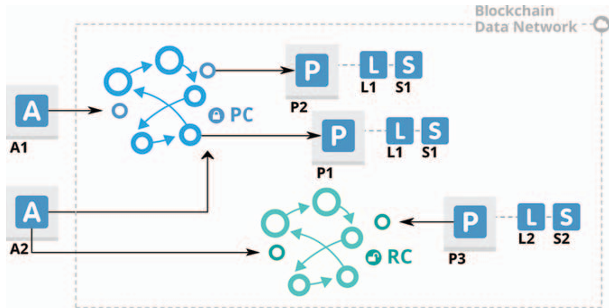 Fig 1. The lifecycle of a Research Channel (RC) from creation to integration.
2. Safeguarding Data Quality
One major critique of crowdsourcing is "junk data." CORUS employs Insufficient Effort Responses (IER) detection. If a participant provides low-quality or repetitive "lazy" data just to farm rewards, the system flags and discards their contribution, ensuring the final statistical analysis remains robust.
Incentivizing Participation
Why would a citizen spend time logging their supplement intake? CORUS introduces a tiered cryptocurrency reward structure:
- Creators: Get a fixed ratio for designing the study.
- Managers: Rewards scale based on the activity of the participants they manage.
- Participants: Rewards are strictly tied to their "stake" (the volume of valid, verified data they contribute).
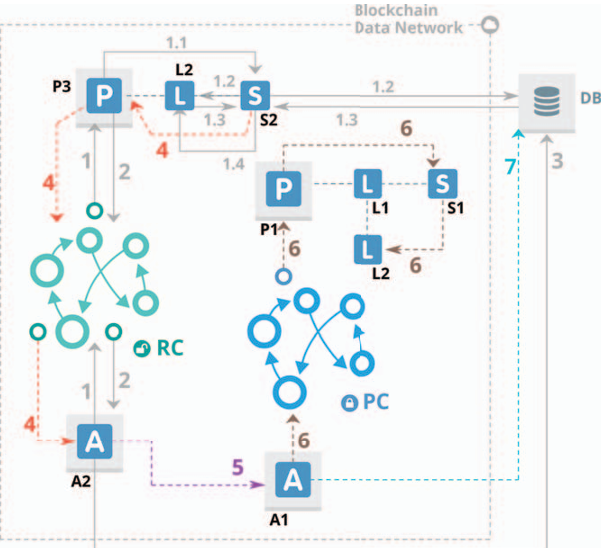 Fig 2. The hierarchical flow of cryptocurrency rewards ensuring sustained engagement.
Experiments & System Flow
The system is deployed on AWS, utilizing high-performance nodes to handle up to 3,500 transactions per second. The workflow is designed for "Simplified Case Report Forms" (CRF), making it easy for non-experts to register phenotypes and healthcare remedies.
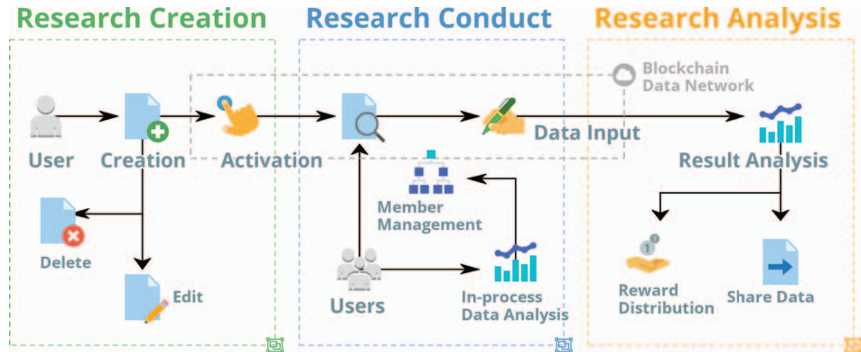 Fig 3. Workflow from research registration to final statistical distribution.
Critical Insight & Future Outlook
CORUS represents a significant shift toward Decentralized Science (DeSci). By leveraging the immutability of Hyperledger Fabric, it effectively eliminates the "administrator intervention" problem that has historically plagued participatory trials.
Limitations: While the system prevents post-hoc data tampering, it still relies on the honesty of the physical user at the point of entry (though IER helps mitigate this). Future iterations could integrate IoT/Wearable data to further automate data entry and reduce human error.
Conclusion: CORUS is more than just a survey tool; it’s a decentralized "Operating System" for health evidence. It empowers the public to validate the products they use every day, potentially disrupting the multi-billion dollar dietary supplement industry with newfound transparency.