
Training as a Threat: Solving the Crowdsourcing Quality-Cost Paradox
On Cost-Effective Incentive Mechanisms in Microtask Crowdsourcing
The paper introduces a cost-effective incentive mechanism for microtask crowdsourcing that utilizes "quality-aware worker training" as a penalty/motivation tool. By modeling worker behavior as a Markov Decision Process (MDP), the authors prove that this mechanism achieves high-quality solutions (Symmetric Nash Equilibrium at ) while maintaining a low budget for the requester.
TL;DR
Microtask crowdsourcing is cheap but often results in garbage data because workers prioritize speed over quality. Standard fixes (like checking every task) are too expensive. This paper introduces a clever game-theoretic mechanism: if a worker's quality slips, they are sent to a mandatory, unpaid "Training State." This long-term penalty forces workers to submit high-quality work in the "Working State," allowing requesters to maintain SOTA quality with remarkably low verification costs.
The Paradox: Why Crowdsourcing often Fails
In platforms like Amazon Mechanical Turk, workers are typically paid per task. This creates a perverse incentive: the faster you click (regardless of accuracy), the more money you make. To counter this, requesters use Majority Voting (paying 3-10 people for the same task) or Gold Standards (expert-verified tasks).
The problem? These "solutions" are expensive. If you pay for 10 workers per task, you lose the cost advantage of crowdsourcing. If you check every task yourself, you might as well do the work in-house. This paper specifically addresses the Incentive-Validation Conflict.
Methodology: The State-Transition Game
The authors move beyond "immediate payment" models to a "state-based" model. They represent the worker's journey as a Markov Decision Process (MDP) with two primary states:
- Working State: The production phase. Workers get paid for tasks. Validation is sparse (not every task is checked).
- Training State: The penalty phase. If a worker is caught submitting a poor solution, they are "demoted." They must complete training tasks without pay to prove their qualification before returning to the Working State.
The Core Insight
By making the future utility dependent on current quality, the requester gains a "threat" advantage. Even if the requester only checks 10% of tasks, the risk of being stuck in the unpaid training state is enough to move the Symmetric Nash Equilibrium (SNE) to high quality ().
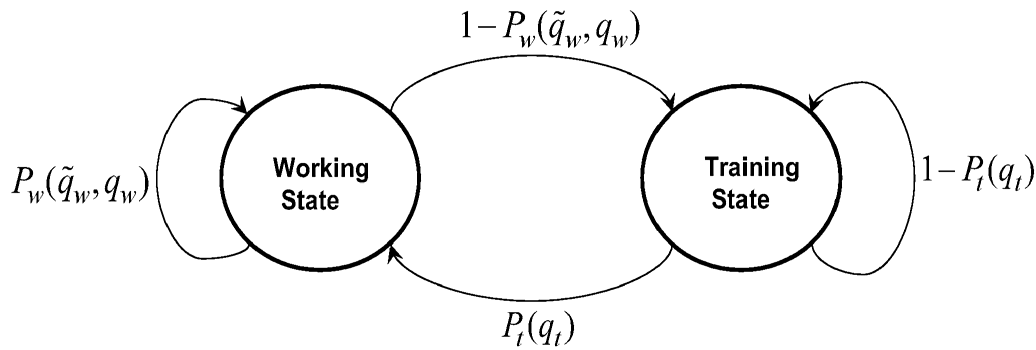 Fig 1: The transition between Working and Training states based on quality evaluation.
Mathematical Intuition
The paper proves that for any arbitrary budget , there exists a number of training tasks large enough that a rational worker will always choose to provide high-quality work.
The cost function can theoretically be minimized toward zero because, at equilibrium, workers provide such high quality that they rarely fail validation, meaning the requester rarely actually has to "pay" for the cost of managing the training state. It becomes an "omnipresent threat" that regulates the system for free.
Experimental Validation: Small Sums, Big Results
The authors tested this on 41 participants performing simple math additions. They compared three scenarios:
- Set I: High verification (Check 100% of tasks).
- Set II: Low verification (Check only 30% of tasks, no training).
- Set III: The Proposed Mechanism (Check 30% of tasks + Training).
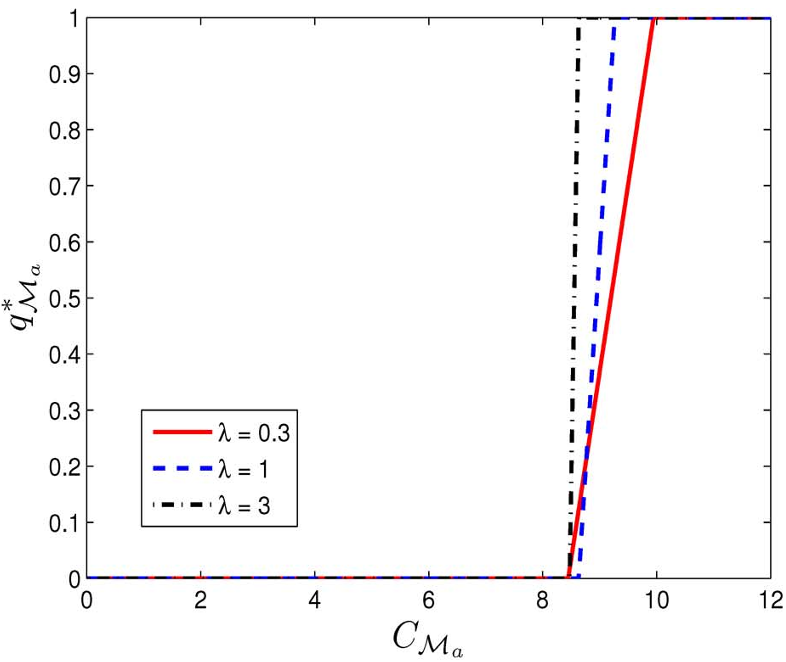 Fig 2: Histogram of participant accuracy across different incentive sets.
The Result: Accuracy in Set II (low verification) plummeted to random-guessing levels. However, in Set III, the simple inclusion of a "training penalty" restored accuracy to the same levels as Set I (the 100% check set), despite only checking a fraction of the work.
Critical Analysis & Takeaways
The brilliance of this work lies in shifting the focus from monetary rewards to opportunity costs.
- Efficiency: The stationary state distribution analysis shows that the majority of workers (>90%) stay in the Working State, meaning the system remains productive.
- Limitations: The model assumes workers are perfectly "rational" and "strategic." In reality, honest mistakes (noise) could unfairly trap good workers in training loops. The authors suggest a "report/compensation" mechanism for errors, but this adds operational complexity.
- Future Impact: This "Quality-Aware Training" framework is highly applicable to RLHF (Reinforcement Learning from Human Feedback) pipelines used in training LLMs, where high-quality human labeling is currently the most expensive bottleneck.
Conclusion
Verification doesn't have to be expensive to be effective. By framing "training" as both a qualification and a cost, requesters can align worker incentives with their own quality goals without breaking the bank.