
XACT: Securing the "Mayorship" Against Location Fraud in GeoSocial Networks
You unlocked the Mt. Everest badge on foursquare! Countering location fraud in Geosocial Networks
The paper introduces XACT, a suite of venue-oriented secure location verification mechanisms designed to combat "check-in" fraud in GeoSocial Networks (GSNs). It leverages minimalist local hardware to provide high-assurance location certification through Wi-Fi, QR codes, and challenge-response protocols.
TL;DR
Geosocial Networks (GSNs) like Foursquare and Yelp rely on "check-ins" to reward users with badges and discounts. However, these systems are plagued by "couch-check-ins" via GPS spoofing. XACT is a suite of low-cost hardware solutions that forces users to prove physical presence at a venue through dynamic Wi-Fi SSIDs, QR codes, and cryptographic challenge-responses, making remote fraud nearly impossible.
The "Mt. Everest" Problem: Why We Cheat
The rise of GSNs turned location into a currency. Becoming the "Mayor" of a Starbucks isn't just a social flex—it often comes with free coffee and discounts. This "gamification" creates a massive incentive for fraud. Using apps like LocationSpoofer or GPSCheat, users can claim to be at Mt. Everest while lying in bed.
The authors analyzed over 780,000 Foursquare users and found that the high density of check-ins at "hotspots" creates fierce competition. Existing defenses—like checking if a person is moving "too fast"—are easily bypassed by sophisticated attackers or botnets of Sybil accounts.
Methodology: The XACT Suite
XACT moves the security anchor from the user's phone to the venue itself. The authors propose three layers of verification:
1. WES (WiFi-enabled Embedded System)
The venue's device acts as an ad-hoc Wi-Fi access point. Instead of a static name, it broadcasts an unpredictable rolling SSID (e.g., changing every few seconds) generated by a secret seed known only to the venue and the GSN provider. To check in, the phone must scan and report the correct current SSID.
2. FES (Feedback-enabled Embedded System)
Venues display a Dynamic QR Code on an LCD screen. This code contains a cryptographic signature and a timestamp. To prevent an attacker from just taking a photo and posting it online (relay attack), a proximity sensor refreshes the code as soon as it is scanned.
3. NES (Network Embedded System) - The Wormhole Killer
This is the most robust layer designed to stop Wormhole Attacks (where an accomplice at the venue forwards data to a remote cheater). NES uses a local challenge-response via Wi-Fi or Bluetooth.
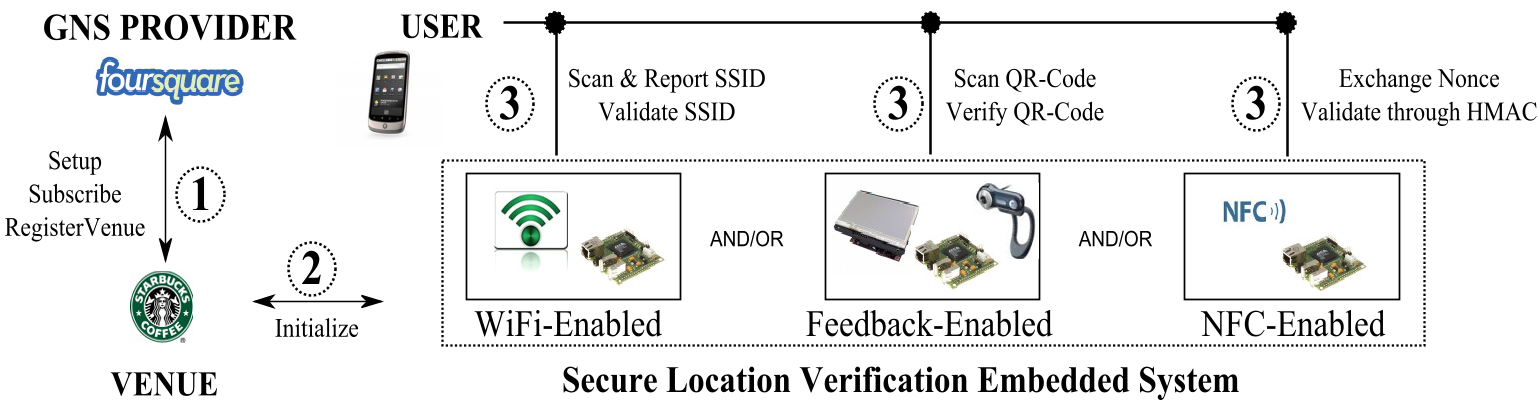
Figure 1: The XACT architecture illustrates how the GSN provider (S) coordinates with the Venue device (XACT R) to verify the Client (C).
Detecting the Invisible: The Wormhole Attack
The most difficult attack to stop is when a "friend" at the venue helps you check in from miles away. XACT detects this using Time-of-Flight/Latency analysis.
In a legitimate check-in, the round-trip time for a cryptographic HMAC is negligible. In a wormhole attack, the data must travel over the internet to the remote cheater and back.
- Success: XACT found that while an honest user takes ~3.6ms for the protocol, a wormhole attack adds at least ~40ms of wired latency.
- Result: NES creates an overhead for attackers that is 12x higher than for honest users, making it a reliable red flag for the GSN provider.
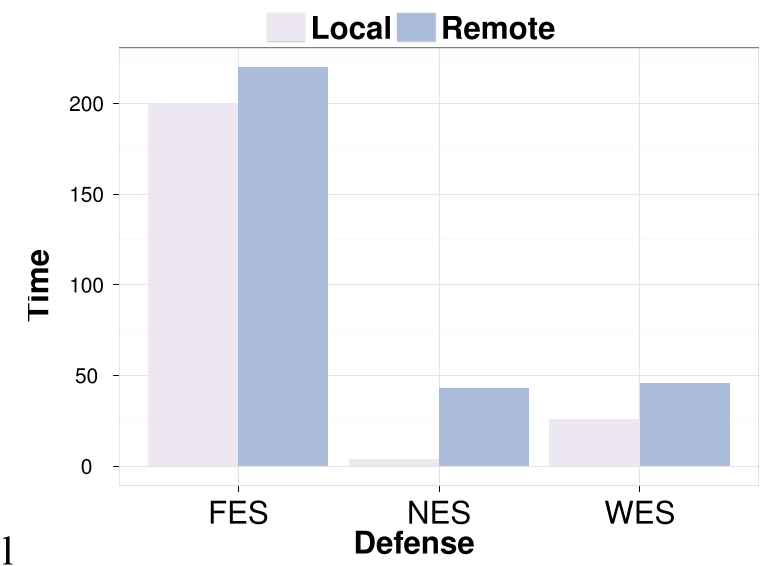
Figure 2: Performance metrics showing the significant latency overhead (in ms) introduced during wormhole attacks compared to honest check-ins.
Why it Matters: Beyond the Badge
While "Mayorships" might seem trivial, the underlying technology has serious implications for:
- Fraudulent Reviews: Ensuring a Yelp reviewer was actually at the restaurant.
- In-Store Marketing: Validating that rewards are given to real customers, not bots.
- Security Logs: Providing "Proof of Presence" for guards or service workers.
Conclusion & Limitations
XACT proves that location security doesn't require expensive infrastructure. By using a $50 BeagleBoard (or even an old smartphone), a venue can effectively end location fraud.
Caveats: The current design requires time synchronization between the venue and the provider. If the venue's clock drifts, legitimate users might be blocked. Additionally, while XACT stops remote spoofing, it still requires at least one physical participant at the venue to facilitate a wormhole—meaning it raises the "cost of cheating" rather than making it strictly impossible.
Takeaway: The future of GSN security lies in local proof of presence, moving away from the era of "trust the GPS" into the era of "trust the interaction."