
Engineering Student Satisfaction: Trust and Teacher Support as Critical Drivers
Course Satisfaction in Engineering Education Through the Lens of Student Agency Analytics
This paper examines the relationship between course satisfaction and student agency in engineering education using the Agency of University Students (AUS) Scale. By combining exploratory statistics with supervised machine learning (Random Forest, SVM), the authors identify key predictors of student satisfaction, achieving a high classification performance (AUC 0.943).
TL;DR
This study bridges the gap between student agency (the capacity to act purposefully in learning) and course satisfaction in engineering. By applying machine learning to survey data from 293 students, researchers discovered that relational factors—specifically trust and teacher support—are far more predictive of a "Satisfied" student than participation levels or gender.
Context: Why Satisfaction Matters in Engineering
In the high-pressure environment of engineering education, "satisfaction" isn't just a feel-good metric; it is a predictor of student retention and deep learning. However, we often struggle to pinpoint exactly what makes a student satisfied. Is it the difficulty of the content? The amount of group work? Or the prestige of the instructor? This paper argues that the answer lies in Student Agency Analytics.
Problem: The Complexity of the Student Experience
Existing research often treats course satisfaction as a simple linear outcome. Yet, the student experience is a complex web of cognitive, motivational, and social factors. Previous studies have identified many potential drivers, but few have ranked them by "criticality"—identifying which factors, if slightly diminished, cause the steepest drop in satisfaction.
Methodology: From Business Metrics to Machine Learning
The researchers employed a unique two-step methodology:
- Categorization via NPS: Borrowing from the "Net Promoter Score" used in business, students were categorized as Satisfied, Neutral, or Dissatisfied based on their likelihood to recommend the course.
- Agency Mapping: They used the validated AUS Scale (Agency of University Students) which maps agency across 11 dimensions, including Personal (Self-efficacy), Relational (Teacher support), and Participatory (Influence) resources.
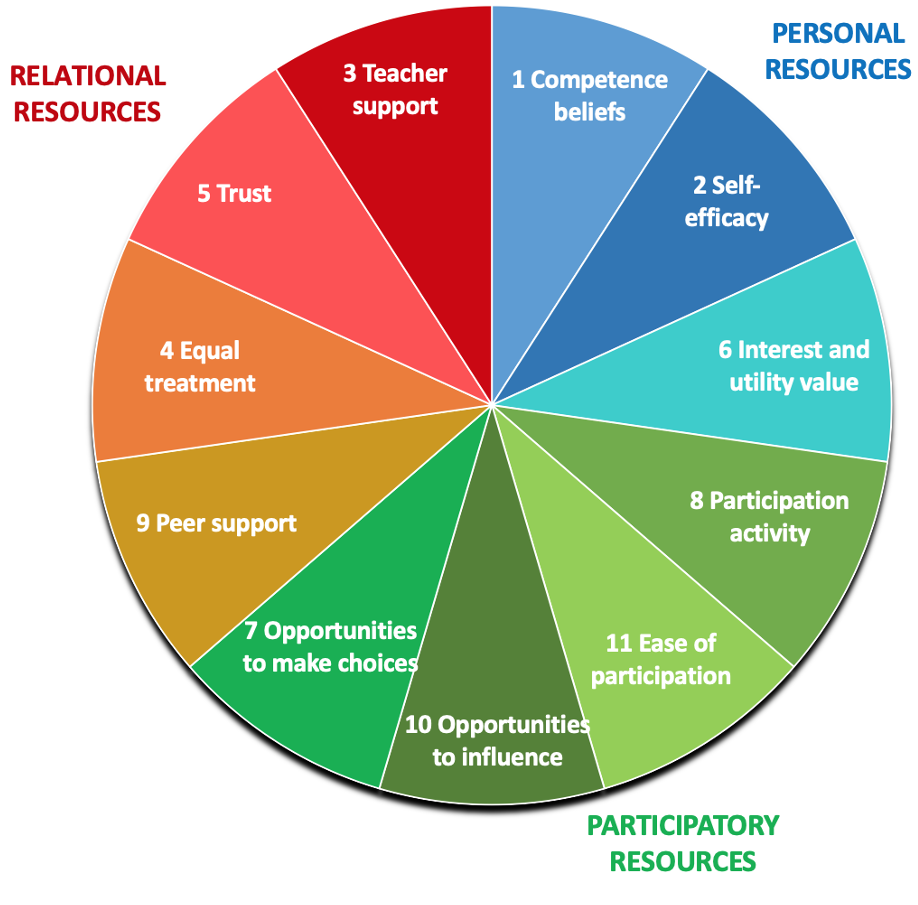 Figure 1: The multidimensional Student Agency (AUS) model used to dissect undergraduate experiences.
Key Results: Relational over Participatory
Using a Random Forest classifier, the study achieved an impressive AUC of 0.943 in predicting satisfied students. The findings provide a clear hierarchy of what matters:
- The "Big Three": Interest and Utility Value, Trust for the Teacher, and Teacher Support were the strongest predictors.
- The Critical Factors: "Trust" and "Teacher Support" were identified as critical—even a small decrease in these areas significantly shifted students from the "Satisfied" to "Neutral" or "Dissatisfied" categories.
- The Surprises: "Participation Activity" and "Opportunities to Influence" were among the least important factors. Furthermore, gender had no significant impact on satisfaction levels.
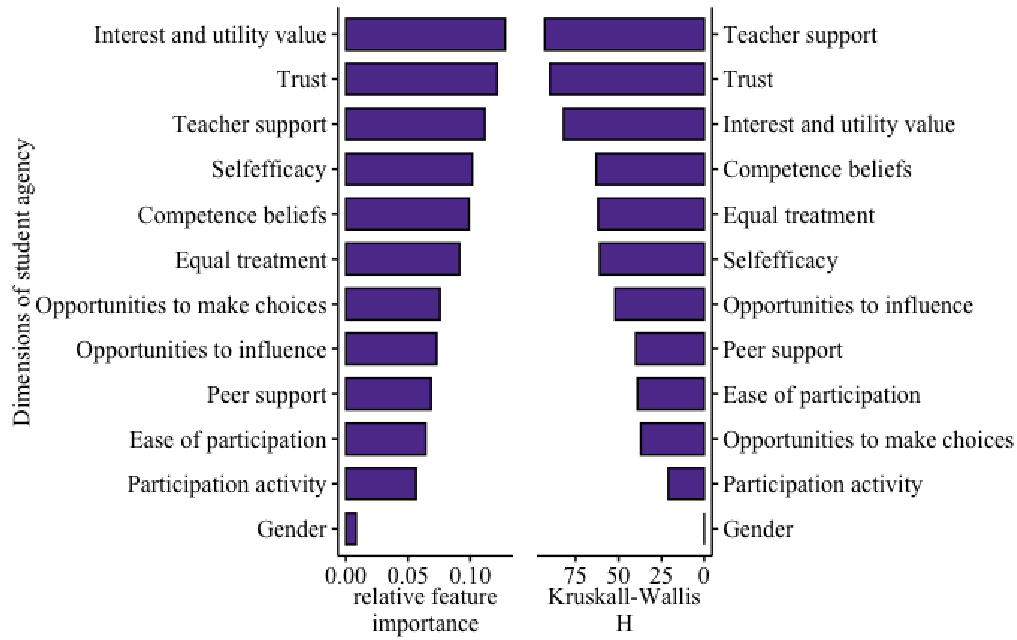 Figure 2: Feature importance ranking shows that relational and interest-based factors outweigh participatory resources.
Critical Analysis & Conclusion
This research offers a powerful insight for engineering departments: The teacher-student relationship is the bedrock of course satisfaction. While many modern pedagogical trends focus on "active participation," this data suggests that if students don't trust their instructor or feel supported, participation alone won't save their experience.
Limitations: The study relies on a sample of 293 students from a single institution. Future work should see if these "critical factors" hold true across different cultures and disciplines outside of IT and Mathematics.
Future Outlook: By integrating these findings into Learning Analytics Dashboards, universities could potentially "early-warn" instructors when trust or support metrics dip, allowing for interventions before student dissatisfaction turns into attrition.