
COVID-19 vs. Social Media: Unveiling the Great Privacy Paradox
COVID-19 vs Social Media Apps: Does Privacy Really Matter?
This study presents a comparative analysis of privacy policies and over 2 million user reviews between COVID-19 contact tracing apps and mainstream Social Media/Productivity apps (e.g., Facebook, TikTok). Using a custom-built automated classification tool, the researchers reveal a "Privacy Paradox" where COVID-19 apps exhibit significantly higher privacy standards despite intense public scrutiny, while social media apps are widely used despite severe data-hungry behaviors.
TL;DR
Why do we trust Facebook with our entire social graph but fear a contact tracing app that anonymizes our ID? This paper performs a deep dive into 2 million user reviews and dozens of privacy policies to reveal a startling reality: COVID-19 apps are statistically more private and ethical than social media, yet they fail not because of "spying," but because of poor software engineering, such as battery drain and lack of multi-language support.
The Core Contradiction: Privacy Fear vs. Reality
During the pandemic, a digital divide emerged. Governments needed 60% app adoption to effectively halt virus transmission. However, public discourse was dominated by fears of "Big Brother" surveillance. Paradoxically, during the same lockdowns, usage of data-hungry apps like TikTok and Facebook skyrocketed.
The authors set out to investigate this anomaly: Does privacy really matter to the average user, or are we misidentifying the reasons for app rejection?
Methodology: Manual Audits + Large-Scale NLP
The researchers employed a dual-track approach:
- Policy Analysis: A rigorous check of 42 official COVID-19 apps against Social Media giants across 7 privacy metrics (Open source status, GPS usage, Identity masking, etc.).
- Automated Review Mining: A custom Python tool that scraped ~2,000,000 reviews from Google Play and the App Store, translating non-English feedback and categorizing sentiments.
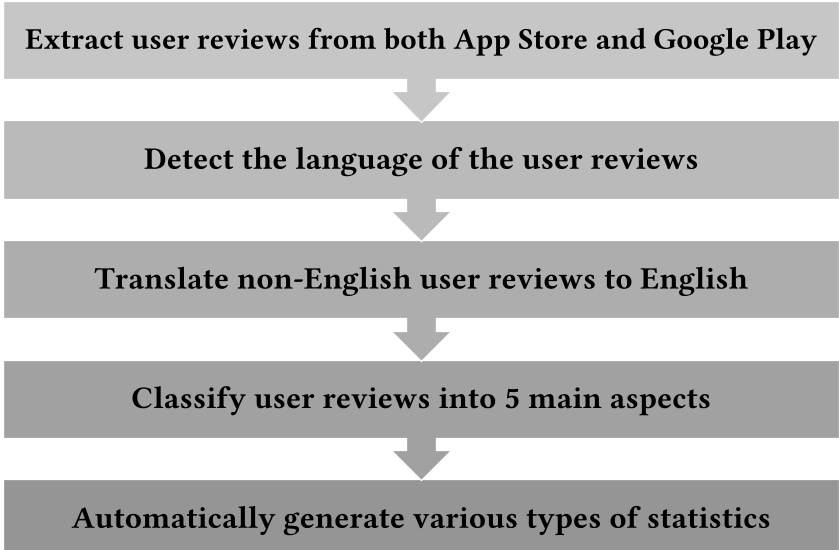 Fig 1: The automated classification tool architecture used to process 2 million reviews.
Why COVID-19 Apps are Technically Superior (Privacy-Wise)
The findings in Table III of the paper are an eye-opener for privacy advocates.
- Transparency: 57% of COVID apps are open-source; 0% of the analyzed social media apps are.
- Data Minimization: While Facebook and TikTok collect "everything" (IP, GPS, device signals), 82% of COVID apps rely on Bluetooth Low Energy (BLE), meaning they don't even know your physical address—only that you were near another anonymous ID.
- Right to be Forgotten: 66% of COVID apps automatically delete data after 21-28 days. Social media apps often retain data indefinitely or make deletion notoriously difficult.
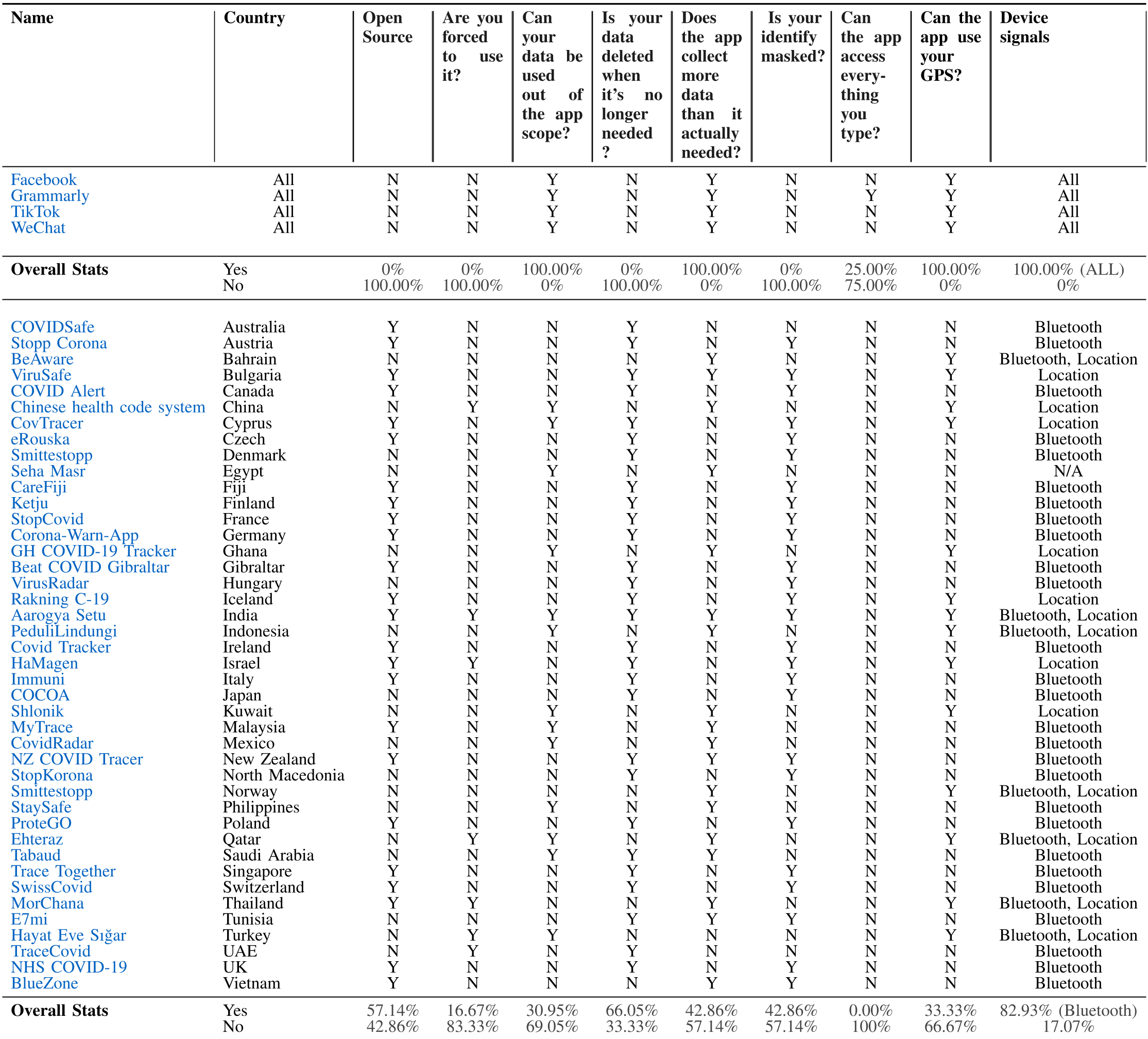 Fig 2: Detailed breakdown of privacy handling: COVID-19 apps vs. Social Media.
The Real Reason for Failure: Stability and Accessibility
If COVID apps are more private, why are their ratings often lower? The review analysis reveals the "hidden" killers of public health tech:
1. The Bluetooth Conflict
Because COVID apps run constantly in the background using Bluetooth, users reported significant interference with headphones and smartwatches, alongside massive battery drain. For a user, a dead phone is a more immediate threat than a theoretical privacy leak.
2. The Accessibility Gap
Many COVID apps were built in a rush (Limited testing).
- Language Barriers: Many apps only supported the local national language, ignoring immigrant populations or tourists.
- Store Locking: Apps were often locked to specific regional App Stores, making them impossible to download for residents with international accounts.
3. Missing Feedback Loops
Unlike social media companies that iterate daily, COVID app developers rarely responded to user requests. This lack of engagement fueled the perception that the apps were "broken" or "abandoned."
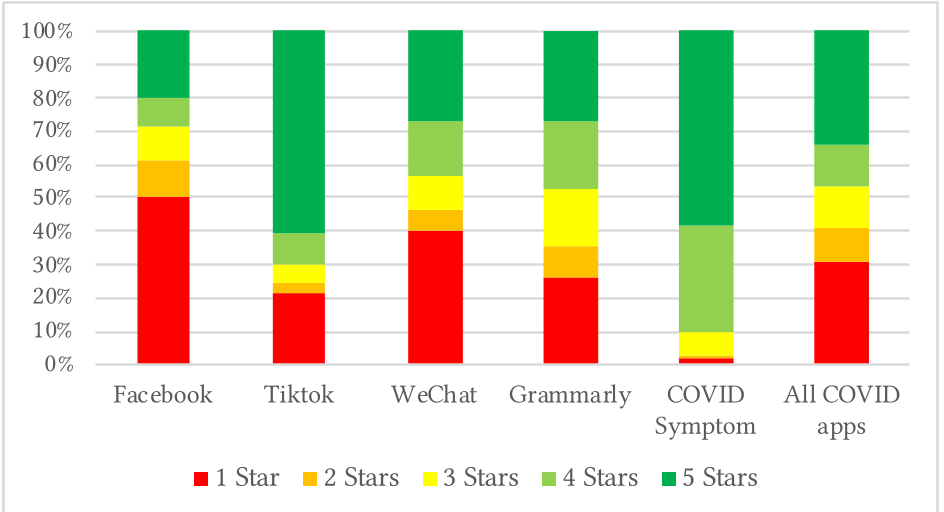 Fig 3: Distribution of stability issues. Negative reviews regarding crashes directly correlate with lower star ratings.
Conclusion and Deep Insight
The "Privacy Paradox" isn't just about hypocrisy; it's about Trust and Utility. Users tolerate privacy violations from social media because the utility (entertainment, connection) is high and the stability is flawless.
Key Takeaway for Future Researchers: Superior privacy is not enough to win over the public. For a public service app to succeed, it must match the Software Engineering standards of the private sector. If an app crashes or drains the battery, users will use "privacy" as a convenient excuse to uninstall it, even if the real reason is simply poor UX.
Health officials must realize that fighting a pandemic is as much a Software Quality Assurance challenge as it is a medical one.