
COVID-Hero: Turning Pandemic Awareness into Child's Play via Machine Learning
COVID-Hero: Machine Learning Based COVID-19 Awareness Enhancement Mobile Game for Children
The paper presents COVID-Hero, a 2D mobile survival game designed to educate children about COVID-19 precautions through interactive gameplay. The study utilizes Machine Learning regression models (notably XGBoost) to analyze user survey data and prioritize features that most effectively enhance pandemic awareness and behavioral changes in children.
TL;DR
COVID-Hero is more than just a 2D mobile game; it is a data-driven intervention tool. By casting children as superheroes fighting the coronavirus, the app teaches hygiene and social distancing. The researchers didn't just build the app—they used XGBoost and Random Forest regression models to analyze survey data, proving that gamification significantly improves children's psychological resilience and adherence to safety protocols during the pandemic.
Background: The Engagement Gap in Pediatric Health
During the COVID-19 lockdowns, children faced a double-edged sword: the threat of infection and the mental toll of isolation. Traditional public health announcements (PSAs) are designed for adults and often fail to resonate with children. The researchers identified that for kids to follow rules like "wearing a mask" or "washing hands," the instruction must be subconscious and fun.
Methodology: Gaming Meets Data Science
The study follows a two-pillared approach: Game Development and AI-Driven Impact Analysis.
1. The COVID-Hero Mechanics
The game utilizes a "Survival Jump" mechanic. Players choose avatars (like Superman or Thor) and navigate through levels of increasing difficulty.
- Positive Objects: Masks, soap, and vitamins (Catch to gain points).
- Negative Objects: Virus particles and crowds (Avoid to save lives).
 Figure 1: The visual aesthetics are designed to be "astral" and "heroic" to maximize child engagement.
2. Identifying "What Works" with Machine Learning
The team collected data via a validated Likert-scale questionnaire from guardians. They then applied five regression models to predict behavioral outcomes:
- Linear Regression (LR)
- Decision Tree (DT)
- Random Forest (RF)
- XGBoost (XGB)
- K-Nearest Neighbors (KNN)
The goal was to see which game features (represented as through ) most accurately predicted shifts in kid's awareness and psychological well-being.
Experimental Results: XGBoost as the Analytical Engine
The study found that XGBoost outperformed all other models in terms of error metrics (MAE, MSE, and ME).
| Model | Max Error (ME) | MAE | R² Score |
|---|---|---|---|
| XGB | 0.410 | 0.070 | 0.950 |
| RF | 0.630 | 0.110 | 0.890 |
| LR | 6.080 | 2.330 | 0.990* |
| *Note: While LR had a higher R², its high residual errors made it less reliable than XGB for this specific sparse survey data. |
Feature Ranking Insights
The ML analysis produced a sequence of feature importance. Interestingly, while parents thought the "Psychological Effect" (F2) was the most obvious benefit, the ML models showed that Adaptability (F12) and Behavioral Changes (F9) were the most mathematically significant indicators of the game's success.
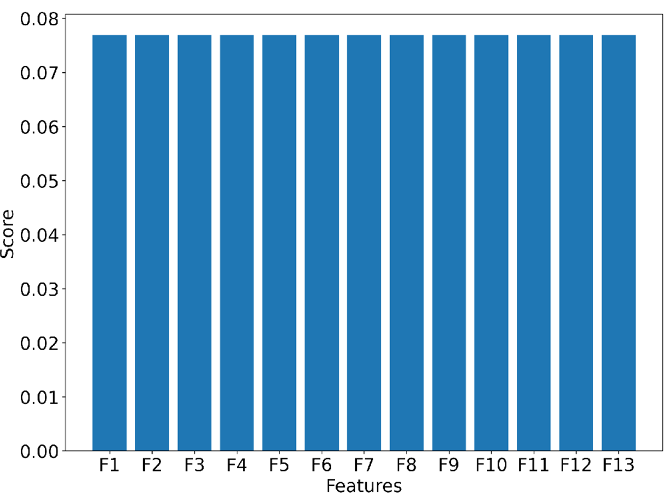 Figure 2: Feature importance across different models, highlighting how XGB highlights specific behavioral variables.
Deep Insight: Beyond Just "Playing"
The core of this research is the Inductive Bias that children learn better through interaction than through observation. By using ML to rank features, the authors move from "we hope this game works" to "we know which parts of this game drive results."
The regression analysis confirmed that the "Superhero" motif wasn't just aesthetic—it provided a psychological anchor that made kids feel empowered rather than fearful of the virus.
Conclusion & Future Work
COVID-Hero successfully bridged the gap between health science and child psychology. By using XGBoost to validate their survey results, the authors provided evidence that interactive media can effectively modify habits.
Limitations: The study relied on guardian-reported data rather than direct clinical observation of the children. Future Outlook: The researchers plan to integrate more Intelligent AI agents within the game to tailor the difficulty and educational content in real-time based on the child's performance.