
COVID-19 and the Social Media Lens: Engineering Smart Living in a Global Crisis
COVID and Social Media: Analysis of COVID-19 and Social Media Trends for Smart Living and Healthcare
This article provides a comprehensive survey and analysis of social media trends during the COVID-19 pandemic, focusing on methodologies like political opinion mining, sentiment analysis, and data veracity. It evaluates how technological advances in data science and mobile applications (e.g., contact tracing and recommendation systems) contribute to the paradigms of Smart Living and Healthcare.
TL;DR
This article serves as a high-level academic synthesis of how social media shifted from a mere networking platform to a critical healthcare instrument during the COVID-19 pandemic. By leveraging Opinion Mining, Sentiment Analysis, and Data Science, the researchers explore the mechanics of information flow, the architecture of trust, and the deployment of mobile technologies to facilitate "Smart Living" amidst a global catastrophe.
Problem & Motivation: The Infodemic and the Trust Gap
In previous outbreaks (like SARS 2002), the public relied on passive information reception (TV/Newspapers). In 2020, the paradigm shifted to an active, high-velocity data exchange. However, this brought three critical pain points:
- Systematic Bias: Data from Twitter or Weibo is often skewed by age, political affiliation, and geography.
- Echo Chambers: Social network structures often isolate communities, leading to the rapid spread of conspiracy theories.
- The Veracity Crisis: In an average daily generation of 2.5 exabytes of data, distinguishing between medical fact and "click-bait" news became a matter of life and death.
Methodology: The Analytical Toolkit
The authors analyze several frameworks used to parse this massive influx of unstructured text:
- Topic Modeling (LDA): Used to segment millions of tweets into distinct categories like "anti-quarantine sentiment" or "vaccine safety concerns."
- Sentiment Analysis: Utilizing Lexical tools like LIWC and TextBlob to quantify the emotional state of the public and politicians.
- FIDES (Framework for Integrative Data Equity Systems): An essential architectural contribution that addresses "feature equity," ensuring underrepresented groups (e.g., low-income families) are not marginalized in data-driven policy decisions.
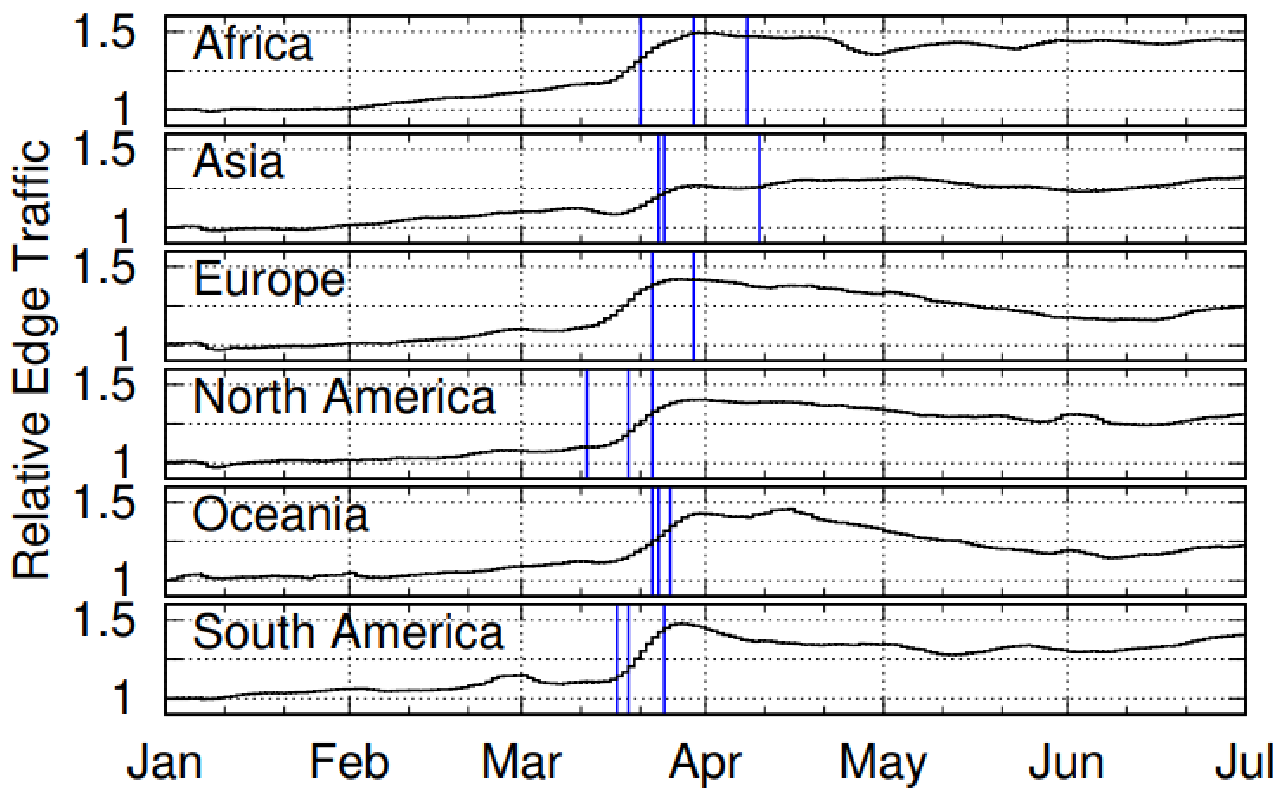 Fig 1: Spatio-temporal distributions of stress symptoms derived from social media mining.
Experiments & Results: Quantitative Insights
The study highlights several intriguing data points that challenge conventional wisdom:
- Source Credibility: Surprisingly, only 0.3% of influential tweets linked directly to medical journals. The public overwhelmingly prefers mainstream news outlets for health information.
- Political Communication: A computational analysis of US Governors' tweets showed that during the pandemic, political messaging became significantly more neutral and "vernacular-heavy" to maintain public focus on safety protocols.
- Regional Differences: Internet traffic growth through Facebook’s Edge Network showed that while developed nations' infrastructures were resilient, Sub-Saharan Africa and South America faced severe congestion, requiring video bit-rate capping.
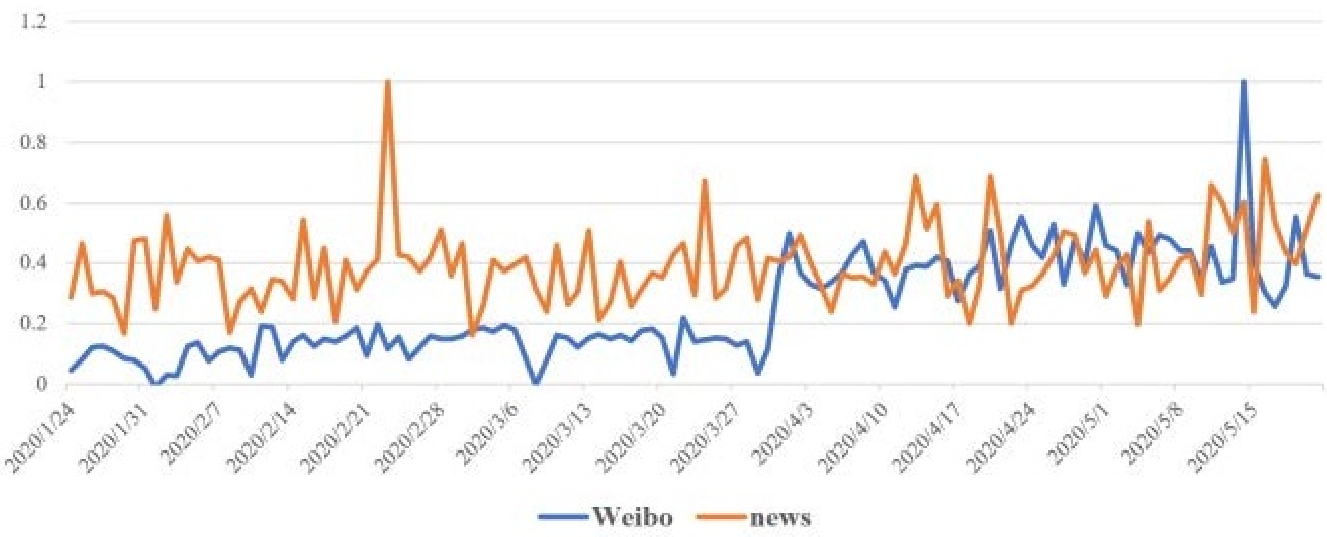 Fig 2: Comparison between public news sentiment and Weibo micro-blog posts, showing a lack of direct correlation.
Smart Living: From Social Metrics to Healthcare Apps
The paper bridges the gap between "Digital Sentiment" and "Physical Impact" by evaluating several Smart Living applications:
- SeVa: A food donation app leveraging HCI principles to combat hunger by connecting cafes with shelters.
- Aarogya Setu & COVID Alert NY: Contact tracing implementations using Bluetooth and GPS technologies.
- Health Essentials Recommenders: Systems using Artificial Neural Networks (ANN) to rank the safety and effectiveness of hygiene products (masks, wipes) based on Amazon review mining.
Critical Insight & Conclusion
The true value of this work lies in its definition of Smart Living as a intersection of Smart Governance and Healthcare. The authors argue that technology alone cannot curb a pandemic; it require a "Trust Infrastructure."
Limitations: The study acknowledges that Twitter's demographic skew limits the generalizability of some findings and calls for more robust "Real-time Surveillance" systems and better protection against cyber-security threats in a telecommuting-heavy world.
Future Outlook: As we enter the recovery phase, the integration of sentiment data into urban policy (Smart Cities) will be the next frontier. The web is no longer an optional utility—it is the indispensable backbone of global survival.