
PosdataP2P: Bridging the Gap Between Social Interaction and Digital Banking
Creating and Modelling Personal Socio-Economic Networks in On-Line Banking
The paper introduces PosdataP2P, an innovative on-line banking service that integrates social network interactions with financial transactions. By leveraging an ontology-based approach and the FOAF vocabulary, it creates a Personal Socio-Economic Network (PSEN) to model user behavior across social and banking domains.
TL;DR
As traditional banking faces disruption, the PosdataP2P project emerges as a middleware solution that transforms social media posts into financial transactions. By modeling these interactions using a Personal Socio-Economic Network (PSEN), the authors provide a framework for banks to understand users not just as account numbers, but as nodes in a dynamic socio-economic web.
The Problem: The "Silent" Data of Traditional Banking
Traditional banks often operate in silos. They know how much you spend, but rarely why or with whom in a social context. This lack of "social signal" makes it difficult to compete with tech giants who possess deep insights into user behavior. Furthermore, the barrier to entry for traditional services remains high for the "unbanked" population. The core challenge is: How can financial institutions capture the social context of money to drive better user engagement?
The Insight: Money as a Social Link
The researchers at the Center for Open Middleware (COM) realized that financial transactions are, at their heart, social interactions. Whether splitting a lunch bill or requesting a loan from a friend, money flows along social lines.
To capture this, they developed PosdataP2P, a service that:
- Monitors Social Channels: Listens for specific text patterns (e.g., "send 4.5€ to Alice").
- Semantic Modeling: Uses ontologies to turn "Observable Data" (a post) into "Inferred Knowledge" (a socio-economic relationship).
The Architecture of PSEN
The system relies on a multi-modular architecture designed to handle the friction between social APIs and banking core systems.
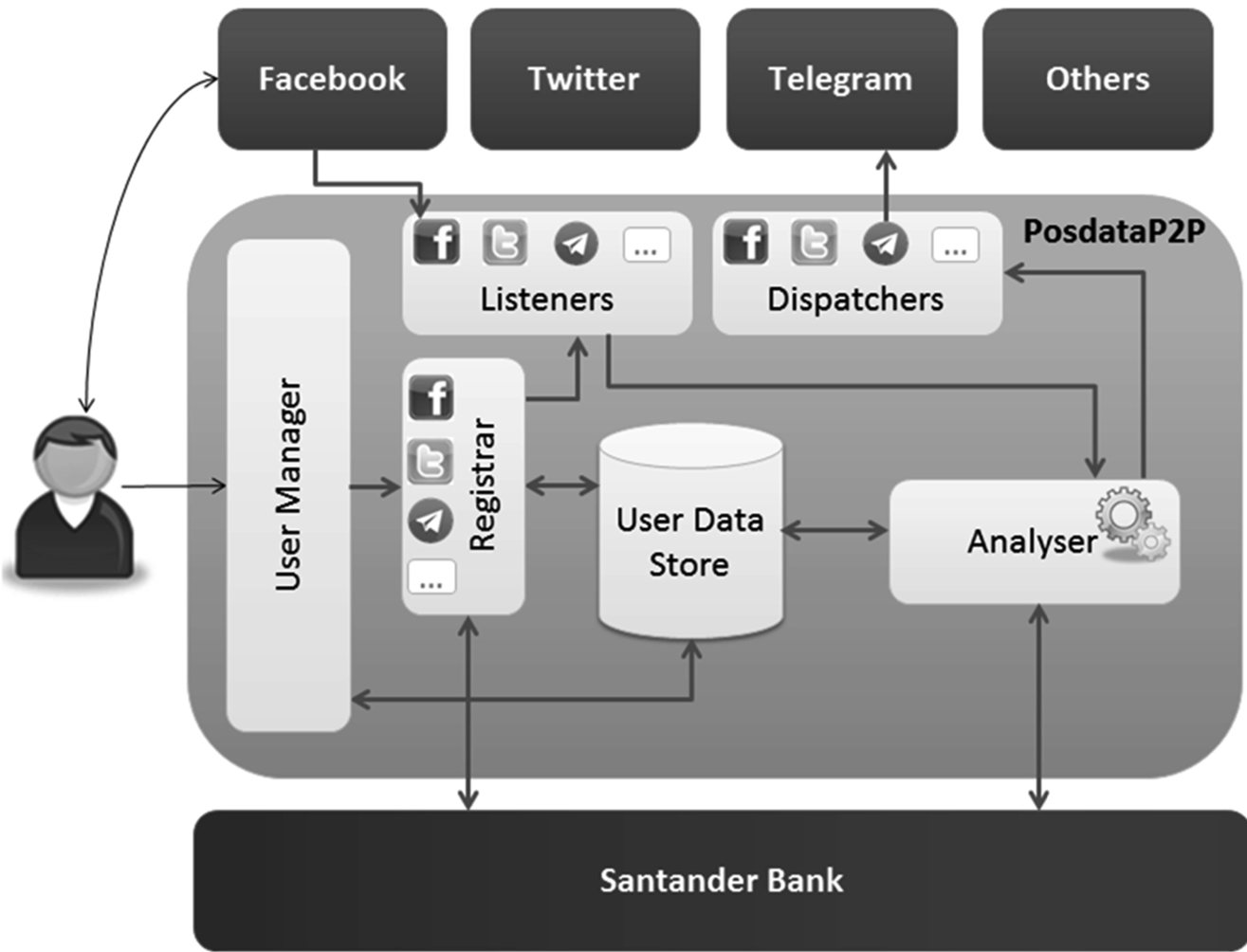 Figure 1: The PosdataP2P Architecture showing the Listener-Analyser-Registrar flow.
Methodology: Extending FOAF for Finance
The most significant technical contribution is the PSEN Ontology. Rather than reinventing the wheel, the authors extended the industry-standard FOAF (Friend of a Friend) ontology.
- The Person Class: Captures demographic data (age, gender, email).
- The EconomicActivity Class: A new addition that bridges two
Personinstances via aPaymentorDemand. - Property Mapping: It uses
initiatorandterminatorproperties to define the flow of capital, effectively turning a bank statement into a social graph.
User Interaction Flow
To maintain security and usability, the system employs a two-factor approach. A user posts a command on Facebook; the Listener detects it, and the Analyser triggers a confirmation request via a second secure channel.
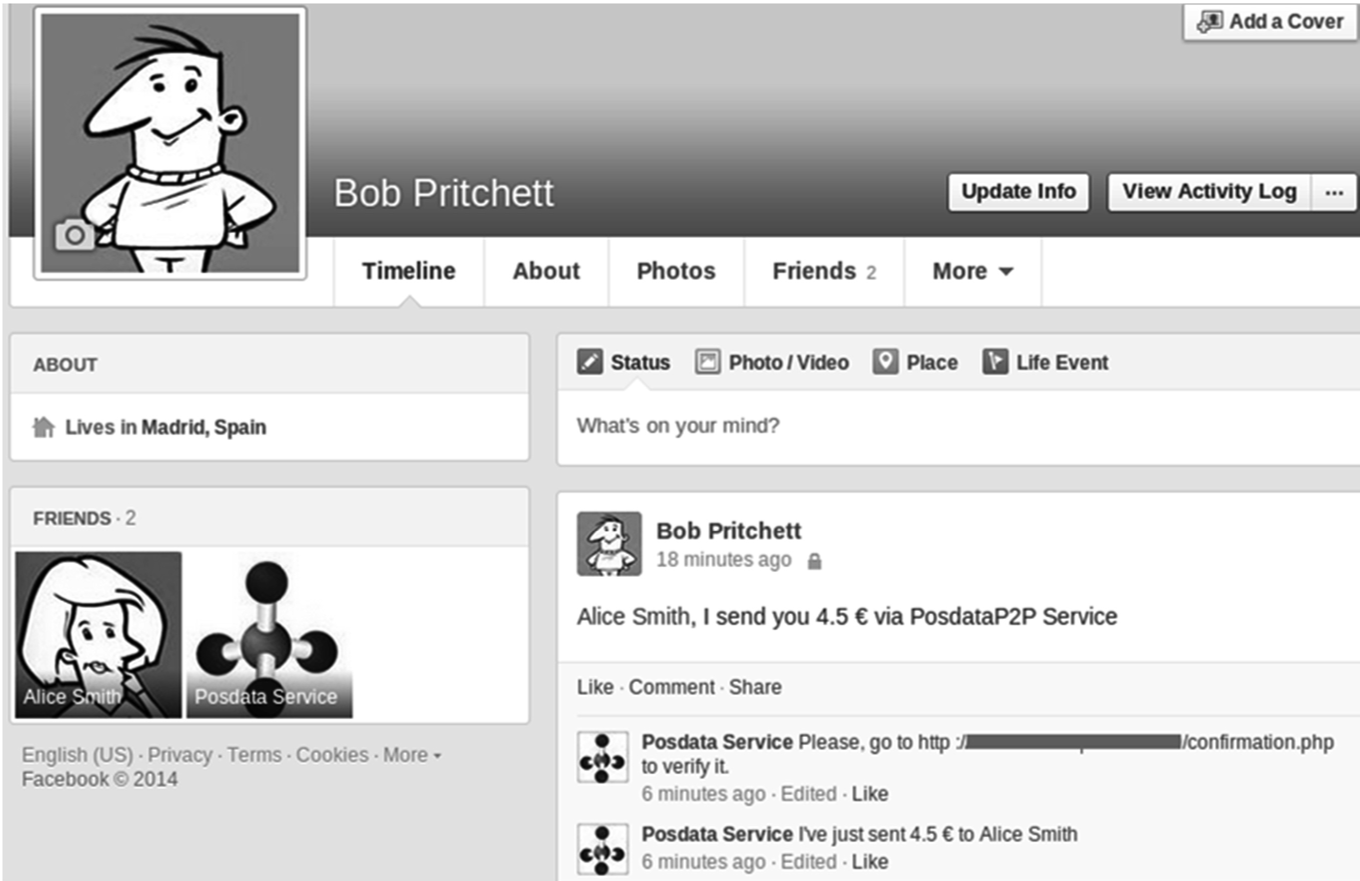 Figure 2: Workflow of a payment from Bob to Alice via Facebook, involving secondary authorization.
Experiments & Results: Real-world Integration
The prototype was integrated with the Santander University Smart Card (USC) ecosystem, which serves over 6 million users.
- Implementation: Built using Apache Jena (for RDF/OWL processing) and Protégé.
- Privacy-by-Design: The system limits data collection to the absolute minimum required for the transaction, utilizing OAuth 2.0 for authorization without ever seeing the user's social media credentials.
- Result: The system successfully demonstrated that social text-mining can serve as a viable trigger for regulated banking API calls, creating a "Personal Socio-Economic Network" that grows richer with every transaction.
Critical Analysis & Future Outlook
While the paper presents a robust framework for socio-economic modeling, there are inherent challenges:
- Platform Dependency: As noted by the authors, changes in Facebook's Graph API (like restricting friend lists) can significantly impact the "Listener" modules.
- NLP Limitations: The current system relies on "predefined patterns." Moving toward true Natural Language Understanding (NLU) would be necessary for a seamless "invisible" banking experience.
Takeaway: PosdataP2P proves that banking is no longer a destination but a feature of the platforms where users already spend their time. By applying semantic technologies to social streams, banks can transition from passive ledger-keepers to active participants in their customers' social lives.