
Social Network Honeypots: Turning the Tables on APT Reconnaissance
Creation and Management of Social Network Honeypots for Detecting Targeted Cyber Attacks
This paper introduces a systematic framework for creating and managing social network honeypots (artificial profiles) specifically designed to detect Advanced Persistent Threats (APTs) during the reconnaissance phase. By deploying realistic avatars on professional networks like LinkedIn and Xing, the authors successfully identified suspicious activities including fake profile requests and malicious payloads targeting an organization.
TL;DR
To combat targeted cyber attacks, researchers have developed a framework that creates "artificial employees" on professional platforms like LinkedIn. These social honeypots lure attackers during the reconnaissance phase, allowing organizations to detect incoming threats before they ever touch the corporate firewall. By integrating these bots into the social fabric of an organization, the researchers achieved high levels of trust and successfully trapped malicious actors.
The "Blind Spot" of Cyber Defense
Modern Advanced Persistent Threats (APTs) don't start with a hack; they start with a "Like" or a "Friend Request." Attackers use Professional Social Networks (OSNs) to map out organizational hierarchies, identifying key personnel for spear-phishing. Because this reconnaissance happens on third-party platforms, it creates a massive blind spot for traditional Intrusion Prevention Systems (IPS).
The author's premise is simple but bold: if attackers are using fake profiles to infiltrate us, we should use fake profiles to catch them.
Methodology: Engineering the Perfect "Social Lure"
The framework (shown below) is not just about creating fake accounts; it’s about a lifecycle of Social Deception.
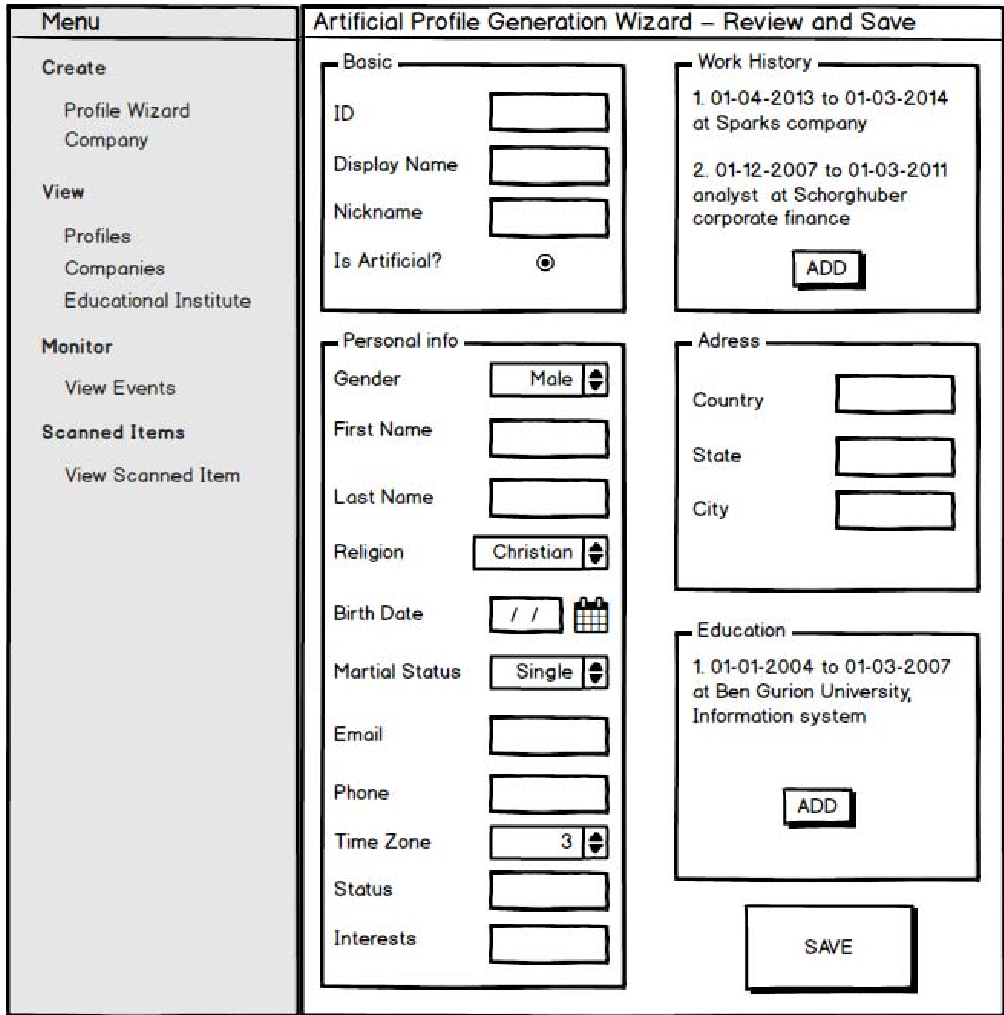
The system relies on five critical pillars:
- Social Network Acquisition: Crawling the target organization to understand its social structure.
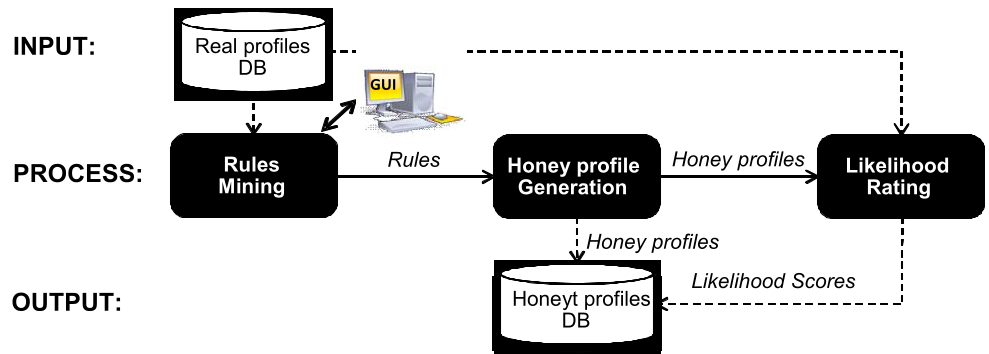
- HoneyGen (The Profile Generator): Using association rules to create "statistically plausible" employees—matching age, education, and career paths found in the real organization.
- The Wiring Algorithm: A strategic process of connecting the honeypots to "Collaborating Employees" first, then "Highly Connected" external users, and finally "Insiders." This builds the Inductive Bias of trust.
- Profile & Email Monitoring: Unified dashboards to track incoming messages and scan them for Zero-day exploits via VirusTotal integration.
Experimental Insights: What Makes a Bot Believable?
The researchers conducted an 8-month field trial within a large European organization, deploying 7 profiles on LinkedIn and Xing.
The "Credibility Gap"
The study proved that "Social Capital" is the primary currency of deception:
- The Gender Bias: Female profiles (e.g., USER_3) received significantly higher acceptance rates and more incoming requests than male counterparts.
- The Profile Picture Effect: Accounts with pictures saw a massive boost in acceptance (reaching ~93% on Xing) compared to those without.
- Survival: 100% of the honeypots survived the study period without being flagged by the OSNs' anti-bot algorithms, thanks to "deliberate limited interaction."
Detecting the "Red" Avatars
By monitoring incoming requests, the team identified "suspicious" profiles (Red Avatars) using a multi-phase investigation:
- Online Footprint: Searching for the sender's existence beyond the OSN.
- Vulnerability Scanning: Analyzing payloads. One suspicious profile sent a CV (PDF) that, upon analysis, contained unusual operating system calls—a clear indicator of an APT penetration attempt.
Critical Analysis & Conclusion
While the "Social Network Honeypot" framework is highly effective, it reveals a harsh reality: employees are dangerously trusting. With a 70% acceptance rate for total strangers, the human firewall remains the weakest link.
Limitations: The study highlights a significant operational hurdle—internal HR conflict. When a real employee couldn't find a honeypot in the internal corporate directory, they triggered an HR investigation, forcing the researchers to stop certain "insider" wiring.
The Takeaway for the Future: To be truly effective, social honeypots must be "Shadow Employees." This requires deep organizational alignment—adding these artificial agents to the official internal address book and involving HR in the defense strategy. In the future of cyber warfare, your most effective security officer might not be a human, but a statistically perfect, AI-managed profile sitting on LinkedIn.