
Breaking Borders: How Social Networks Transform Vocabulary Acquisition in OMLL
Creative interaction in social networks: Multi-synchronous language learning environments
This research evaluates the efficacy of an Online Mobile Language Learning (OMLL) course using WhatsApp and GRE applications for vocabulary acquisition. The study demonstrates that multi-synchronous interaction in social networks significantly enhances lexical knowledge compared to traditional face-to-face instruction. SOTA achievements include a statistically significant improvement in posttest scores with a high effect size (Partial Eta Squared = .54).
TL;DR
Mobile technology has evolved from a simple communication tool into a pervasive learning environment. A recent study by Mellati et al. demonstrates that integrating social network applications like WhatsApp into language courses—termed Online Mobile Language Learning (OMLL)—significantly outperforms traditional classrooms in vocabulary teaching. By leveraging "creative interaction," learners gain higher autonomy and achieve a 54% variance improvement in performance compared to conventional methods.
Background Positioning
In the landscape of Computer-Assisted Language Learning (CALL), this paper bridges the gap between theoretical social networking and practical classroom application. It moves beyond "what" apps can do to "how" they reshape the psychological and social dynamics of learning in developing educational contexts like Iran.
Problem & Motivation: The "Classroom Wall" Constraint
Traditional English as a Foreign Language (EFL) instruction often hits a wall the moment the student leaves the room. Key pain points include:
- Anxiety & Inhibition: Face-to-face eye contact and immediate teacher correction can create "debilitative anxiety," silencing shy learners.
- Static Interaction: Vocabulary is often taught through production-based activities rather than authentic, input-rich social exchange.
- Infrastructure Gap: In developing countries, expensive PC-based labs are often inaccessible, whereas Smartphones are ubiquitous.
The authors' primary insight is that because students already use Smartphones for recreational interaction, repurposing these devices for "Affinity Spaces" (as defined by Gee, 2004) can turn social scrolling into structured learning.
Methodology: The OMLL Framework
The researchers conducted a one-month experiment with 90 female learners (B1 level). The experimental group utilized a dual-app strategy:
- GRE Vocabulary App: Provided the "content" via digital flashcards and gamified tasks.
- WhatsApp: Served as the "interaction hub" for synchronous and asynchronous discourse.
Overall Architecture

The core of the method is Multi-Synchronous Interaction. Unlike a static forum, WhatsApp allows for:
- Immediate Feedback: Reducing the feedback loop duration.
- Peer Assessment: Students assess each other's sentences, fostering a "learner-centered" environment rather than a "teacher-led" one.
- Digital Confidence: Text-based interaction allows learners to "fix" their production before sharing, reducing the fear of making errors.
Experiments & Results: Quantitative Proof
The study used a one-way ANCOVA to control for the students' initial knowledge (pretest).
SOTA Comparison
The results were definitive. The OMLL group achieved a significantly higher mean on the posttest compared to the control group.
| Group | Adjusted Mean (Posttest) | Std. Error |
|---|---|---|
| Experimental (OMLL) | 26.97 | 0.306 |
| Control (Conventional) | 22.52 | 0.306 |
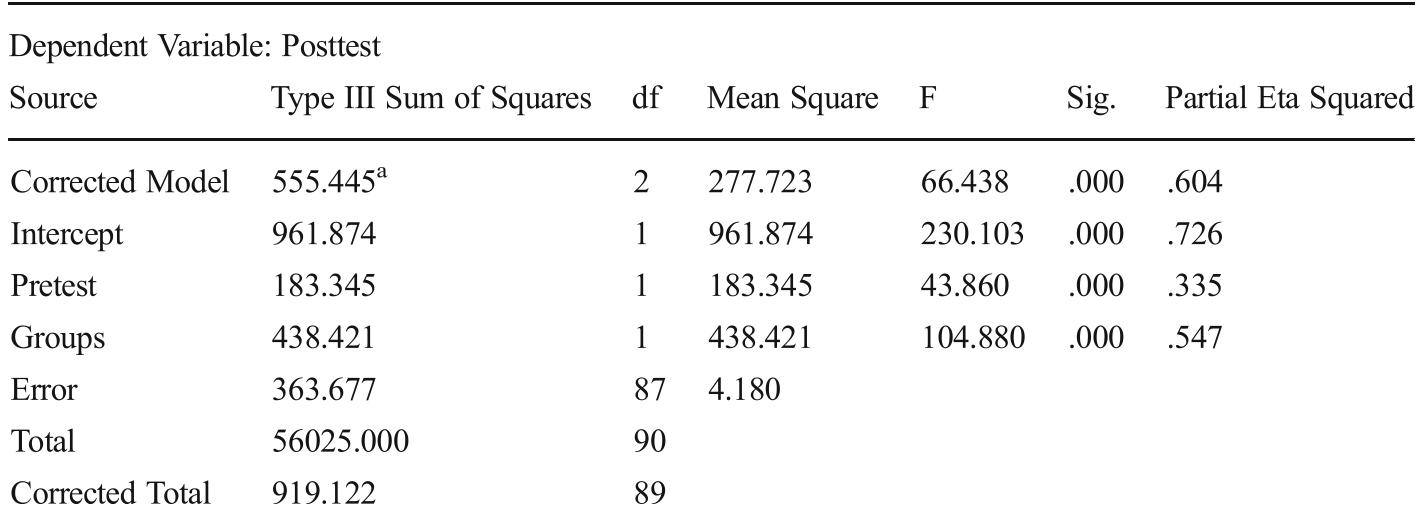
With a Partial Eta Squared of .547, the intervention had a "large effect size," proving that the OMLL method was the primary driver of the lexical gains.
Qualitative Insights: Why It Works
Through semi-structured interviews, the authors identified several "hidden" drivers of success:
- Reduced Affective Filter: Students felt less "ashamed" of errors online.
- Adaptability: Learners could access materials at their own pace, accommodating individual differences that are usually ignored in a one-size-fits-all lecture.
- Ubiquity: Learning happened during daily "micro-moments" (on the bus, at home) rather than being confined to a 60-minute session.
Critical Analysis & Conclusion
Takeaway
OMLL isn't just a supplement; it's a paradigm shift. By moving vocabulary acquisition into the social sphere, we align pedagogical goals with the natural digital behavior of the modern "hi-tech" learner.
Challenges & Limitations
Despite the success, the paper identifies critical bottlenecks:
- The "Double-Edged Sword" of Freedom: Without a planned curriculum, learners can easily be distracted by the social/recreational aspects of their phones.
- ICT Literacy: The effectiveness of OMLL is capped by the technological literacy of both teachers and parents.
- Cultural Trust: There is still a prevalent "lack of trust" regarding the privacy and academic validity of social media learning in conservative educational settings.
Future Outlook
The next frontier for this research involves exploring how mobile social networks can be used for State-Space Model (SSM) style adaptive learning, where the app predicts which words a student is likely to forget and re-injects them into the social feed.
Final Verdict: A foundational study demonstrating that for today's students, the "screen" is a more effective bridge to knowledge than the "chalkboard."