
CrysP: Automating the Fabric of Our Social Presence Through Activity Fusion
CrysP: Multi-Faceted Activity-Infused Presence in Emerging Social Networks
This paper introduces Crystal Presence (CrysP), a framework that fuses context-aware activity analysis with multi-faceted social presence. By leveraging a suite of wearable and environmental sensors, the CrysPSys prototype automates the detection of simultaneous user activities and intelligently disseminates tailored status updates across diverse social platforms like Facebook, LinkedIn, and Twitter.
TL;DR
CrysP (Crystal Presence) is a proactive system that senses what you are doing—whether it's "writing a thesis" or "baking a cake"—and automatically updates your status across different social networks. By treating a user's presence like a multi-faceted crystal, it shares professional updates to LinkedIn and personal ones to Facebook simultaneously, reducing manual overhead and enhancing real-time connectivity.
The "Update Fatigue" Problem
In our hyper-connected world, we navigate multiple social identities. We are professionals on LinkedIn, friends on Facebook, and niche enthusiasts on specialized blogs. However, keeping these "statuses" updated is a manual, distracting task.
Existing systems like CenceMe or simple IM "Rich Presence" often provide a one-size-fits-all update (e.g., "John is walking"). This lacks granularity and contextual sensitivity. Why should your boss see that you are "listening to Pink Floyd" if you are also "writing a project report"? CrysP argues that presence should be multi-faceted and activity-infused.
Methodology: How CrysP "Understands" You
The CrysPSys architecture functions through three sophisticated layers that move from "raw data" to "social meaning."
1. The Sensing Component
The system doesn't rely on a single source. It aggregates data from:
- Wearable Sensors: Accelerometers (Mulle v3) for physical motion.
- Environment Sensors: RFID tags on objects (like coffee mugs or laptops) to detect interaction.
- Software Hooks: Monitoring active applications (Word, Eclipse) and URL headers to distinguish "studying" from "browsing."
2. CrysP Determination (The Brain)
This layer uses a Decision Tree (J48) for low-level motion and the Context Spaces Model for high-level reasoning. The core innovation is the Activity-Presence Ontology. It doesn't just see "sitting"; it sees "sitting + Library + Word Document = Studying for Exam."
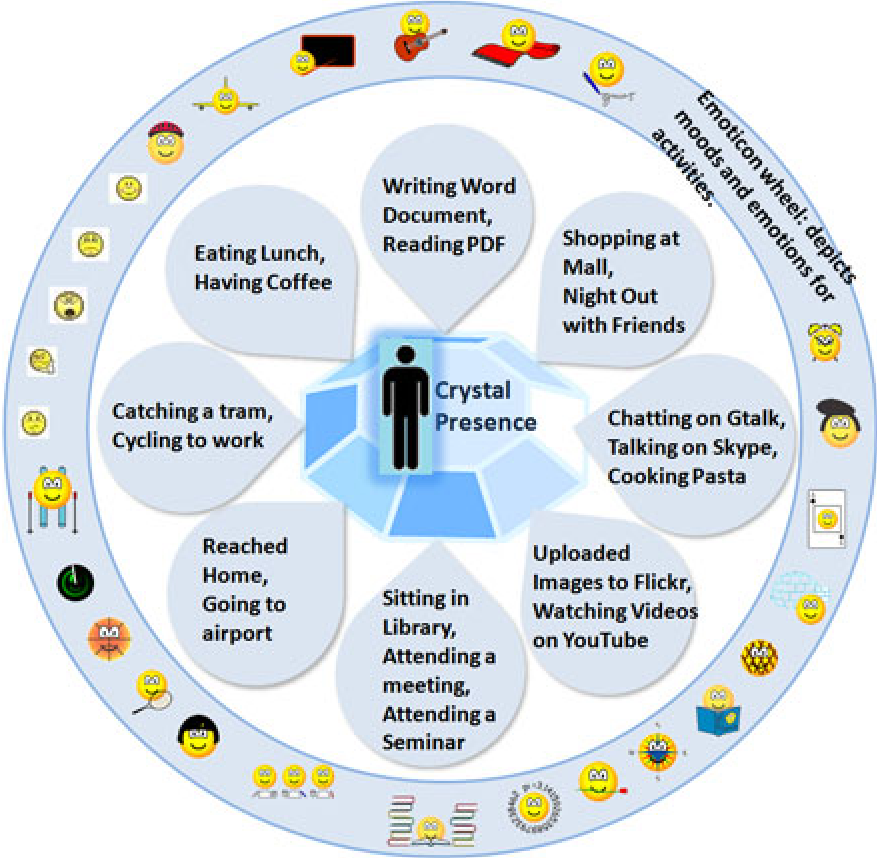 Figure 1: The concept of multi-faceted presence where different activities represent different faces of a crystal.
3. The Sharing Component (The Filter)
This is where the privacy and relevance logic lives. Using a Presence-Sharing Ontology, the system classifies which activity facet belongs to which "Audience."
- Work Facet -> LinkedIn / Skype
- Personal Facet -> Facebook / GTalk
- Public Facet -> Twitter
Experimental Results & Prototype
The authors validated the system with a student-life scenario. Using a waist-mounted sensor and a wrist-mounted RFID reader, they achieved over 92% accuracy in basic activity recognition.
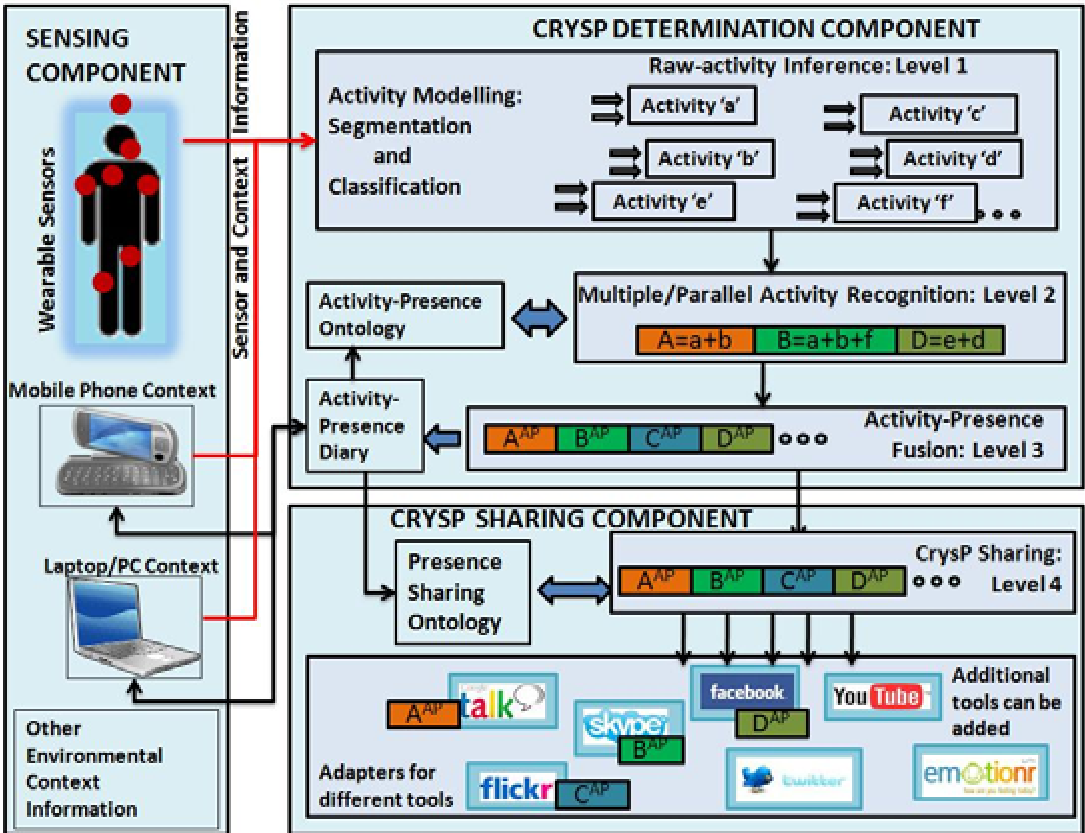 Figure 2: The tripartite architecture of CrysPSys showing the flow from sensing to semantic sharing.
The prototype successfully demonstrated that a user could be "Cooking Pasta" and "Reading References" simultaneously, with the system splitting these truths across the appropriate social channels without any manual input from the user.
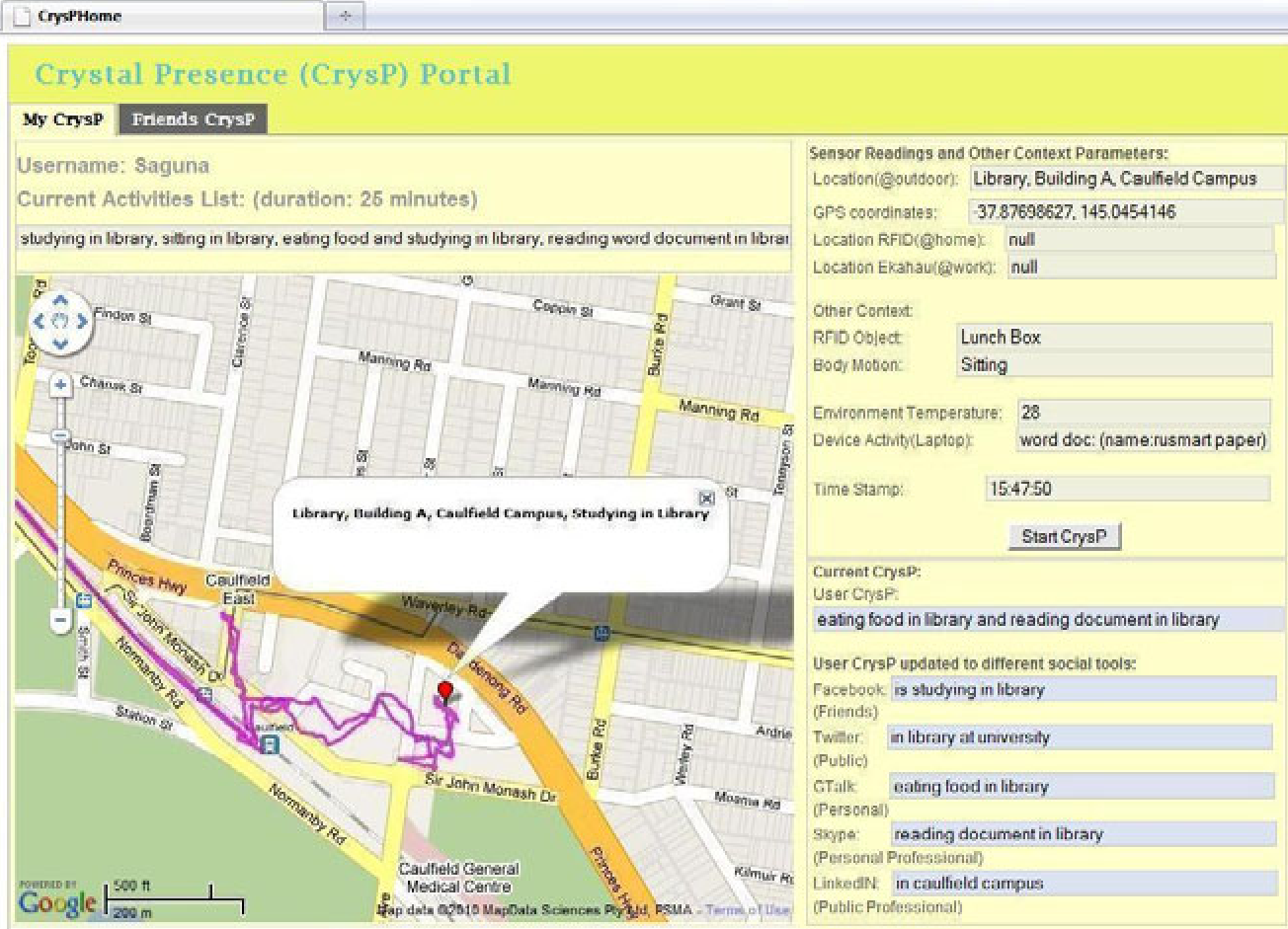 Figure 3: The CrysP Web-GUI tracking user path, activity, and environmental context.
Deep Insight: Beyond Just "Status Updates"
The real value of CrysP isn't just saving a few seconds on a Facebook post. It’s about Ambient Awareness:
- Energy Efficiency: As seen in "Scenario A," if a smart home knows you are "stuck in a meeting" or "stuck in traffic," it can delay the oven or heater, saving electricity.
- Cognitive Load: By automating updates, it prevents the distraction of "documenting life," allowing the user to simply "live it."
- Relationship Management: It allows for a more nuanced digital presence that mirrors our real-world complexity—where we are many things to many people, all at once.
Limitations and Future Outlook
While the accuracy for physical motion is high, the semantic "leap" from object interaction to complex intent (e.g., distinguishing "reading for fun" vs. "reading for work") still requires robust ontologies and occasional user feedback. Future iterations aim to move the heavy computation from laptops to mobile devices, though battery life remains a significant hurdle.
CrysP represents a pivotal step toward Passive Communication, where our environment speaks for us, allowing us to stay connected without staying "plugged in."