
Decoding the Cultural DNA of Social Networks: Why One Size Doesn't Fit All
Cross-Cultural Analysis of Social Network Services in Japan, Korea, and the USA
This paper presents a cross-cultural analysis of Social Network Services (SNS) across Japan, South Korea, and the USA. By mapping Geert Hofstede’s cultural dimensions onto five core user-interface (UI) components, the authors identify systemic design patterns that explain why platforms like MySpace or Facebook often struggle to gain traction in Eastern markets compared to local SOTA services like Mixi or Cyworld.
TL;DR
Why did MySpace conquer America but vanish in Japan? This paper argues that the secret lies in Cultural Dimensions. By analyzing SNS platforms in the USA, Japan, and Korea, the authors demonstrate that UI design is never neutral—it is a reflection of a society's values regarding power, individuality, and risk.
The "Glitch" in Global Design
In the world of Human-Computer Interaction (HCI), there is a persistent myth that "good design" is universal. However, the data proves otherwise. MySpace’s "cluttered" layout was a badge of individuality for Americans, yet it failed to resonate with Japanese users who preferred the structured anonymity of Mixi. The authors suggest that failing to account for cultural Inductive Bias leads to products that feel alien or even intrusive to local users.
Methodology: The 5x5 Culture-UI Matrix
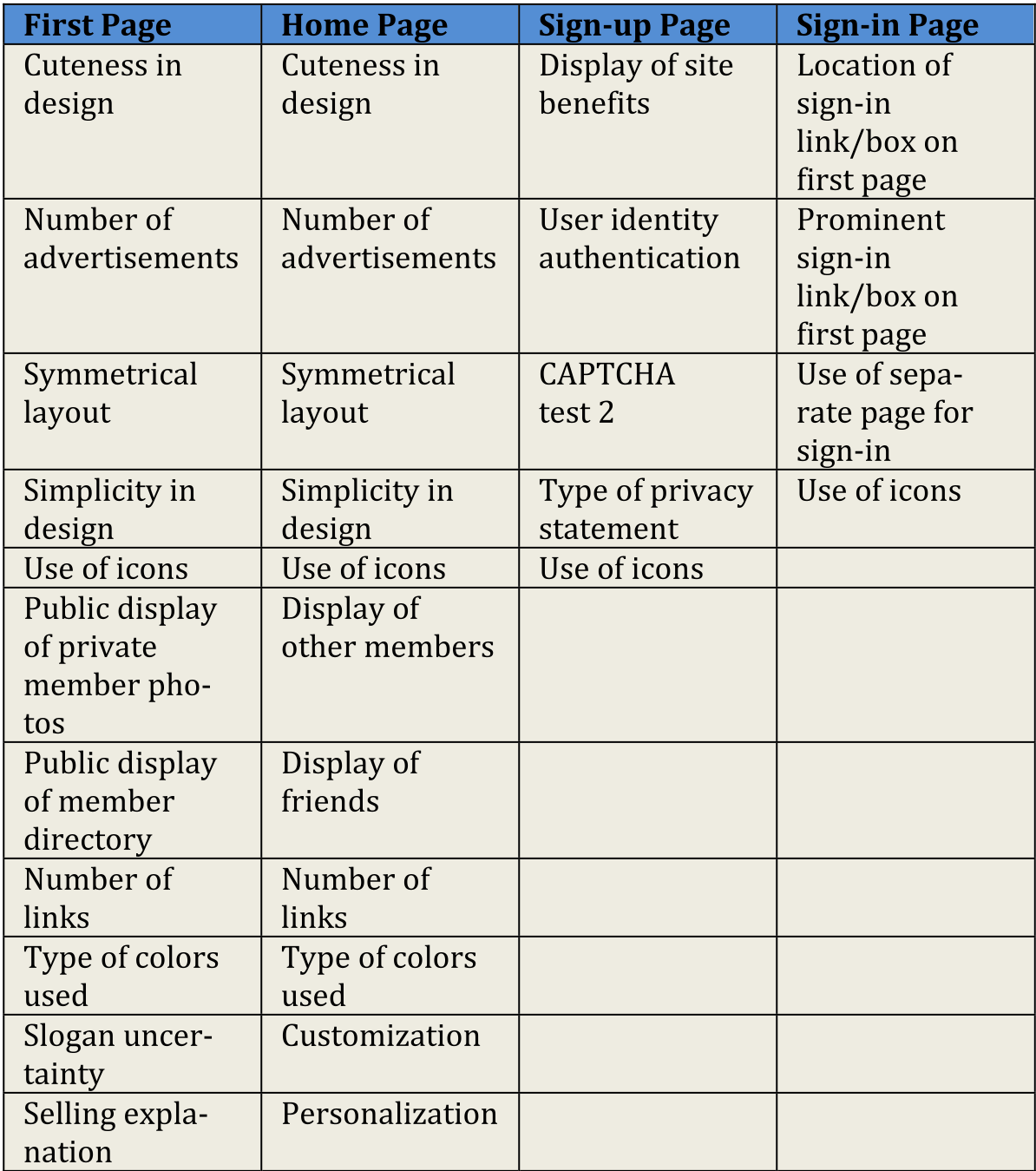
The researchers mapped Hofstede’s Cultural Dimensions against five pillar components of User Interfaces. This created a framework to explain "Why" certain features exist:
- Metaphors: Concepts like "Friends Lists" (Action-oriented, USA) vs. Private Circles (Content-oriented, Japan).
- Mental Models: How users perceive strangers (e.g., Facebook’s "People You May Know" creates uncertainty that High Uncertainty Avoidance cultures like Korea might find jarring).
- Navigation: The friction of sign-up (High Power Distance South Korea requires credit card/SMS verification; Low Power Distance USA allows easy impersonation).
- Interaction: User control vs. prescribed paths.
- Appearance: The visual "vibe"—colors, symmetry, and the use of "cute" icons.
Key Insights: Faces vs. Avatars
One of the most striking findings concerns the Individualism vs. Collectivism axis.
- USA (High Individualism): Users strive to be unique. Profiles feature real names and high-quality personal photos.
- Japan (Collectivism): Users prefer not to stand out. On Cyworld Japan, profile pictures are frequently replaced by animals, toys, or celebrities to maintain a "discreet" social presence.
 Fig 3: The contrast between the self-expressive American profile and the representative Japanese avatar.
Visual Harmony and Uncertainty Avoidance
The study also highlights how Uncertainty Avoidance dictates layout. American sites like LinkedIn often use asymmetrical, "floating" designs that prioritize content density. Conversely, Korean sites like Linknow utilize highly structured, symmetrical tab headers and prominent sign-in boxes to minimize navigational ambiguity.
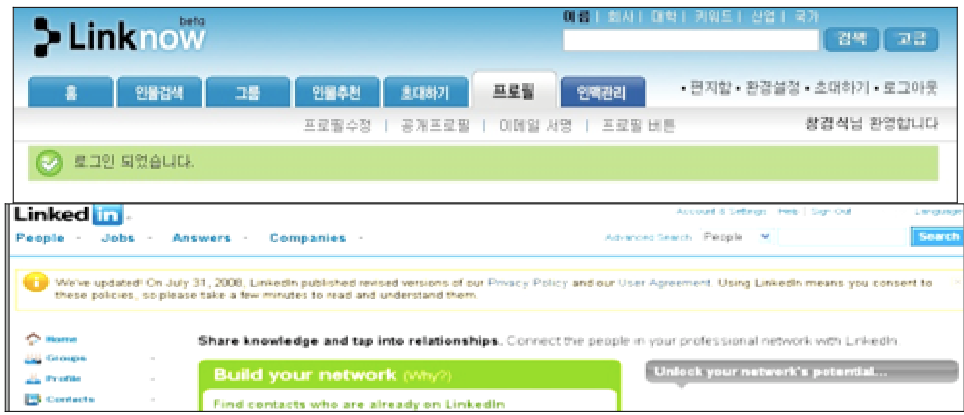 Fig 7: Symmetrical (Linknow, Korea) vs. asymmetrical (LinkedIn, USA) design structures.
Conclusion: Beyond Translation
The primary takeaway is that Localization involves more than just translating strings. Mark Zuckerberg’s insistence on "real names" as a selling point was a fundamental misunderstanding of Japanese cultural preferences for anonymity. For a digital product to thrive globally, it must mirror the cognitive scaffolding of its target audience—respecting their specific needs for security, identity, and social hierarchy.
Limitations: The study notes that emerging markets (like China) are seeing a shift in youth values that may contradict traditional long-term orientations, suggesting that culture is dynamic, not static.