Digital Proximity: How Geographical Distance Shapes Our Crisis Vocabulary
Cross-Cultural Reactions to Crisis Events via Language and Emoticon Use
This study applies Construal Level Theory (CLT) to analyze 2 million tweets following the 2015 Paris attacks. It discovers that geographical distance significantly influences linguistic concreteness and emoticon usage, utilizing information entropy to quantify cross-cultural reactions to crisis events.
TL;DR
Does the internet actually make the world "smaller"? This research analyzes 2 million tweets from the 2015 Paris attacks to prove that even in a hyper-connected world, our physical distance from a tragedy fundamentally changes how we talk about it. People closer to the event use more concrete, diverse language and specific emoticons, while those further away resort to abstract concepts and repetitive clichés like "thoughts and prayers."
Background: The Illusion of Immediacy
We often hear that social media has annihilated distance. When a crisis strikes, the world watches in real-time. However, this study challenges that notion by applying Construal Level Theory (CLT). CLT suggests that "psychological distance" (whether spatial, temporal, or social) dictates how we mentally represent events. Proximal events are viewed "concretely" (the how), while distal events are viewed "abstractly" (the why).
Methodology: Entropy and Concreteness
The researchers curated a dataset of 2 million tweets using hashtags like #ParisAttacks. They focused on two balanced subsets of English-language tweets: within-France and outside-France.
Two primary metrics were used:
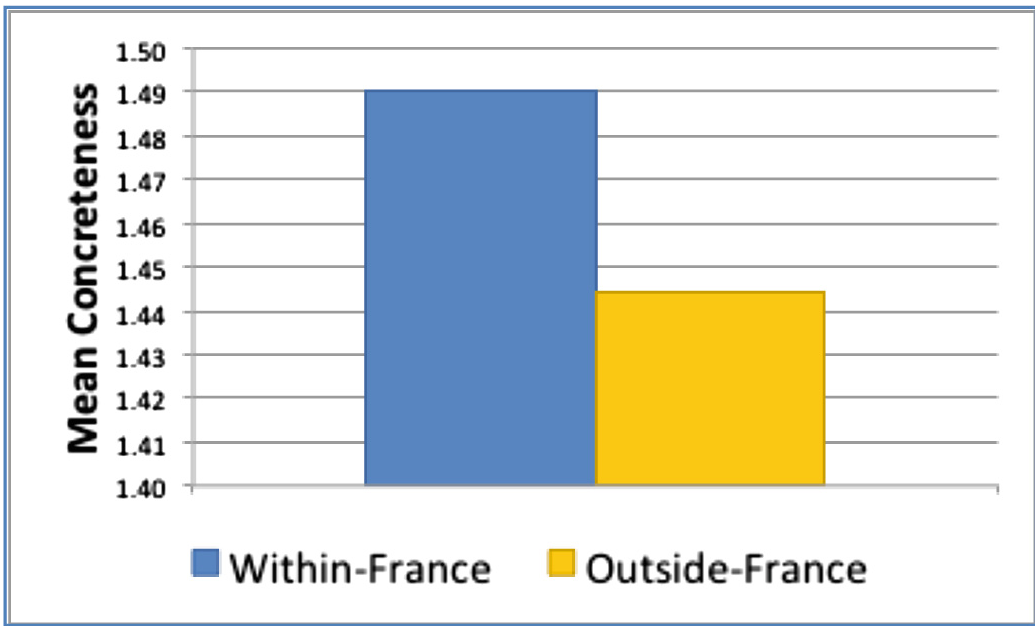
- Concreteness Ratings: Using a lexicon to score words on a scale of 1-5 (e.g., "heart" is concrete; "love" is abstract).
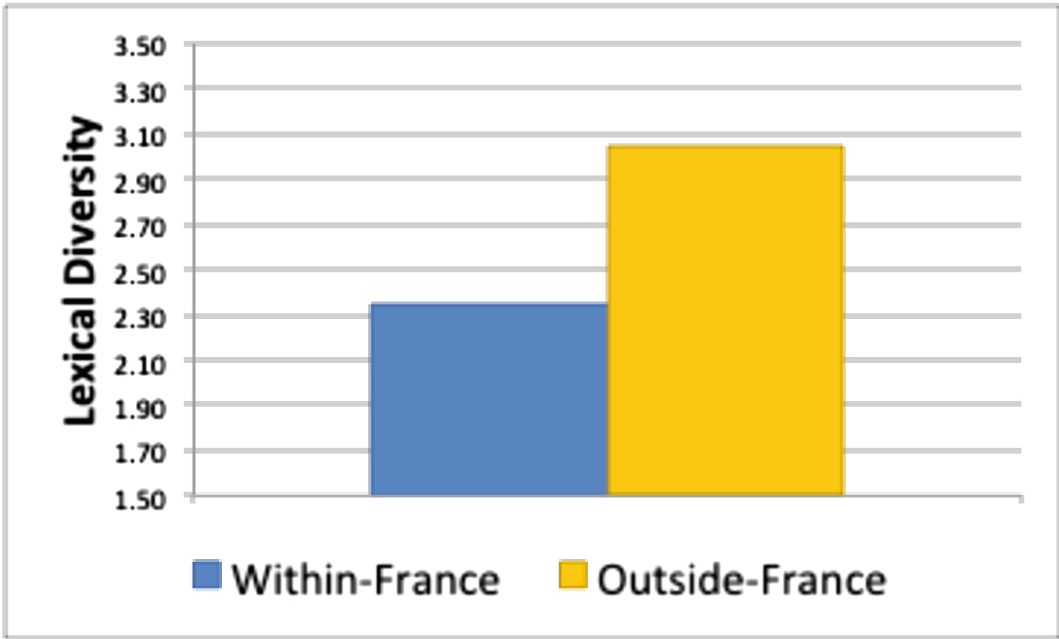
- Information Entropy: A measure of lexical diversity. High entropy means a varied vocabulary; low entropy suggests redundant, repetitive word choices.

Core Insights: The "Language" of Distance
1. The Concrete vs. Abstract Trade-off
The study found a fascinating reversal in lexical diversity based on location.
- Inside France: Users displayed higher lexical variation in concrete words. This indicates they were describing specific, perceptible details of the unfolding situation.
- Outside France: Users showed higher variation in abstract words. They were more likely to discuss the "meaning" of the event or general sentiments.
2. Emoticons as Paralinguistic Gestures
The use of non-verbal symbols (emojis/emoticons) also differed significantly. Within-France tweets were 57% more likely to contain emoticons (11% vs 7%).
However, the diversity of these emoticons was lower for those in France. They converged on a few specific symbols of grief and shock (:(, :/, =(), suggesting a shared, intense emotional state. In contrast, those outside France used a wider variety of symbols but with less frequency, reflecting a more "detached" emotional processing.
3. "Prayers" vs. "Crying"
The co-occurrence of words with the ☹ emoji revealed a striking cultural divide:
- Outside France: High frequency of "prayers," "thoughts," and "thanks."
- Within France: High frequency of "crazy" and "crying."
This suggests that while the "out-group" offers social support through abstract concepts, the "in-group" is focused on the immediate, visceral experience of the crisis.
Critical Analysis & Conclusion
This paper provides robust empirical evidence that geographical distance remains a primary filter for human experience, even on platforms designed to bridge that gap.
Limitations: The study focuses only on English-language tweets. A cross-lingual analysis (comparing French-language tweets from France vs. French-language tweets from Quebec) would further isolate the effect of "geography" from "culture."
Takeaway: For crisis management and social monitoring, understanding that "distance = abstraction" is vital. Local reactions provide the "ground truth" of concrete experience, while global reactions provide the "thematic" interpretation of the event.