
EmotionCLIP: Bridging the Gap Between Brain Waves and Language for Robust Emotion Recognition
Cross-Domain EEG-Based Emotion Recognition with Contrastive Learning
This paper introduces EmotionCLIP, a novel multimodal framework that reformulates EEG-based emotion recognition as an EEG-text matching task using a contrastive learning paradigm. By integrating a specialized SST-LegoViT backbone with a pre-trained CLIP text encoder, the model achieves state-of-the-art cross-subject accuracies of 88.69% (SEED) and 73.50% (SEED-IV).
TL;DR
EmotionCLIP is a breakthrough framework that treats EEG emotion recognition as a vision-language matching problem rather than simple classification. By mapping complex, 4D EEG signals into a shared semantic space with textual emotion descriptions, it achieves a new SOTA in cross-subject and cross-time generalization, hitting 88.69% accuracy on the SEED benchmark.
Problem & Motivation: The "Individual" Barrier
The "holy grail" of affective computing is a system that understands emotions across different people. However, EEG signals are notoriously "messy"—they change based on a person’s scalp thickness, electrode placement, and even their mood on a different day (non-stationarity).
Previous approaches tried Domain Adaptation (aligning person A's data to person B's), but this is like trying to align two constantly shifting clouds. The authors' insight is brilliant: Why not align brain waves to a stable anchor? Textual labels like "Happy" or "Sad" carry universal semantic meaning. By using a pre-trained CLIP text encoder as a compass, the model can project noisy EEG data onto a stable linguistic map.
Methodology: The SST-LegoViT Architecture
To make this mapping work, the EEG signals need to be processed with extreme precision. The authors propose the SST-LegoViT (Spatial-Spectral-Temporal Lego Vision Transformer).
1. 4D EEG Representation
Instead of treating EEG as a 1D wave, they transform it into a 4D tensor: Time × Frequency × Height × Width. This captures the "where" (spatial), "what speed" (spectral), and "when" (temporal) of brain activity.
2. Multi-Scale & Feature Fusion
- Spatial Multi-scale Encoder: Replaces the standard FFN in Transformer blocks with parallel 1x1, 3x3, and 5x5 convolution kernels to capture brain activity at different resolutions.
- Legoformer: A specialized module that fuses Differential Entropy (DE) and Power Spectral Density (PSD). It uses cross-attention where DE acts as the primary "context" to guide the inclusion of auxiliary PSD info.
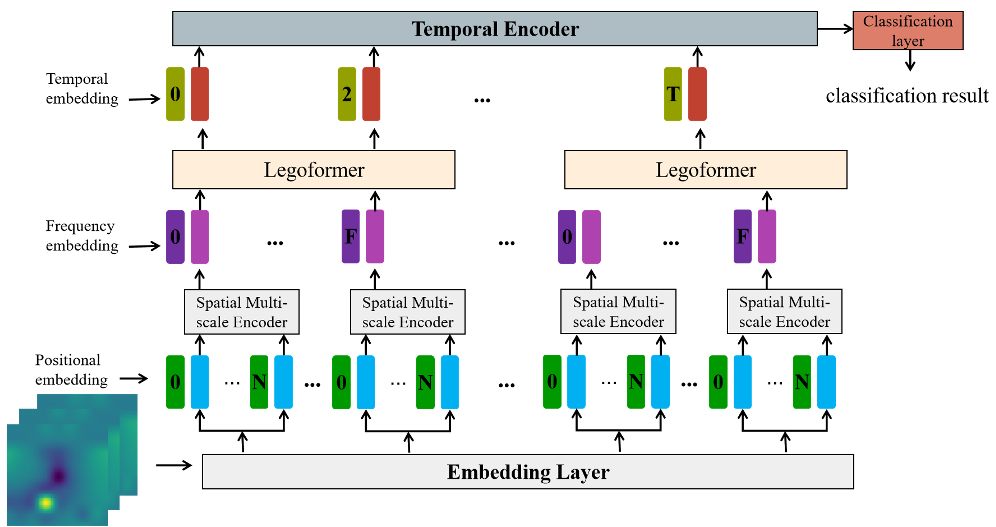 Fig 1. The EmotionCLIP Framework: Matching EEG embeddings with frozen CLIP text embeddings.
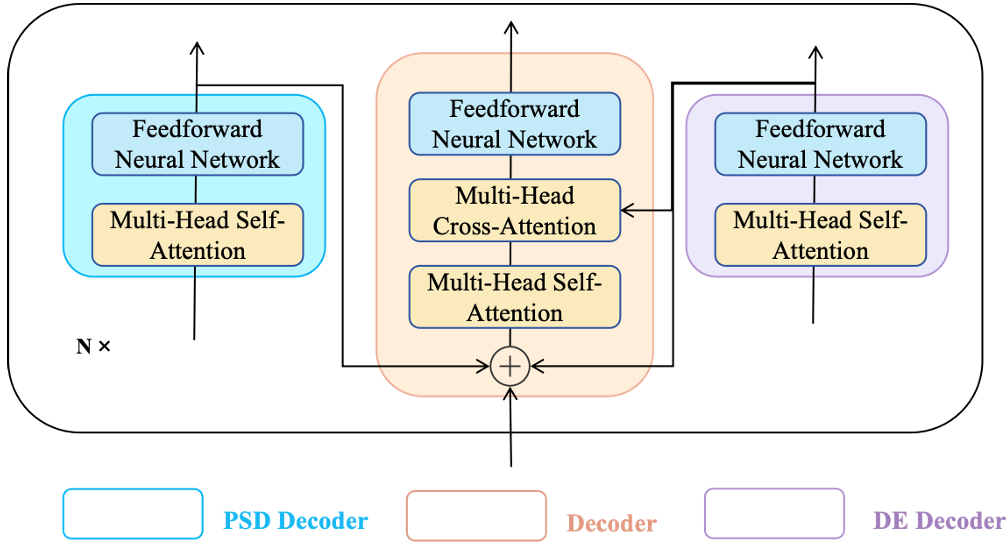 Fig 2. LegoFormer: Fusing spectral features via cross-attention.
Experiments & Results: Setting a New SOTA
The model was tested against rigorous Leave-One-Subject-Out (LOSO) protocols, which is the most challenging "real-world" test for EEG.
- Cross-Subject (SEED): EmotionCLIP achieved 88.69%, beating the previous best (MSFR-GCN) by nearly 2%.
- Cross-Time Stability: Even when trained on session 1 and tested on session 3 (days apart), the model maintained high performance (~88%), proving it doesn't just memorize specific session noise.
The Power of Few-Shot
Interestingly, while the model has zero-shot capabilities, its accuracy jumps significantly with just 32 samples (32-shot). This suggests that while the linguistic space provides a great starting point, a small amount of "brain-tuning" is essential to bridge the gap between abstract language and biological signals.
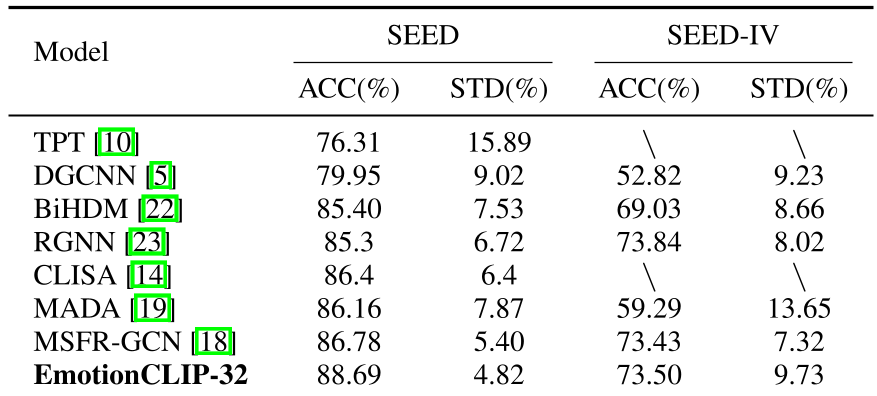 Table 1. EmotionCLIP-32 outperforms SOTA baselines across multiple datasets.
Critical Analysis & Conclusion
Takeaway
EmotionCLIP proves that Contrastive Multimodal Learning is not just for images and text. By using the rich semantic priors of LLM-based text encoders, we can regularize biological signals that are otherwise too variable to model effectively.
Limitations & Future Work
- Backbone Size: While called "lightweight," the 4D convolution and Transformer stack still require significant compute compared to simple RNNs.
- Text Prompting: The performance is sensitive to the 16 templates used. Future work could explore Learnable Prompts (Prompt Tuning) specifically for neural signals.
- Label Granularity: Current datasets focus on discrete emotions (Happy, Sad). The next step is applying this to the Valence-Arousal continuous space.
EmotionCLIP marks a significant step toward "universal" brain-computer interfaces that don't need hours of calibration for every new user.