
Printable Strings: The Semantic Bridge for Cross-Platform IoT Malware Classification
Cross Platform IoT-Malware Family Classification Based on Printable Strings
The paper introduces a cross-platform IoT malware family classification method using printable strings as the primary feature. Leveraging static analysis and a novel feature selection scheme (DFrank), it achieves 99% accuracy on same-platform tests and 96-98% accuracy across heterogeneous CPU architectures like ARM, MIPS, and X86.
TL;DR
As the IoT ecosystem expands, malware is no longer confined to a single architecture; it spreads across ARM, MIPS, X86, and more. This paper presents a breakthrough static analysis method using printable strings that achieves a staggering 98% accuracy in cross-platform classification. By focusing on human-readable artifacts rather than architecture-specific opcodes, the researchers have created a lightweight, highly generalizable defense mechanism.
The Heterogeneity Headache: Why Current Detection Fails
Detecting malware in the IoT world is a nightmare of diversity. A single malware family, like Mirai, is compiled for dozens of different CPU architectures.
- The Opcode Trap: Most static analysis relies on opcodes. However, an
ADDinstruction on ARM looks nothing like anADDon MIPS. Models trained on one fail on the other. - The ELF Dilemma: ELF headers change based on the target machine, leading to poor generalization.
- Dynamic Bottlenecks: Running malware in sandboxes (dynamic analysis) is slow and often impossible for resource-constrained IoT devices or obscure architectures.
Methodology: Seeing the Forest, Not the Opcodes
The researchers' core insight is that while machine code changes per platform, the logic and intent (often reflected in API calls, function names, and hardcoded strings) remain remarkably stable.
1. Feature Extraction: PSI and SLF
The system extracts two types of vectors:
- String Length Frequency (SLF): A distribution of how many strings fall into specific length bins.
- Printable String Information (PSI): A binary presence-absence vector of specific unique strings.
2. The DFrank Selection Mechanism
With over 14 million initial strings, the "noise" is deafening. The authors proposed DFrank, a hybrid scoring system:
- Entropy Reward: It prioritizes strings that appear consistently across multiple architectures.
- Discrimination Reward: It prioritizes strings that are unique to a specific malware family.
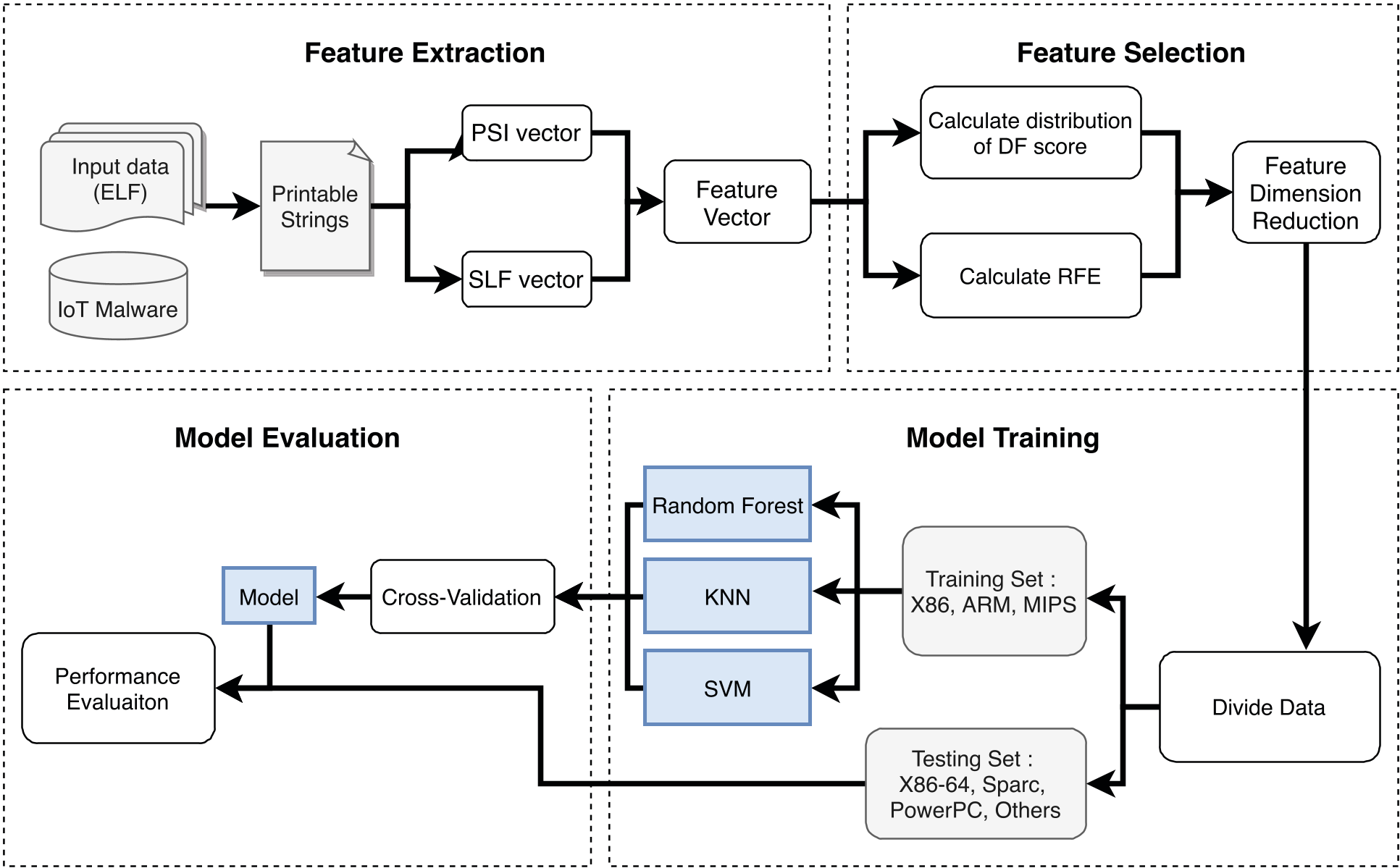 Figure 1: The proposed workflow from binary extraction to family classification.
Experiments: Superior Generalization
The researchers tested their model by training on common platforms (X86, ARM, MIPS) and testing on "unseen" platforms (SPARC, PowerPC, etc.).
The Death of Opcode-Based Models
The results were conclusive. When moving to a different architecture, the Opcode-based model’s accuracy plummeted to roughly 32.8%. The proposed string-based model, however, stayed rock-solid at 98%.
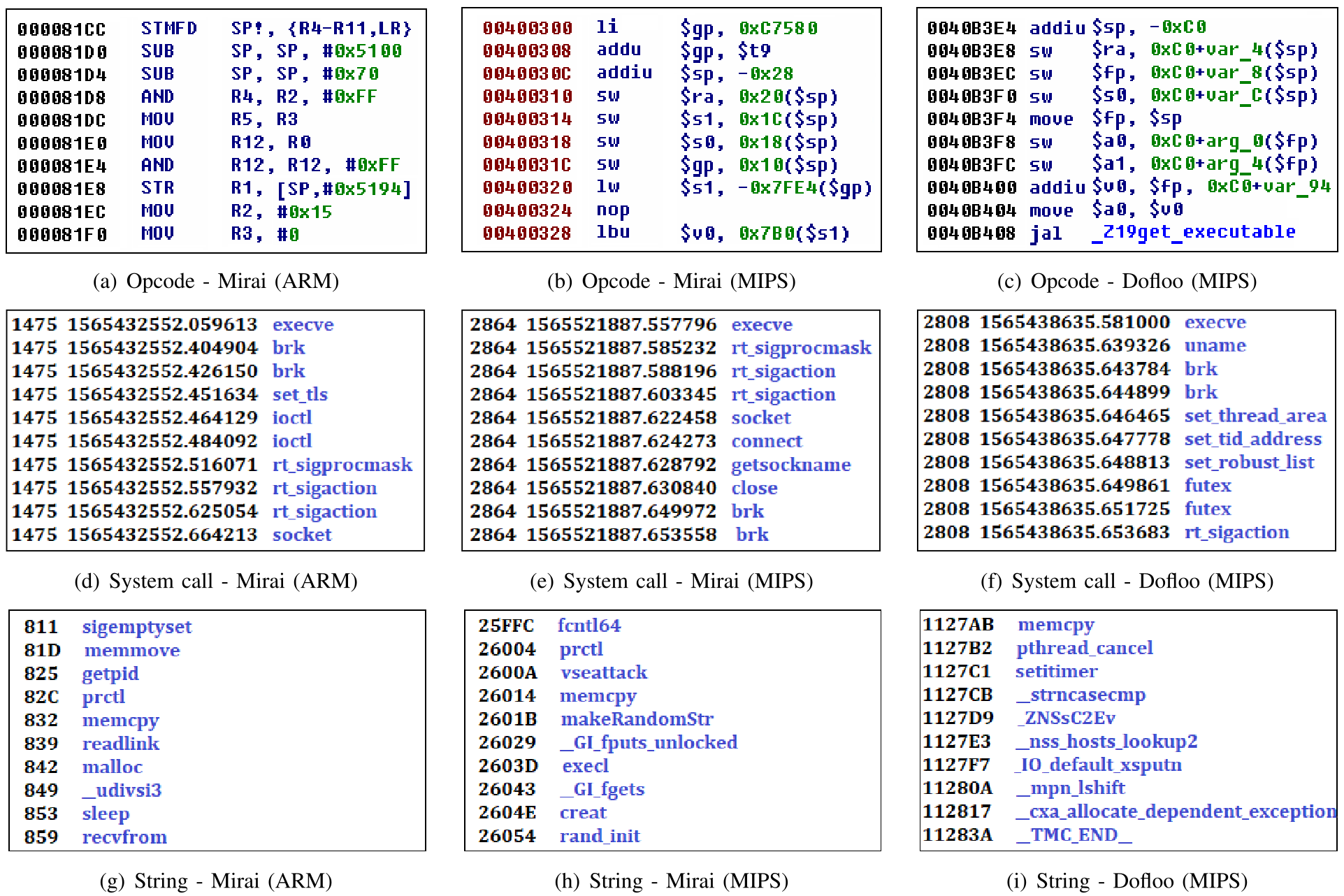 Figure 2: Visual proof that printable strings (bottom) remain consistent across ARM and MIPS, whereas opcodes (top) vary wildly.
Efficiency Gains
By applying their selection setting "f", the team reduced the feature dimensions from 14 million to 2,361. This resulted in:
- Training Time: Dropped from over 100,000 seconds to just 140 seconds for Random Forest.
- Accuracy: Actually increased due to the removal of noise.
Critical Insight & Conclusion
This work demonstrates that in the fight against IoT malware, semantics trump syntax. By capturing the "language" of the malware rather than its "instruction set," we can build defenders that are as flexible as the attackers themselves.
Limitations: While powerful, this method is susceptible to obfuscation. If a malware author encrypts or packs their printable strings, the "semantic bridge" collapses. Future work must integrate de-obfuscation layers to maintain this high accuracy against more sophisticated adversaries.
Takeaway: For security engineers, this proves that printable strings are a "low-hanging fruit" with "high-hanging value" for cross-platform fleet protection.