
Crowd-parking: Turning Driving Experience into a Smart City Infrastructure
Crowd-parking: A New Idea of Parking Guidance Based on Crowdsourcing of Parking Location Information from Automobiles
This paper introduces "Crowd-parking," a novel parking guidance system that bypasses the need for real-time sensor data from parking lots by using crowdsourced GPS location information. The core method employs a hybrid CNN-LSTM spatial-temporal classifier to learn parking experiences from driving trajectories and recommend optimal parking spots.
TL;DR
The "Crowd-parking" system proposes a paradigm shift in urban navigation: instead of asking parking lots for their vacancy data, it "learns" where to park by watching where thousands of other cars successfully stopped. By utilizing a CNN-LSTM spatial-temporal classifier, the system achieves over 90% accuracy in recommending parking spots, effectively acting as a "veteran driver" for every user.
The Data Dilemma: Why Smart Parking is Stalled
Developing a City-wide Parking Guidance System (CPGS) is a massive undertaking in China. The primary roadblock isn't the algorithm—it's the data. Most parking lot operators consider occupancy data a professional secret or lack the infrastructure to export it. With less than 10% of lots in cities like Shenzhen sharing data, traditional systems become useless.
The authors' insight is simple: if we can't see the slots, we can see the cars. Just as Baidu Maps uses smartphone GPS to detect traffic jams without road sensors, "Crowd-parking" uses crowdsourced GPS data to infer which parking lots are actually accessible and preferred at any given time.
Methodology: From Raw GPS to Intelligence
1. Identifying the "Silent" Stop
The system identifies a parking event by monitoring the Automobile Accessory Power (ACC). When the engine stops (ACC off), the last valid GPS coordinate is filtered via Particle Filtering to eliminate urban "canyon" noise, marking a successful parking event.
2. The Spatial-Temporal Architecture
The researchers treat parking as a classification problem. Each parking lot is a "category." The model must predict which category a car belongs to based on:
- Temporal Features: Day of the week, time of day.
- Spatial Features: Destination and the specific road/approach used.
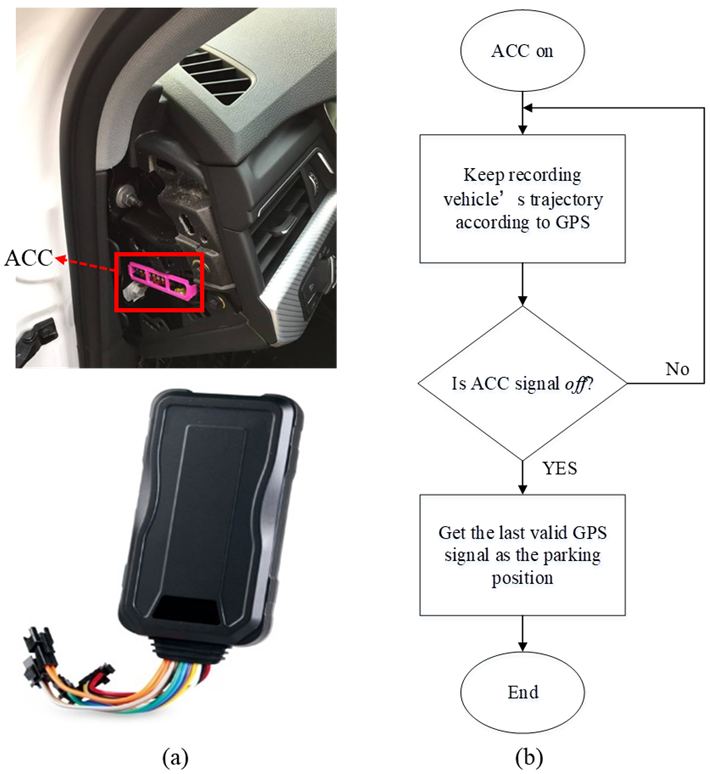 Fig 1: The CNN-LSTM model structure designed to extract spatial features via 1D-CNN and temporal dependencies via LSTM units.
Experimental Battle: Veteran vs. Novice
The model was tested in a high-density area near Shenzhen Children’s Hospital. The results demonstrated two key breakthroughs:
- Spatial Awareness: The system doesn't just recommend the closest lot. If you approach from "Road 1" versus "Road 2," the model changes its recommendation based on historical success rates for those specific routes.
- Temporal Adaptability: Recommendations dynamically shift between weekdays and weekends, mirroring the real-world congestion patterns of the hospital.
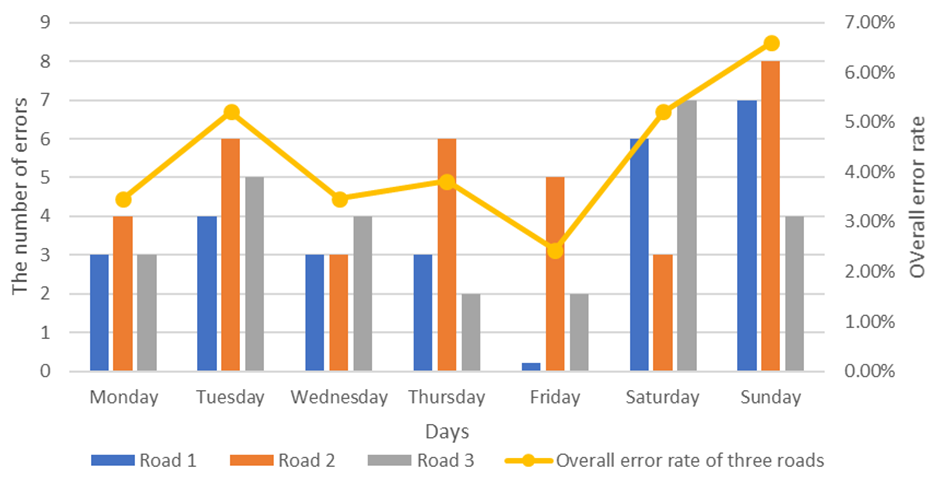 Fig 2: Comparison between predicted (blue) and actual (orange) parking events shows high temporal alignment.
The "Inexperience" Gap
The authors compared Crowd-parking against two baselines:
- Random Parking: Mimics a "green" driver—high error rates and frustration.
- Nearest First: Mimics an average driver—often leads to congestion and "full lot" rejections during rush hours.
- Crowd-parking: Acts like a "veteran." It knows that during Monday at 10:00 AM, the hospital lot is full, and immediately directs the user to a specific side-street lot that others have successfully used.
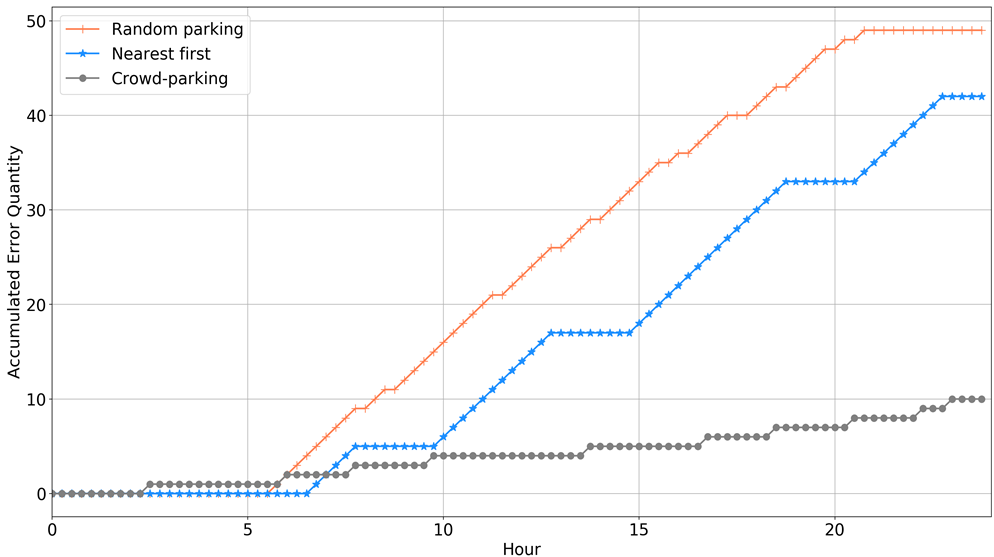 Fig 3: Cumulative error analysis showing Crowd-parking's superior performance compared to standard heuristics.
Critical Insight & Future Directions
The beauty of Crowd-parking lies in its low-cost scalability. It requires zero cooperation from parking lot owners. However, its accuracy is bound by the "cold start" problem—it needs a baseline of users to provide initial experiences.
The next evolution of this work likely involves integrating external factors like weather (which drastically changes parking behavior) or real-time event data (concerts, sales) to further refine its "experience" base. For now, it offers a robust blueprint for how crowdsourced data can overcome the barriers of private infrastructure.