
CrowdCrit: Demystifying Design Critique through Structured Crowdsourcing
CrowdCrit: crowdsourcing and aggregating visual design critique
CrowdCrit is a crowdsourcing system designed to generate and aggregate high-quality visual design critiques using paid non-expert workers. It introduces a scaffolding framework with 70 pre-authored critique statements to guide workers in providing professional, actionable feedback that mimics a studio environment.
TL;DR
CrowdCrit is a research system that transforms non-expert crowd workers into effective design critics. By providing a structured framework of 70 design principles and an aggregation interface, it enables novice designers to receive fast, high-quality, and actionable feedback that was previously only available in professional studios.
Academic Context: This work, presented at CSCW '14, is a seminal piece in "Crowd-Powered Systems," specifically focusing on how to bridge the expertise gap in subjective, creative tasks through Scaffolding.
Problem & Motivation: The Feedack Gap
In the traditional "studio critique" model, learning happens through face-to-face interaction and expert review. However, for most people—students, hobbyists, or small business owners—professional feedback is a scarce resource.
While platforms like Mechanical Turk provide access to thousands of workers, these workers usually lack the vocabulary of design. They might say "I don't like the colors," which is subjective and useless, rather than "the background lacks contrast for readability," which is an actionable design principle. The authors identified that the bottleneck wasn't the workers' eyes, but their lack of a conceptual framework to articulate what they see.
Methodology: Scaffolding the Language of Design
The core innovation of CrowdCrit is the use of educational scaffolding. Instead of a blank text box, the system provides a structured workflow:
- Taxonomy of Critique: The authors curated 70 statements based on classic design textbooks, categorized into 7 principles: Layout, Readability, Simplicity, Emphasis, Balance, Consistency, and Message.
- Visual Grounding: Workers must create a bounding box (annotation) on the design to justify their critique.
- Actionable Feedback: Each statement includes a short title, a detailed description, and a generic solution, ensuring every piece of feedback is "Specific, Conceptual, and Actionable."
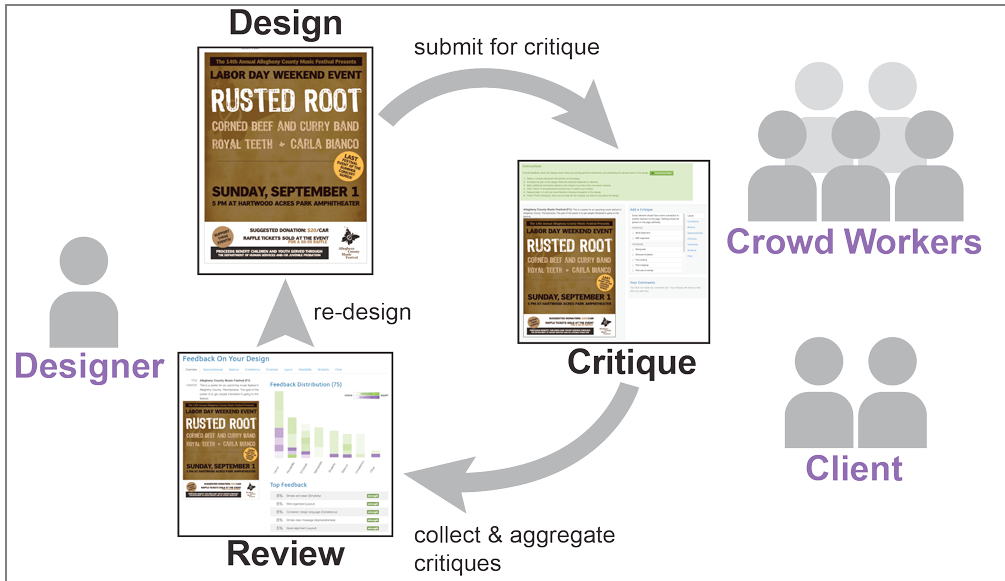 Figure 1: The CrowdCrit system architecture showing the flow from submission to aggregation.
Aggregation: Turning Noise into Insights
A common issue with crowdsourcing is "data overload." If 50 workers provide 3 critiques each, a designer is hit with 150 comments. CrowdCrit solves this with a sophisticated Aggregation Interface:
- The Overview: Offers a stacked bar chart displaying the distribution of critiques across design principles. Color coding distinguishes between "Strengths" (positive) and "Suggestions" (negative).
- Expertise Weighting: The system tracks worker expertise (based on prior design tests) and encodes it into the visual lightness of the UI, allowing designers to prioritize feedback from more "competent" workers.
- Details on Demand: Hovering over a critique highlights the exact part of the image the worker was referring to.
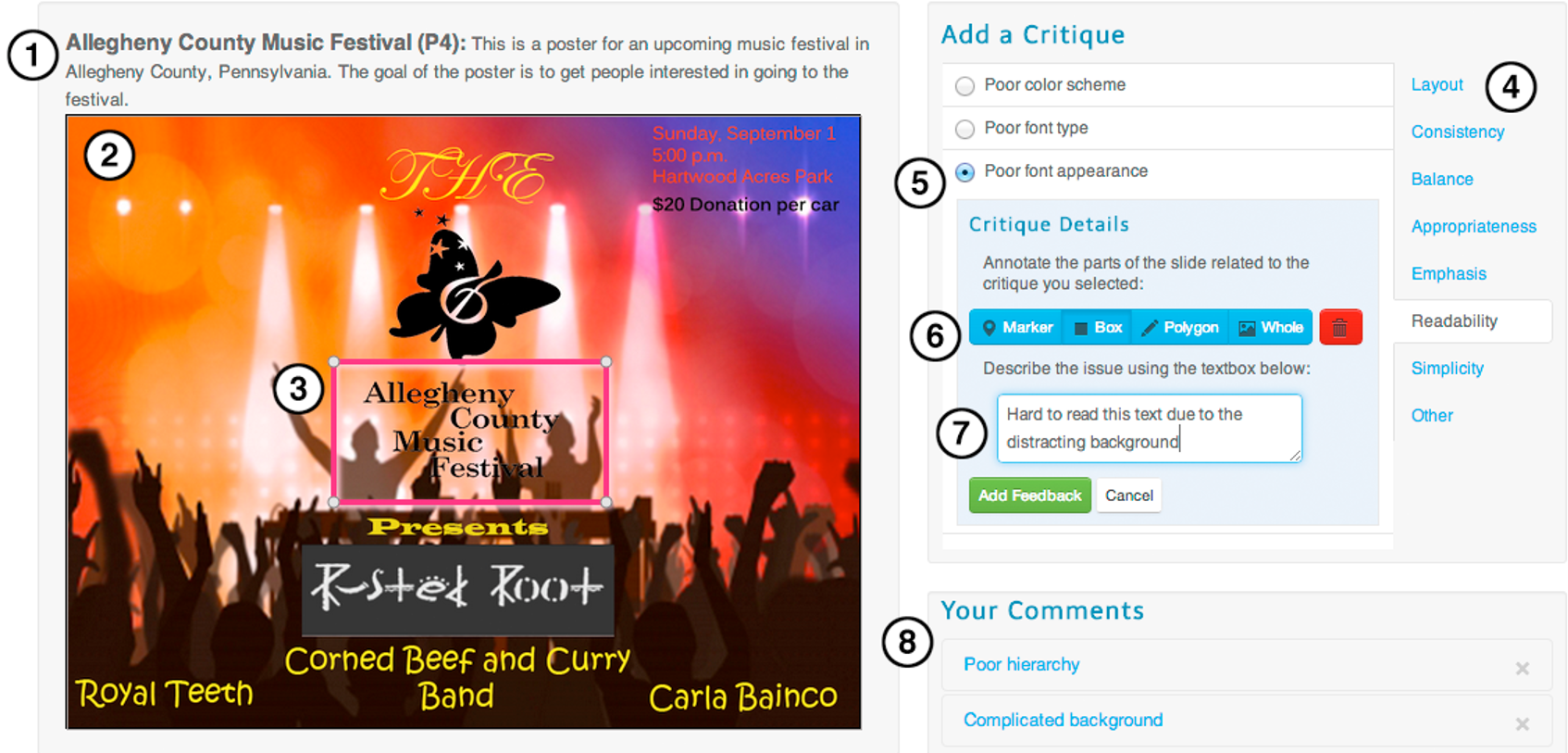 Figure 2: The aggregation dashboard featuring the distribution of feedback and specific principle drill-downs.
Experiments & Results
The authors validated the system through a poster design contest. The findings were revealing:
- Constructive Criticism Matters: There was a positive correlation between the number of negative critiques received and the actual improvement in the final design. Designers who were "pushed" by the crowd performed better.
- User Acceptance: Designers appreciated the speed (feedback within hours) and the diverse perspectives, noting that the structured format made it easier to digest than raw comments.
Critical Analysis & Future Outlook
Takeaway: CrowdCrit proves that the "intelligence" of a crowd is often a function of the interface constraints we place upon them. By restricting workers to established design principles, we prevent "vague feedback" and force "domain-aligned thinking."
Limitations:
- The 70 statements, while holistic, might miss unique or highly avant-garde design issues.
- There is a risk of "formulaic" design if workers only look for what is on the list.
Future Directions: In today's context, the "Pre-authored statements" could be replaced by dynamic, AI-generated suggestions, and the aggregation could use LLMs to summarize common themes across hundreds of crowd responses. CrowdCrit laid the foundation for the structured collaborative tools we see in modern UI/UX platforms today.