
CrowdFound: Turning Your Daily Commute into a Search-and-Rescue Mission
CrowdFound: A Mobile Crowdsourcing System to Find Lost Items On-the-Go
CrowdFound is a mobile crowdsourcing system designed to locate lost items by mobilizing "passers-by" currently en route. The system utilizes proximity-based notifications, interactive maps, and item descriptions to assign micro-tasks to physically proximate volunteers, achieving a successful recovery rate in pilot testing.
TL;DR
Losing your keys or wallet usually triggers a frantic, solo retracing of steps. CrowdFound shifts this burden from the individual to the "crowd en route." By sending real-time, location-triggered notifications to people already walking or running near a lost item, the system turns physical proximity into a powerful tool for recovery.
The "Lost and Found" Mismatch
We currently rely on two flawed extremes:
- Passive Hardware: Tile or AirTags work, but you have to buy them before you lose the item.
- Static Social Posts: Posting on Facebook or Craigslist reaches thousands of people, but statistically, almost none of them are currently standing where you dropped your wallet.
The authors identify a massive untapped resource: The Daily Commute. Millions of people follow predictable paths every day. CrowdFound asks: What if we could ping the person already standing 10 feet away from your lost item?
Methodology: High-Precision Altruism
CrowdFound is built on three pillars: Proximity, Description, and Navigation.
- Requesting Help: A user marks the "last seen" location on a map and provides a photo/description.
- Proximity Ping: The system monitors the GPS of other users. When someone enters the "danger zone" of a lost item, they receive a push notification.
- The Hunt: If the volunteer accepts, the app provides a route and a checklist.
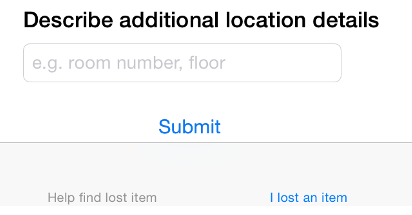 Figure 1: Users input specific details and tag the location on a map.
Why Does it Work? (The Insight)
The brilliance of CrowdFound isn't just the GPS; it's the Socio-Technical Design. The authors found that users didn't just help out of pure kindness—they helped because:
- Gamification: It felt like a "treasure hunt" or a competition against friends.
- Low Friction: It didn't ask people to go across town; it asked them to look down while they were already walking past.
Results: From Pings to Proof
The researchers conducted a field study, hiding items like candy canes across a university campus and suburb.
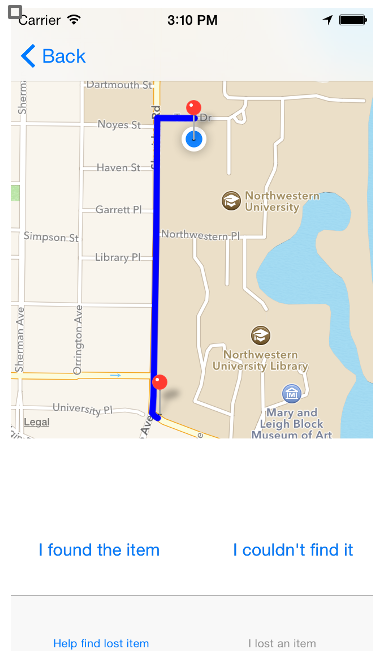 Figure 2: The system provides a route from the volunteer's current location to the target area.
- Recovery Power: Users found 50% of the lost items.
- Persistence: Volunteers were willing to search for up to 10 minutes and deviate significantly from their intended path.
- The "Exercise" Effect: Interestingly, joggers saw the "Search" notification as a motivation to run further, suggesting a synergy between crowdsourcing and fitness.
Critical Analysis & The Future
While the pilot was successful, the paper highlights several "real-world" hurdles:
- GPS Precision: A "pin" isn't enough. Future versions should use "shaded regions" to account for the uncertainty of where an item actually fell.
- Notification Fatigue: If someone is in a car or a train, pinging them to look for a needle in a haystack is useless. The system needs to sense the user's speed and context.
Final Takeaway
CrowdFound proves that physical crowdsourcing is more than just "gig work" (like TaskRabbit). It's a way to weave community support into the fabric of our daily movements. By lowering the "cost of helping" to a few minutes of a commute, we can solve problems that were previously left to luck.
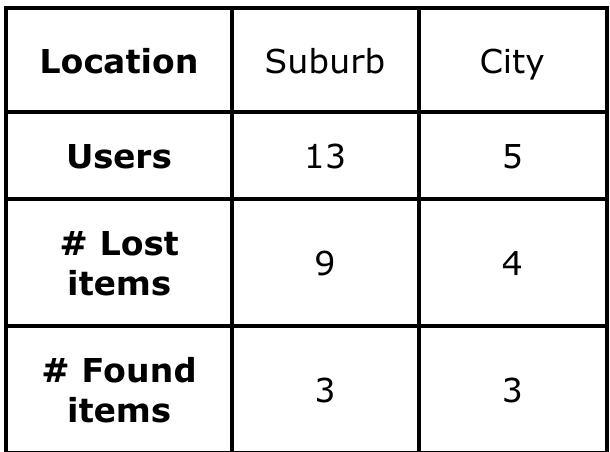 Table 1: Success rates across different environments (Suburb vs. City).