
Decoding the Harvest: What Makes Agricultural Crowdfunding Succeed?
Exploring Crowdfunding Performance of Agricultural Ventures: Evidence from FlyingV in Taiwan
This study investigates the crowdfunding performance of agricultural ventures on FlyingV, one of Asia's largest reward-based platforms. By analyzing 112 agricultural projects, the research identifies key determinants of success, including project categorization, funding targets, and contributor volume.
TL;DR
Crowdfunding is often touted as the "democratization of finance," but for agricultural ventures, the field isn't always green. This study analyzes 112 projects on Taiwan's FlyingV platform, revealing that while agriculture accounts for a small slice of the pie, success is highly predictable based on the funding target, contributor volume, and strategic categorization.
Executive Summary
In the landscape of modern Agribusiness, traditional bank loans are increasingly difficult for innovative, small-scale startups to secure. Crowdfunding (specifically the reward-based model) has emerged as a vital alternative. However, this research highlights a sobering reality: agricultural projects on FlyingV have a success rate of just 43.8%, lagging behind the general platform average. The study breaks down the "Why" behind these failures and provides a roadmap for future "Agri-preneurs."
The "Agri-Venture" Motivated by Necessity
The primary hurdle for agricultural innovation isn't a lack of ideas—it's the funding gap. Traditional financial systems view small farms as high-risk/low-return. Crowdfunding shifts the value proposition from "returns on investment" to "communal identification" and "pre-selling." The author's insight is that agricultural success on these platforms isn't just about the product; it’s about the social capital and the psychology of the target.
Methodology: The Mechanics of Success
The researcher utilized a rigorous statistical framework to evaluate how different variables influence three key performance indicators:
- Total Funding Pledged
- Funding Success (Binary: Yes/No)
- Funding Ratio (Pledged/Target)
The Research Framework
The study looks at the interplay between project characteristics and performance:
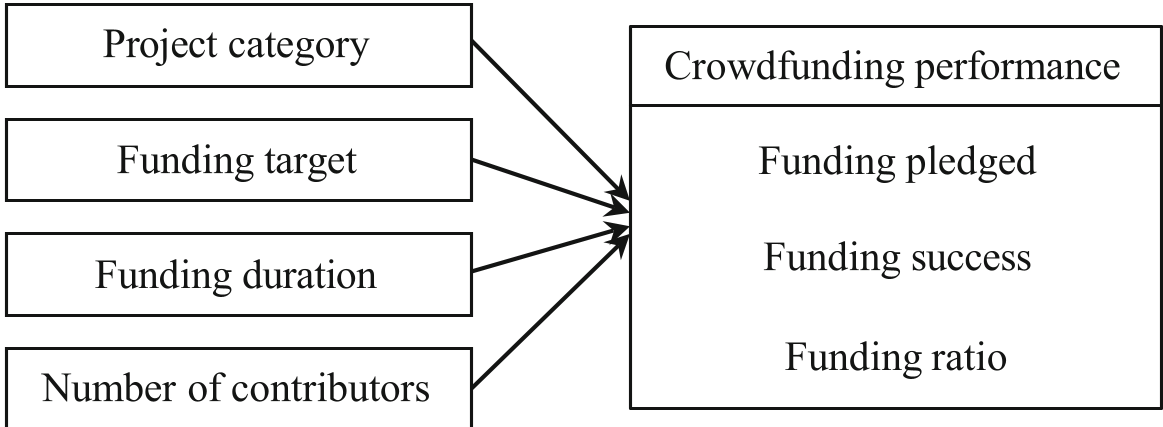
Figure 1: Conceptual model illustrating the relationship between independent variables (Category, Target, Duration, Contributors) and Crowdfunding Performance.
Key Performance Analysis
The data suggests that the "traditional" way of labeling agricultural projects might actually be a hindrance.
- The "Anchor" Effect: Most projects (over 75%) are pigeonholed into "Leisure," "Public," or "Local" categories. Ironically, regression analysis showed that projects in these "major" categories actually pledged less money than those that identified as "Design" or "Technology."
- The Target Trap: There is a clear negative correlation between the size of the funding goal and the likelihood of success. Setting a "modest" goal (under 262k NTD) acts as a psychological catalyst for contributors who want to see a project cross the finish line.
Performance Metrics at a Glance
Below is the descriptive breakdown of the agricultural project pool:
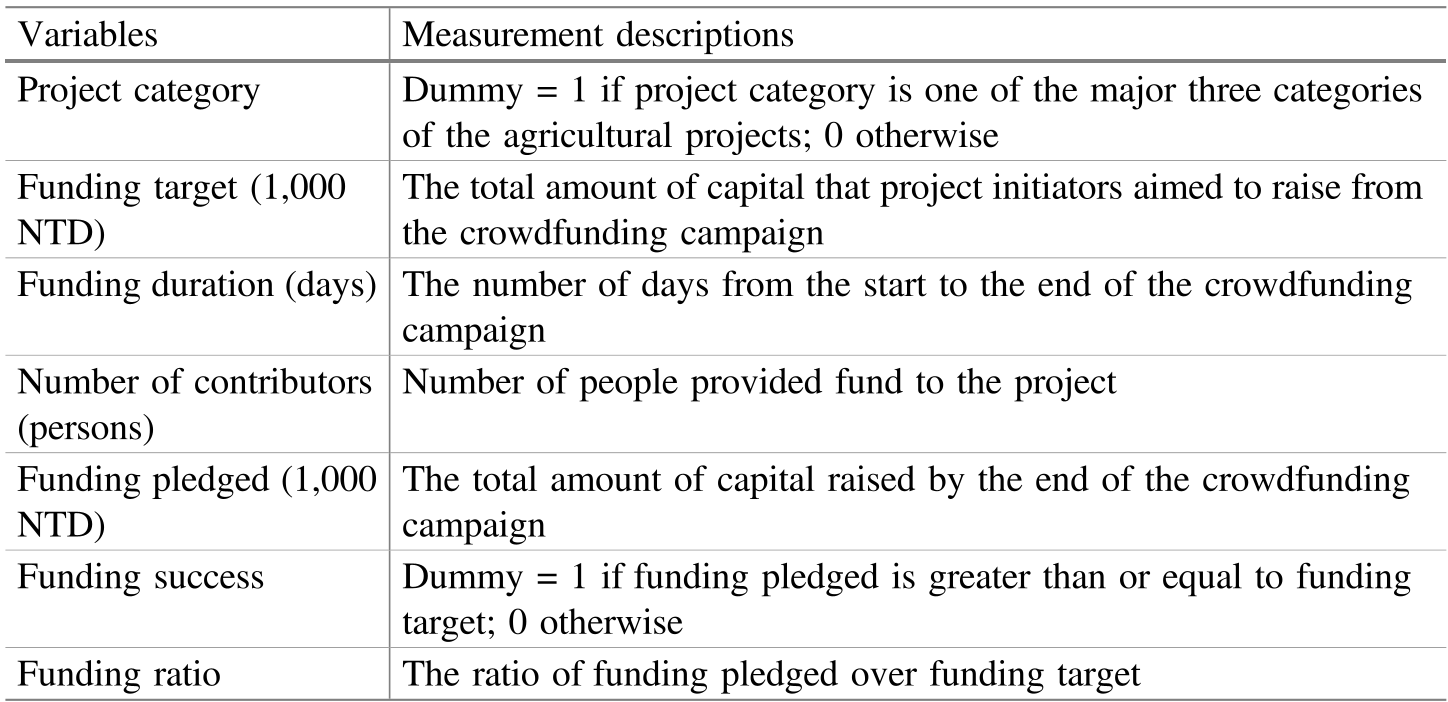
Table 1: Most projects hit only an 82% funding ratio, highlighting the struggle to reach the "all-or-nothing" threshold.
Critical Insight: The "Number of Contributors" Rule
The most significant finding across all models was the Number of Contributors. In the binary logistic regression (Table 4 of the paper), this variable was the dominant predictor of success.
- Implication: Agriculture is a community-based industry. Success in crowdfunding is less about finding one "whale" (large investor) and more about mobilizing a "swarm" of small supporters. This validates the theory that reward-based crowdfunding is essentially a marketing and social networking exercise rather than purely a financing one.
Critical Analysis & Conclusion
Takeaways for Project Initiators
- Diversify Labels: Don't just call it a "Local" project. If your agricultural venture involves new tools, list it under "Technology." If it has unique packaging, try "Design."
- Keep it Lean: Set the lowest possible viable funding target to build momentum.
- Social First: Before launching, ensure you have a "crowd" ready. The platform (FlyingV) is the vessel, but your social network is the fuel.
Limitations
The study focuses exclusively on FlyingV in Taiwan. Regional cultural differences in "philanthropy" vs. "pre-ordering" may mean these results vary in Western contexts or in lending-based (P2P) agricultural crowdfunding.
Future Outlook
As Asia overtakes Europe as the second-largest crowdfunding market, agricultural ventures must move beyond "charity-seeking" and toward "value-proving." The integration of Agri-tech with sophisticated digital marketing will likely be the next frontier for sustainable rural development.