
CrowdITS: Turning the "Crowd" into a Massive Grid of Intelligent Traffic Sensors
CrowdITS: Crowdsourcing in intelligent transportation systems
CrowdITS is a hybrid crowdsourcing framework designed for Intelligent Transportation Systems (ITS) that integrates human-reported data with sensory inputs. By leveraging smartphone ubiquitous sensing and interactive reporting, it enables non-real-time applications like congestion-free routing without requiring expensive specialized roadside infrastructure.
TL;DR
CrowdITS is a research framework that challenges the dependency of Intelligent Transportation Systems (ITS) on expensive roadside hardware. By utilizing the smartphones already in every driver's pocket, it creates a hybrid sensing ecosystem. The system aggregates human-reported incidents with official data to provide real-time, congestion-free routing that outperforms traditional GPS services in responsiveness.
Problem & Motivation: The Infrastructure Bottleneck
For decades, the vision of a "Smart City" was tied to the deployment of fixed infrastructure—expensive induction loops buried in asphalt and high-maintenance CCTV cameras. While paradigms like Vehicle-to-Vehicle (V2V) and Vehicle-to-Infrastructure (V2I) are promising, they face a massive deployment gap: they require specialized hardware in every car and on every corner.
The authors identify a critical missing link: Human Intuition. A driver can spot a collision, a temporary road hazard, or a sudden slowdown instantly, yet existing automated systems (like Google Maps’ pervasive GPS tracking) might take several minutes to "detect" the resulting traffic tailback. CrowdITS seeks to weaponize this human awareness through Crowdsourcing.
Methodology: The Architecture of CrowdSensing
The core of CrowdITS is its hybrid nature. It doesn't just rely on GPS traces; it combines interactive inputs (voice and touch) with ubiquitous sensing (background GPS logging).
1. The Plugin-Based Server Logic
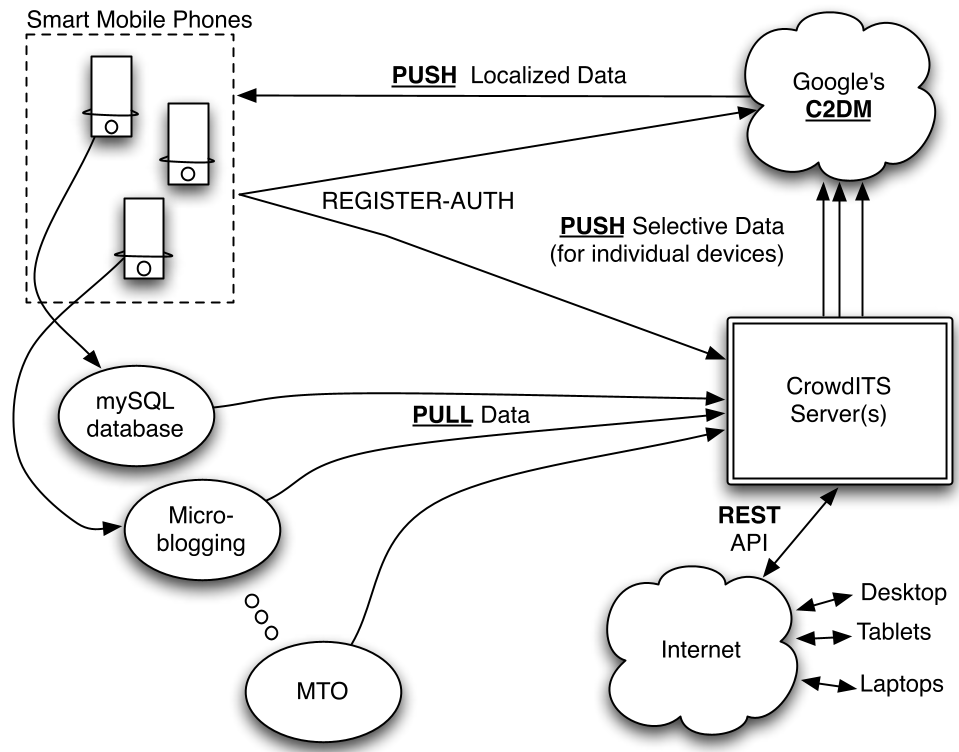
To handle the massive scale of incoming data, the authors designed a backend that uses a "Plugin Framework." Each data stream (e.g., Twitter/X feeds, Ministry logs, or user reports) is handled by a dedicated module. This allows the system to scale its processing power based on local demand.
2. Spatial Mapping via Geohashing
CrowdITS uses Geohashing to convert coordinates into searchable strings. This allows the system to efficiently "bucket" users and events. If two users share a long geohash prefix, they are geographically close, allowing the server to push targeted notifications to only those drivers who will actually be affected by a specific road event.
3. Energy-Efficient Messaging
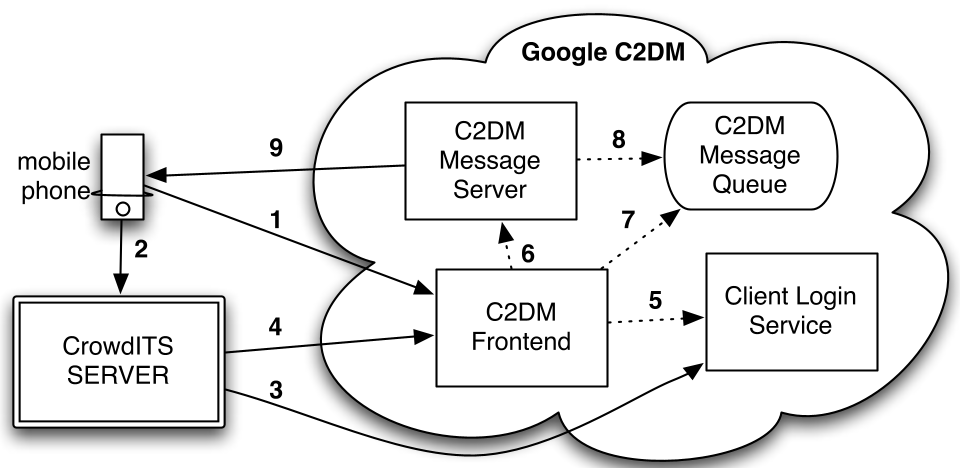
Instead of mobile apps constantly "polling" the server for updates (which drains battery), the system integrates with Cloud to Device Messaging (C2DM). The server "pushes" data to the device only when a relevant event occurs in the user's geohashed path.
Experiments: Beating the Standard Navigation Apps
The authors tested CrowdITS against traditional GPS-based navigation apps. In a real-world collision scenario, the difference was stark:
- Baseline Apps: Failed to recognize the traffic change immediately because they relied solely on aggregate speed data.
- CrowdITS: Captured the "Collision" event via a user report minutes earlier, triggering an immediate re-routing calculation.
By using CloudMade APIs and real-time geohash subscriptions, the application constantly updates the "optimal path" as new reports flow into the hub.
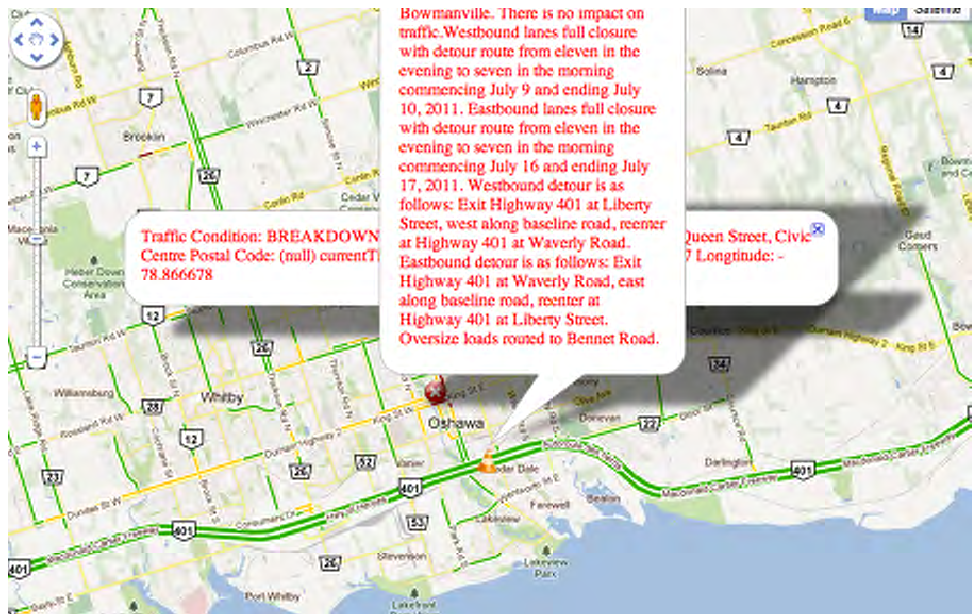 Fig: CrowdITS identifying a collision (red star) and re-routing the driver (blue path) while standard apps remain stuck.
Critical Insight & Future Outlook
CrowdITS represents a shift toward "Information Democritization" in transport. However, as an academic editor, I note several hurdles:
- Verification: How does the system handle "trolls" or false reports?
- Incentives: Why should a driver take the time to report an accident? (The paper suggests "personal satisfaction," but modern platforms would likely requires gamification).
- Privacy: Geohashing traces provide high-resolution movement data; securing this "Identifiable Information" remains a paramount concern for future iterations.
Ultimately, the value of CrowdITS lies in its data aggregation strategy—proving that the most powerful sensor in a smart city isn't a camera on a pole, but the collective awareness of its citizens.