
CrowdPickUp: Reimagining Crowdsourcing Through Physical Context
13848_CrowdPickUp Crowdsourcing Task Pickup in the Wild.
CrowdPickUp is a novel crowdsourcing system that bridges the gap between digital micro-tasks and physical urban environments using "situated" posters. It introduces a hybrid deployment model where passers-by can discover tasks via QR codes on physical posters and complete them on their own mobile devices, achieving competitive accuracy levels (up to 96%) across diverse task categories.
TL;DR
CrowdPickUp is a hybrid crowdsourcing framework that uses physical posters in the wild to recruit workers for mobile micro-tasks. By leveraging the benefits of both "situated" interactions and mobile flexibility, it achieves data accuracy comparable to desktop platforms (up to 96% after filtering) while engaging users in their local community context.
The Motivation: Moving Beyond the Desktop and the App
Most crowdsourcing happens in two extremes:
- The Desktop Void: Platforms like Amazon Mechanical Turk offer efficiency but lack any connection to the worker's physical surroundings.
- The App Drain: Mobile crowdsourcing apps often require "always-on" tracking, which leads to high battery consumption and privacy concerns, often discouraging participation.
The authors of CrowdPickUp identified a "sweet spot": using physical posters as triggers. This allows for Situated Recruitment—finding people who are already in a specific location relevant to a task—without the friction of a heavy app or the limitations of a fixed public kiosk.
Methodology: The Hybrid Deployment
The architecture of CrowdPickUp is deceptively simple but strategically brilliant. It consists of physical posters placed strategically around a city (in this case, Oulu, Finland).

Task Categories
The system offered a unique mix of tasks to test worker preference and performance:
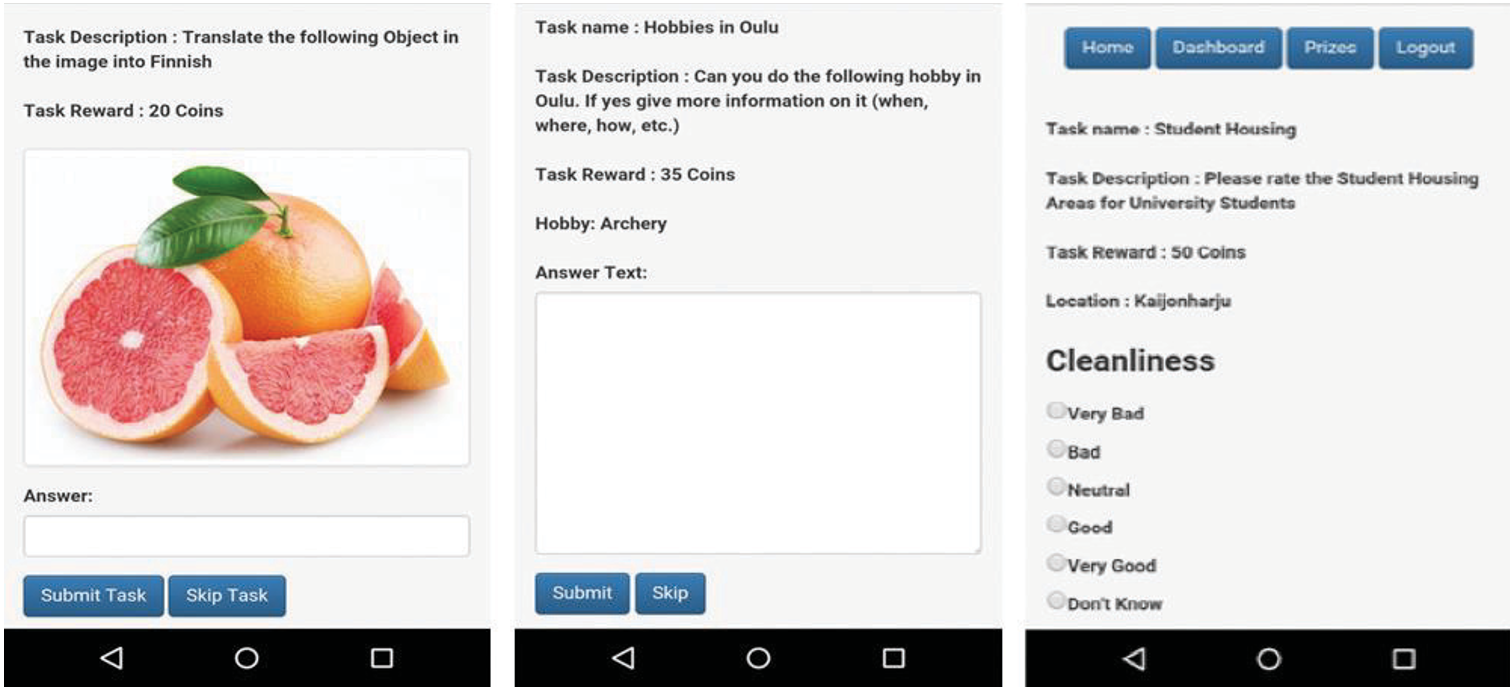
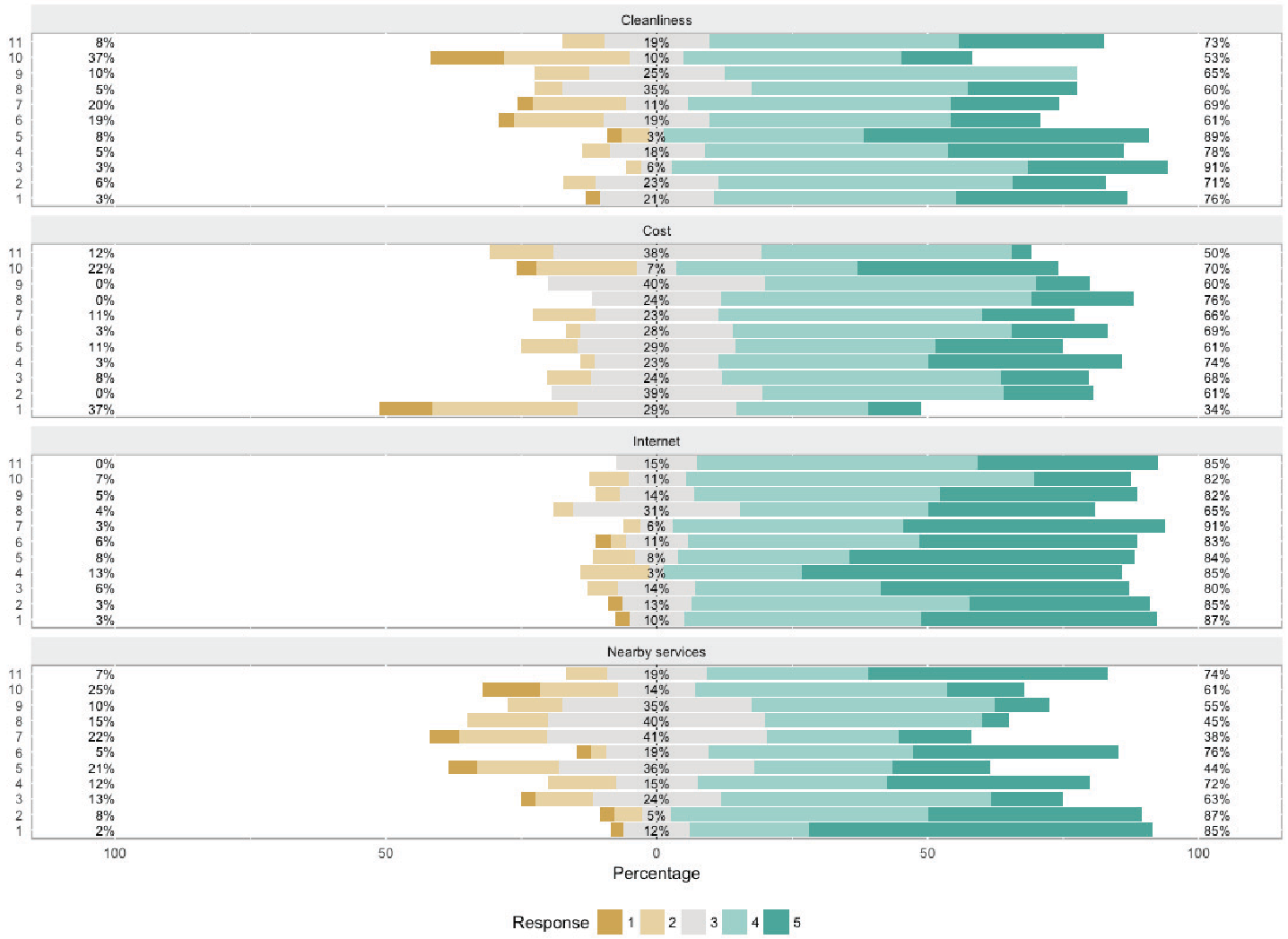
- Local Knowledge: Object translation (naming rare fruits/berries), rating local student housing, and identifying hobbies.
- Location-Based: Rating specific physical locations.
- General Tasks: Sentiment analysis and word relevancy (serving as a baseline).
Experiments & Results: Is it Accurate?
One of the biggest concerns with "in-the-wild" crowdsourcing is data quality. Can a person standing at a bus stop provide data as good as someone sitting at a desk?
Key Performance Metrics
The study found that while raw accuracy was decent (~70-74%), the integration of "Agreement Filters" (consensus among workers) and "Seniority Filters" (workers with local residency) skyrocketed the accuracy.
| Task Category | Unfiltered Accuracy | Filtered (Agreement) |
|---|---|---|
| Object Translation | 73.5% | 85.7% |
| Sentiment Analysis | 73.9% | 96.7% |
| Word Relevancy | 65.7% | 88.8% |
Table: Accuracy improvements through quality control mechanisms (Adapted from Table 4).
Worker Insight: The "Pokémon Go" Effect
Qualitative feedback revealed a fascinating trend: workers didn't just perform tasks; they integrated them into their daily routines. One worker reported bicycling around the city specifically to "collect" tasks, comparing the experience to an exercise or a game. This "gamified" sense of exploration is a powerful incentive that traditional platforms lack.
Critical Analysis & Conclusion
The "Situated" Advantage
The core strength of CrowdPickUp is its high task diversity and low barrier to entry. Because it uses a web-based mobile interface triggered by a QR code, the friction of installation is removed. More importantly, it demonstrates that "localness" is a strong motivator—workers were more interested in tasks that they felt had an impact on their own community.
Limitations
However, the system still faces challenges:
- The "One-Time" Factor: Many workers completed tasks in one "burst" and did not return.
- Device Limitations: Some complex tasks (like detailed text entry) were still frustrating to perform on small screens compared to desktops.
Final Thoughts
CrowdPickUp proves that the city itself can be a "distributed office." By turning physical spaces into touchpoints for digital work, researchers and urban planners can tap into a wealth of local expertise that stayed previously hidden. This work paves the way for future "Smart City" applications where residents contribute to their environment's data layer as they move through it.