
CrowdRec: Optimizing the "Crowd" Experience through Rapid UX Prototyping
CrowdRec: A prototype recomendation system for crowdsourcing platforms using Google Venture Design: Google Venture Design Sprint
CrowdRec is a prototype recommendation system designed for Crowdsourced Software Development (CSD) platforms. It utilizes the Google Venture Design Sprint methodology and Quant-UX tools to create a user-centric interface that helps developers select suitable tasks from a massive pool of available options.
TL;DR
CrowdRec is an academic prototype aimed at solving "task paralysis" in crowdsourced software development. By utilizing the Google Venture Design Sprint and the Quant-UX tool, the researchers developed a recommendation interface that simplifies task selection. Evaluated via the Technology Acceptance Model (TAM), the system showed high user approval but revealed critical insights into how subtle UI flaws can lead to significant user indecision.
Problem & Motivation: The Paradox of Choice in Crowdsourcing
Crowdsourcing platforms like TopCoder and BugFinders have revolutionized software engineering by externalizing tasks to a global "crowd." However, this open-call model creates a significant bottleneck: The Task Selection Problem.
For a developer, finding a task that matches their specific skill set and interests among thousands of open calls is no longer trivial. This manual process leads to:
- Time Loss: Professionals spend more time "shopping" for tasks than coding.
- Low Engagement: Inadequate matching leads to participants dropping out of the ecosystem.
The authors identified that while platforms manage projects well, they fail to provide a personalized user experience (UX). Their insight was to treat the developer as a consumer who needs a recommendation engine—similar to Netflix or Amazon—but for software tasks.
Methodology: The 5-Day Sprint Architecture
To bridge the gap between theory and execution, the team adopted the Google Venture Design Sprint, a high-intensity 5-day framework:
- Understand: Defined User Stories and the core project scope.
- Diverge: Used the "Crazy Eights" technique to brainstorm UI layouts.
- Decide: Selected the best storyboards and defined the user flow.
- Prototype: Built the high-fidelity prototype using Quant-UX, allowing for collaborative real-time editing and integrated heatmapping.
- Validate: Conducted user testing with 23 professionals, analyzing the results through the lens of TAM (Perceived Usefulness vs. Ease of Use).
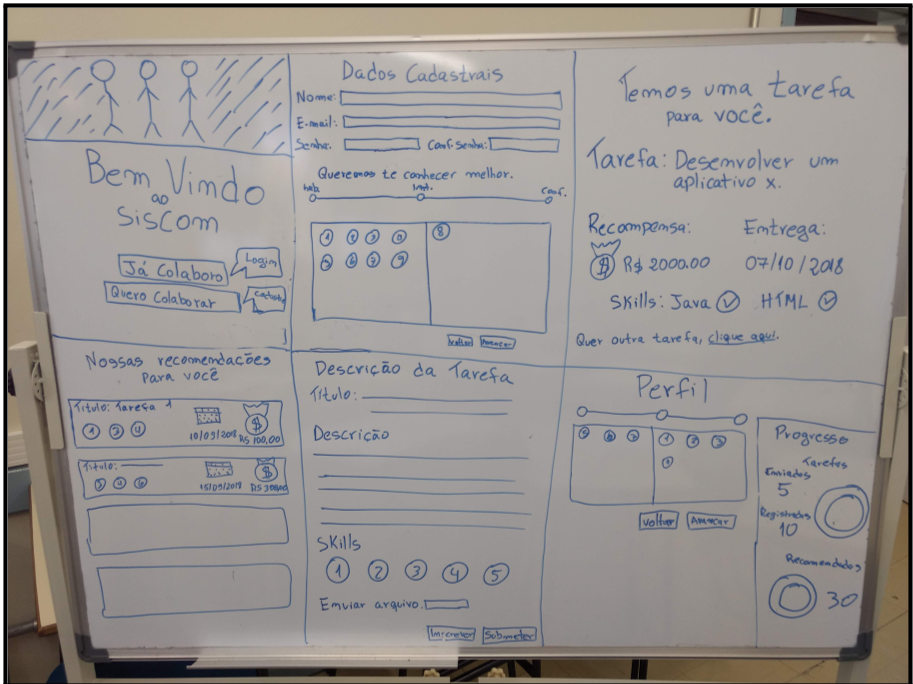 Figure 1: The initial storyboard mapping the logic of the recommendation flow.
Experiments & Results: Perceived Value vs. Interaction Reality
The evaluation focused on three pillars: Perceived Ease of Use (FUP), Perceived Usefulness (UP), and External Variables (VE).
- Ease of Use: 74% of participants gave positive feedback. The interface was deemed intuitive for basic navigation.
- Usefulness: 62% agreed that the tool would significantly enhance their productivity in real-world crowdsourcing environments.
- The UX Trap: Despite high approval ratings, the Quant-UX analytics revealed a hidden friction point.
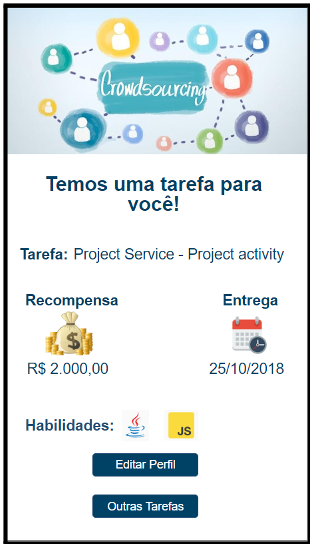 Figure 2: The Task Recommendation screen, which analytics showed was the most challenging for users.
Quantitative data showed that Screen 4 (Task Recommendation) had an average dwell time of 61 seconds—nearly double that of any other screen. Heatmaps indicated that users were clicking on non-interactive decorative images, confused about how to "drill down" into task details. This highlights a classic UX lesson: Visual hierarchy must clearly distinguish actionable elements from aesthetic ones, especially in high-information environments.
Critical Analysis & Conclusion
Takeaway
CrowdRec succeeds as a proof-of-concept that UX-first design can solve the fragmentation issues in crowdsourcing. The move from "Open Call" to "Personalized Recommendation" is a necessary evolution for the sustainability of collective intelligence platforms.
Limitations
- Sample Size: With 31 interactions (and 23 core users), the study lacks the statistical power typically required for a full Factorial Analysis (which usually requires 50+ participants).
- Algorithm vs. Interface: The paper focuses heavily on the interface (UX) but less on the underlying algorithm (the "black box" of how recommendations are actually calculated).
Future Prospect
Future iterations of CrowdRec should integrate Behavioral Analytics directly into the recommendation engine—learning from which tasks a user ignores just as much as which ones they select. Moving forward, the fusion of Design Sprints with AI-driven personalization will be the SOTA for developer tools.