
Crowdsourcing 3D Robotics: Building Manipulation Databases via the Web
Crowdsourcing the construction of a 3D object recognition database for robotic grasping
This paper introduces a web-based crowdsourcing system for constructing 3D object recognition databases tailored for robotic grasping. By leveraging remote teleoperation and a novel iterative point cloud registration algorithm, the system builds functional 3D models that achieve up to 88.7% recognition accuracy.
TL;DR
Researchers at Worcester Polytechnic Institute have developed a system that uses the "wisdom of the crowd" to teach robots how to see and grab household objects. By connecting remote users to a PR2 robot via a web interface, they captured both 3D point clouds and "grasping intelligence," resulting in a robust recognition system with ~89% accuracy without the need for expensive lab setups.
Background: The Scalability Bottleneck in Robotics
For a robot to function in a messy human home, it needs to recognize thousands of objects. Traditionally, this meant placing every single item on a specialized turntable in a lab to scan it. This doesn't scale. If a robot encounters a new toy or a specific brand of cereal in the field, it currently has no easy way to "learn" that object's 3D geometry or how to hold it.
The Insight: Teleoperation as Data Labeling
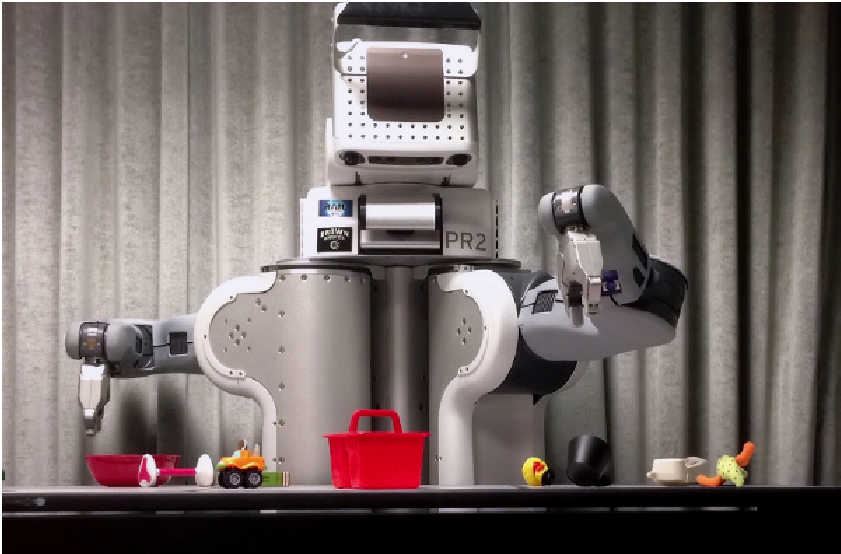
The authors pivoted from automated scanning to crowdsourced teleoperation. By using the Robot Management System (RMS), they allowed non-expert users to control a PR2 robot through a browser. As users performed tasks (like picking up a toy), the system recorded:
- Visual Data: Segmented point clouds from a Kinect sensor.
- Manipulation Data: Gripper position, orientation, and force sensor data.
- Semantic Data: Human-provided labels.
Methodology: Iterative Point Cloud Registration
The core technical challenge is merging scattered, noisy point clouds captured from different angles into a coherent 3D model. Simple alignment often leads to "error propagation," where one bad match ruins the whole model.
1. The Decision Tree Gatekeeper
Instead of blindly merging clouds, the authors trained a C4.5 decision tree. It looks at metrics like:
- Overlap (mo): How many points overlap?
- Color Error (mcErr): Do the colors match in the overlapping region?
- Spread Difference: Are the objects roughly the same size? The tree had an 81% success rate in predicting whether a "merge" would be successful, acting as a quality control filter.
2. Graph-Based Reconstruction
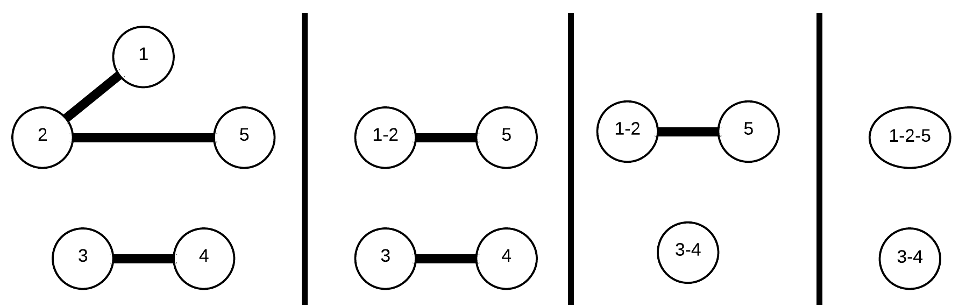
The system treats every point cloud as a node in a graph. Edges are drawn only where the decision tree predicts a successful match. The algorithm then "collapses" the graph, merging nodes until only the most distinct, high-quality 3D models remain.
Experimental Results
The system was tested on two main datasets:
- User Study (10 objects): Reached 88.7% accuracy.
- Supplemental Set (29 objects): Reached 83.93% accuracy.
Notably, the system struggled with reflective or "glossy" objects (like metal tape measures), where the depth sensors produced inconsistent data. However, for standard household items like bowls, toys, and books, the generated models were highly effective for downstream recognition tasks.

Critical Analysis & Future Work
The beauty of this approach is its extensibility. Unlike Flickr-based datasets which are just 2D images, this database contains the physical "how-to" of grasping.
Limitations:
- Sensor Noise: The reliance on structured light/depth sensors means shiny or transparent objects remain a blind spot.
- Computational Cost: While highly accurate, the "all-to-all" graph construction has a high runtime complexity (though acceptable for offline training).
Future Outlook: The true potential lies in mapping the captured "grasp points" onto the final 3D models. This would allow a robot to not just recognize a "Phone" but specifically know to grab it by the sides with a certain force—all learned from a stranger on the internet.