
Deciphering the Crowdsourcing Interface: A Task-Complexity Framework
An Investigation of User Interface Features of Crowdsourcing Applications
The paper investigates the user interface (UI) features of crowdsourcing applications by classifying them into seven categories based on a three-dimensional task complexity taxonomy. It maps specific UI elements like searchability, gamification, and mobile integration to different task types, providing a framework for optimizing crowd engagement.
TL;DR
Crowdsourcing is more than just "outsourcing to a crowd"; it is a spectrum of varied activities ranging from labeling images to developing open-source software. This paper introduces a taxonomy of seven crowdsourcing categories based on task complexity and analyzes which User Interface (UI) features—such as gamification, searchability, and mobile access—are essential for each. It moves beyond generic definitions to provide a strategic roadmap for designing effective crowd-facing platforms.
Background: Beyond the Buzzword
In the landscape of modern digital labor, "crowdsourcing" has become a catch-all term. However, the design requirements for a platform like Amazon Mechanical Turk (micro-tasks) are fundamentally different from Wikipedia (collaborative knowledge) or Waze (geo-spatial data). The authors argue that the lack of design clarity stems from a failure to categorize tasks properly. They position their work as a classification-driven UI analysis, aiming to bridge the gap between organizational needs and participant experience.
The Taxonomy of Task Complexity
The core of this research lies in three dimensions that define the "weight" of a task:
- Task Structure: Is the solution a "known quantity" (well-structured) or open-ended (unstructured)?
- Task Interdependence: Can an individual do it alone, or does it require a synchronized community?
- Task Commitment: Does it require 10 seconds of clicking or weeks of professional expertise?
By crossing these dimensions, the researchers identified seven distinct quadrants of crowdsourcing.
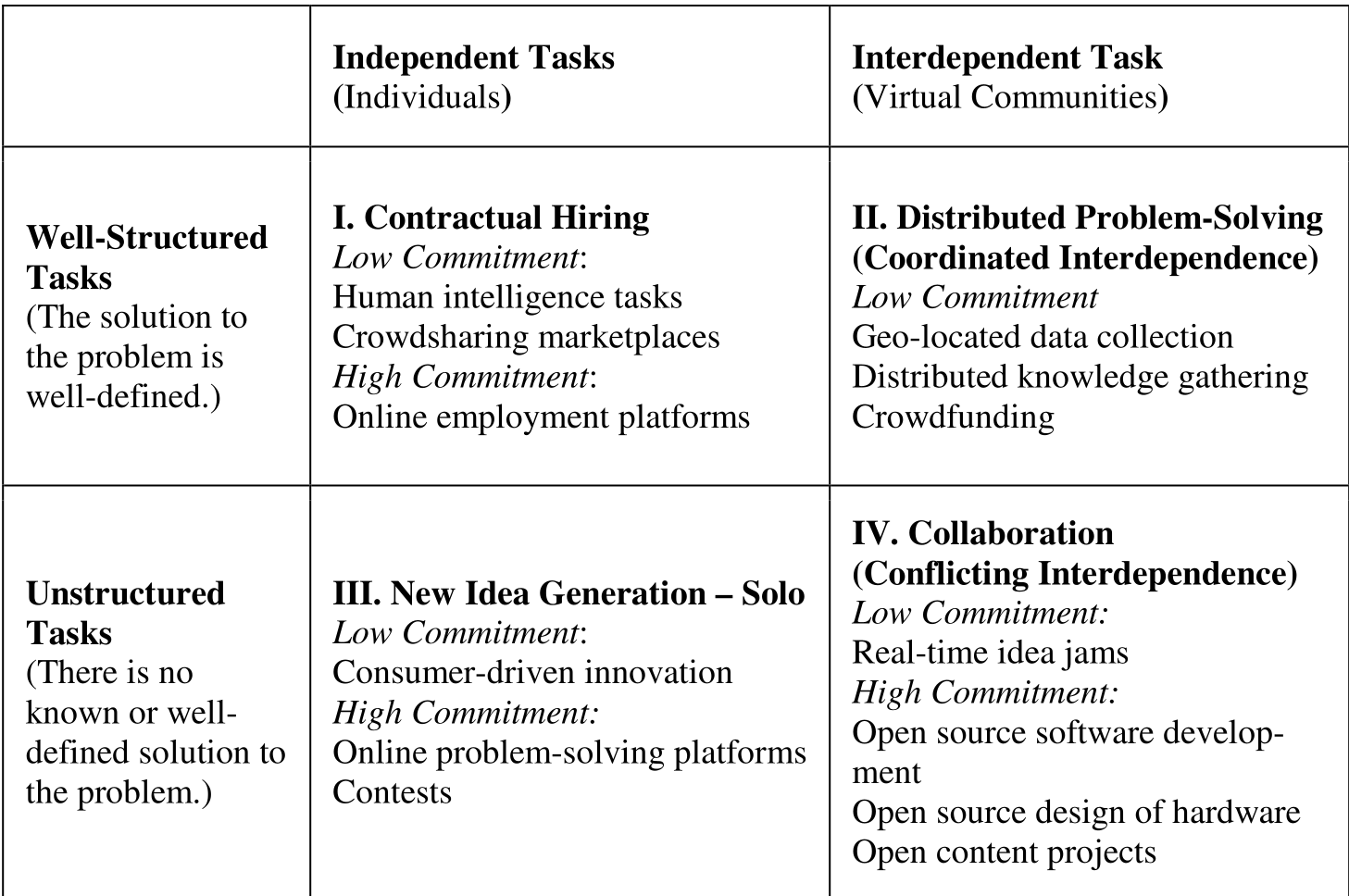 Figure 1: The Taxonomy of Crowdsourcing Approaches based on Task Complexity.
UI Feature Mapping: Why Some Design Patterns Win
The paper deep-dives into representative platforms to explain the "Why" behind their UI choices:
1. Contractual Hiring (High & Low Commitment)
For platforms like Amazon Mechanical Turk and Elance (Upwork), the task is well-defined and independent.
- The UI Insight: Online Credentialing is the "Killer App." Because the requestor doesn't know the crowd, the interface must provide skill tests and dashboards to verify quality and track earnings. Searchability is paramount here because of the sheer volume of discrete tasks.
2. Distributed Knowledge & Data (Waze & CureTogether)
These involve "Coordinated Interdependence"—the crowd acts alone, but the system synthesizes the data.
- The UI Insight: Mobility and Immediacy. For apps like Waze, the UI must minimize cognitive load (e.g., two-click reporting) because the user is often driving. Community building is used here not for collaboration, but for "stickiness"—making the user feel like part of a tribe (e.g., "Wazers").
3. Collaboration & Open Content (Wikipedia & IBM Jam)
These are the most complex: unstructured tasks with high interdependence.
- The UI Insight: Conflict Resolution Tools. Unlike solo tasks, these platforms need Wiki software and version control. Interestingly, the paper notes that for high-commitment collaborative tasks, human intervention (administrators/editors) is still more effective than automated UI features for resolving disagreements.
Critical Results: The Universal vs. The Specific
The investigation revealed a clear hierarchy of features:
- Universal: Searchability is non-negotiable. If the crowd can't find a task that fits their skill or interest, the platform fails.
- Niche: Gamification is highly effective for solo, low-commitment tasks (like Dell IdeaStorm) to keep users "hooked," but is less prevalent in professional-grade collaborative software development.
- Emergent: Visualization (like CureTogether’s 2D plots) is essential when the goal is to help the crowd learn from its own aggregated data.
Takeaway and Future Outlook
The paper concludes that Task-Fit is the most important metric for any crowdsourcing architect. If you are building a platform for high-commitment professional work, focus on credentialing and portfolios. If you are harvesting data on-the-go, focus on mobile UX and one-tap interactions.
Limitations: The study is an "initial investigation" and acknowledges that the winnowing process for high-commitment unstructured tasks (like Cisco's $250k prize) remains labor-intensive and difficult to automate through UI alone. The future of crowdsourcing design likely lies in better AI-assisted synthesis to reduce the burden on human moderators in collaborative environments.
Senior Editor's Note: This paper remains a foundational read for understanding the "Inductive Bias" of crowdsourcing platforms—how the structure of the interface dictates the quality of the human labor it attracts.