
B2B Crowdsourcing: Breaking the Myth of the "Small Crowd"
Can crowdsourcing really be used in B2B innovation?
This paper explores the feasibility and application of crowdsourcing in the Business-to-Business (B2B) innovation sector, introducing a research framework based on a systematic literature review and case studies. Using platforms like InnoCentive and IBM Innovation Jam, it demonstrates that B2B companies can achieve SOTA innovation efficiency by leveraging "crowd wisdom," "crowd creation," and "crowd funding" across all innovation phases.
TL;DR
While crowdsourcing is often dismissed as a B2C luxury, this research proves it is a potent engine for B2B innovation. By shifting the focus from "consumers" to "professional communities," B2B firms can leverage global expertise to solve complex R&D problems, secure funding, and accelerate time-to-market.
Background: Why B2B is Different
In the world of B2B, you don't have a million fans—you might only have ten key clients. This leads to the misconception that crowdsourcing won't work. Furthermore, professional problems are complex; you can't ask a random crowd to design a rail system or optimize a silica coating—or can you?
The paper argues that the "crowd" in B2B isn't the public; it's a network of non-direct users, academic experts, and specialized professionals.
Methodology: Mapping the Innovation Lifecycle
The authors categorize the B2B innovation journey into three clinical phases and match them with specific crowdsourcing platforms:
- Front-End (Ideation): Platforms like Atizo and IBM Innovation Jam are used for brainstorming and concept selection.
- Product Development: National Instruments (NI) Community and InnoCentive allow companies to outsource the actual modular solving of scientific problems.
- Commercialization: Kickstarter isn't just for gadgets; it’s used by B2B startups (e.g., A Quick CNC) to validate market demand and fund production.
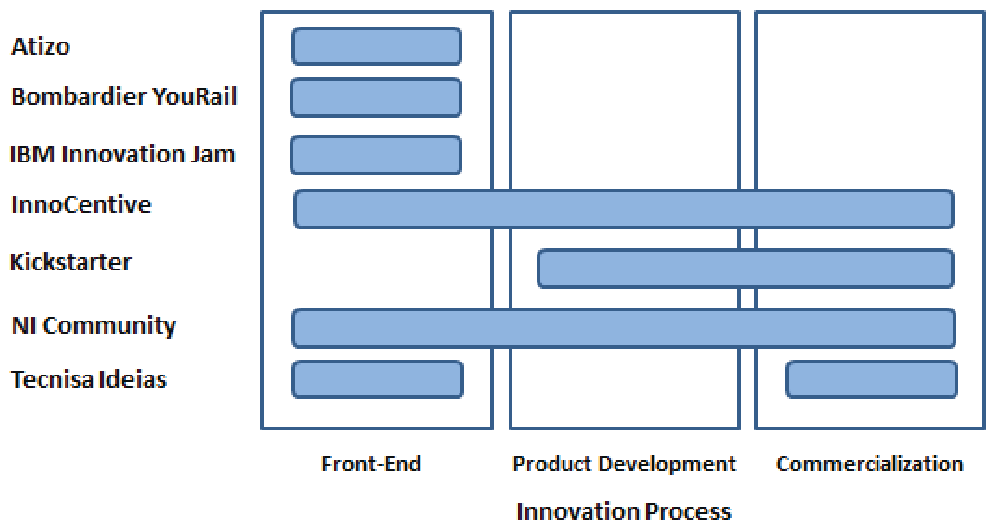 Figure 1: This chart illustrates how different platforms serve specific stages of the B2B innovation funnel.
The "5C" Engine of Social Media
A central insight of this paper is that crowdsourcing is essentially powered by Social Media roles. The authors use the "5C Model" to explain why these efforts succeed:
- Communicating: Sharing the open call.
- Collaborating: Collective creation (e.g., LabView's community coding).
- Connecting: Networking people across industries.
- Completing: Using the crowd to filter and rate ideas (CrowdVoting).
- Combining: Merging diverse data sources (Mash-ups).
Key Results & Case Studies
The research evaluated 18 platforms, finding evidence that B2B crowdsourcing is thriving in specialized niches:
- Bombardier: Successfully crowdsourced train interior designs through their "YouRail" contest, proving that industrial design can benefit from external creative input.
- National Instruments: Built an "Idea Exchange" where R&D interacts directly with users to prioritize software features, effectively turning their customer base into a co-development team.
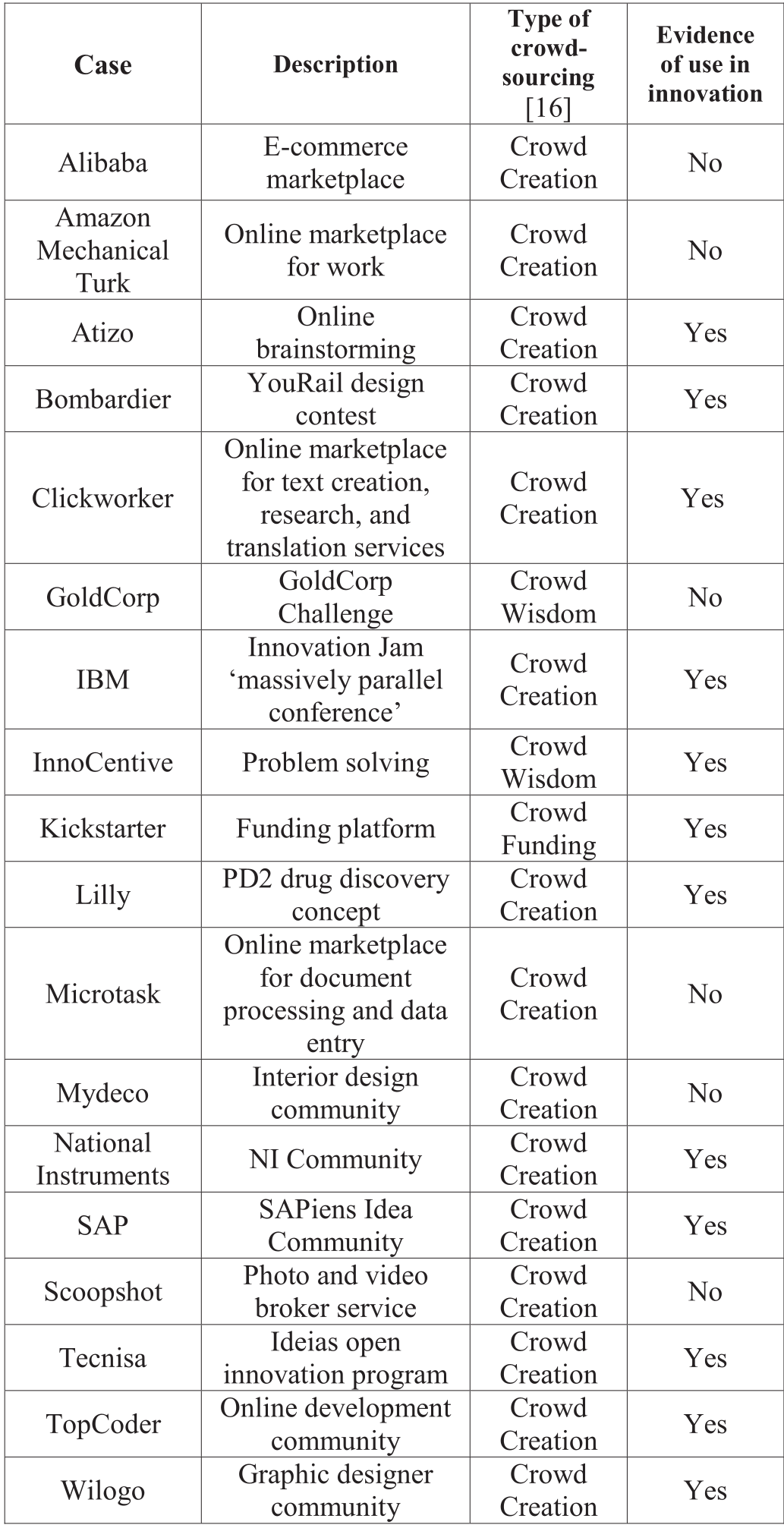 Table 1: Selective list of B2B companies and the types of crowdsourcing utilized.
Critical Insight: The "Open Call" Reimagined
The paper redefines the "Open Call" for B2B. It doesn't have to be a shout into the void of the internet. It can be a targeted open call—restricted to a language, a professional community (like IEEE), or an intermediary (like InnoCentive). The value isn't in the quantity of the crowd, but in the diversity of the perspective (Inductive Bias).
Conclusion & Future Outlook
The study concludes that the B2B sector has reached a SOTA status in "Front-end" innovation, but still has room to grow in using crowds for complex product development and testing.
Takeaway for Managers: Stop asking "where is my crowd?" and start asking "who are the experts outside my walls?" The future of B2B innovation lies in the hybrid model: combining internal R&D with external crowd wisdom to reduce costs and increase quality.