
The 5W Model: Turning Social Media into a Real-Time Urban Emergency Sensor
Crowdsourcing Based Description of Urban Emergency Events Using Social Media Big Data
This paper introduces the 5W model (What, Where, When, Who, Why) to detect and describe urban emergency events in real-time by leveraging crowdsourced social media data from Sina Weibo. It transforms social media users into "social sensors" to provide geographical and semantic context for incidents like fires, traffic jams, and crimes.
TL;DR
Researchers have developed a 5W model (What, Where, When, Who, Why) that treats social media users as "social sensors" to detect urban emergencies. By crawling Sina Weibo data and applying a set of 10 logical heuristics, the system can identify incidents like fires or hijacks within minutes, providing spatial-temporal mapping and causal analysis that often leads official reporting.
Problem & Motivation: The Noise in the Crowd
Urban centers are increasingly vulnerable to sudden incidents. While we have physical sensors (CCTV, smoke detectors), they are expensive and have "blind spots." Social media platforms like Weibo act as a massive, real-time distributed sensor network, but they are plagued by:
- High Noise: Many users post "fake news" or rumors.
- Low Signal-to-Value: Sifting through millions of "What's for dinner?" posts to find one "The building is on fire!" is a massive computational challenge.
- Redundancy: Millions of "forwarded" posts hide the original witness's location.
The authors' insight was to create a structured framework that mimics how humans describe events—the 5W profile—specifically designed to filter out the noise and find the "ground truth."
Methodology: The 5W Framework
The core of the system is a three-layer architecture: Social Sensors Layer, Crowdsourcing Layer, and Description Layer.
1. The 5W Breakdown
- What: Uses a predefined "Concepts Set" (synonyms for "fire," "crash," etc.) to find candidate posts.
- Where: Extracts street names via Baidu Map APIs and GIS coordinates from mobile check-ins.
- When: Analyzes the "Life Course" (start/end timestamps) while filtering out delayed forwards.
- Who: Employs the Deformable Part Model (DPM) to detect people in uploaded images, identifying suspects or rescuers.
- Why: Scans high-engagement posts and official government accounts to determine the cause (e.g., electrical failure).
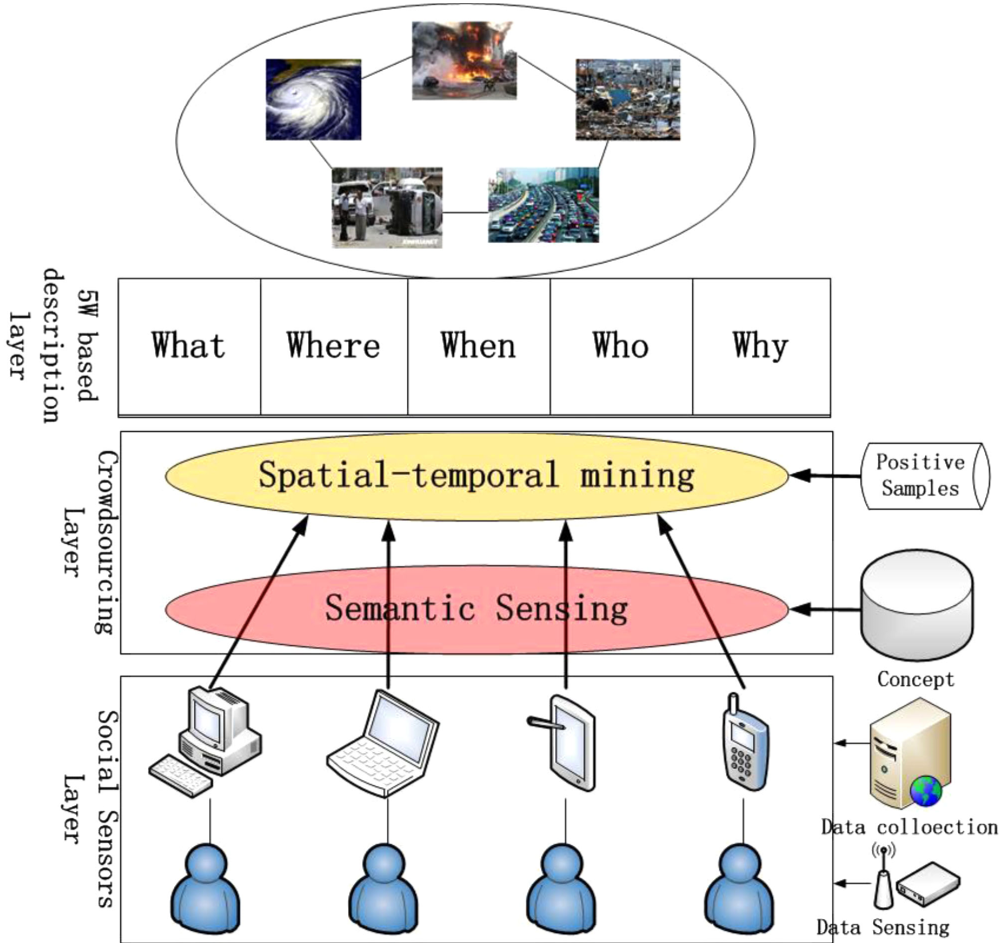 Fig 1: The hierarchical structure of the 5W model, showing the flow from raw data to structural description.
2. The Heuristic Filters
To solve the noise problem, the authors introduced 10 heuristics. For example:
- Heuristic 3: Posts with images/videos are more likely to be real "positive samples."
- Heuristic 6: Only original posts (not forwards) provide valid timestamps.
- Heuristic 4: Mentions of street names in text are often more accurate for event location than the user's GPS "check-in," as the user may be standing several blocks away from the fire.
Experiments & Case Studies
The paper validates the model through two high-stakes scenarios:
Case Study A: The Guangzhou Fire
A fire broke out at Beijing Road. The model returned 246 results, but refined them to 21 valid witness posts using the heuristics.
- Speed: The first valid post appeared only 4 minutes after the fire started.
- Precision: Successfully mapped the spread of the fire across five nearby streets based on various witness angles.
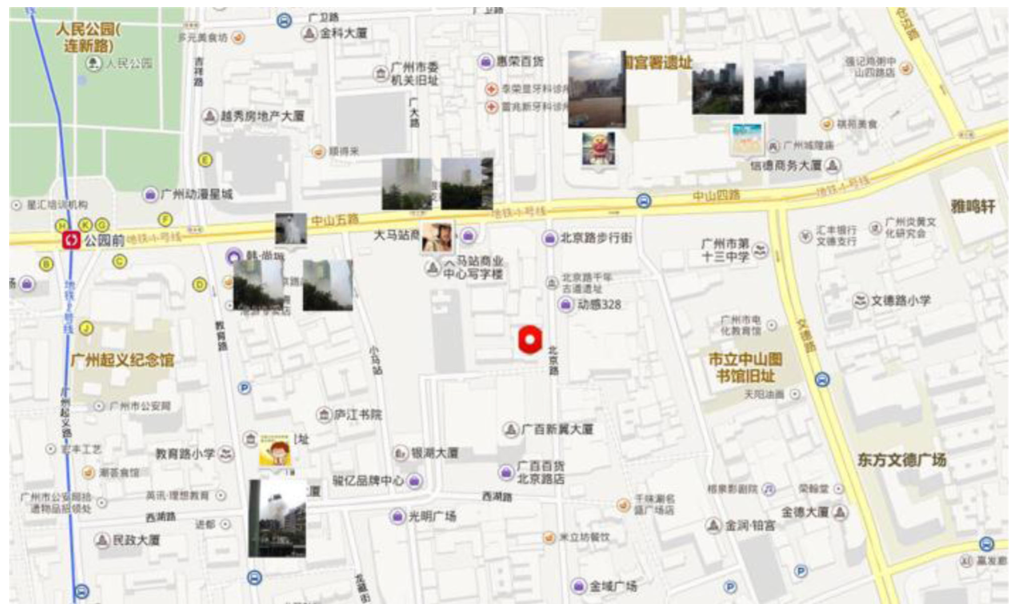 Fig 2: GIS-based annotation showing multiple social sensors viewing the fire from different angles.
Case Study B: The Shanghai South Station Hijack
In a crime scenario, "Who" becomes vital. Using the DPM model on uploaded photos, the system identified a suspect and a heroic rescuer. The "Why" was captured from a news post explaining the suspect had been hungry for two days—providing immediate psychological context for law enforcement.
Critical Analysis & Conclusion
Takeaways
The 5W model proves that structured metadata extraction is superior to simple keyword counting. By treating the crowd as a sensor array, cities can achieve a level of granular surveillance that physical infrastructure cannot match.
Limitations & Future Work
- Language Dependency: Currently optimized for Chinese (Weibo); performance on English (Twitter) or multilingual environments needs testing.
- Privacy: The extraction of "Who" (participators) via image detection raises ethical questions regarding public surveillance.
- Automation: The "Concepts Set" still requires manual initialization, which might be too slow for truly novel types of emergencies.
The future of urban computing lies in this hybrid domain where human perception and machine algorithms work in tandem to keep cities safe.