
Crowdsourcing-Based Indoor Propagation: Balancing Accuracy and Effort in Wi-Fi Localization
Crowdsourcing-Based Indoor Propagation Model Localization Using Wi-Fi
The paper proposes a crowdsourcing-based indoor localization system that optimizes the Propagation Model (PM) using a small amount of user-collected Wi-Fi data. By combining a quartile-based outlier removal process, simultaneous optimization of PM parameters (X and N), and a coordinate correction mechanism, the system achieves an accuracy of 3.78 m with significantly lower data collection overhead than traditional fingerprinting methods.
TL;DR
Building comprehensive "Radio-maps" for indoor navigation is a labor-intensive nightmare. This paper presents a smarter alternative: a system that utilizes a handful of user-contributed Wi-Fi data points to calibrate a physical Propagation Model (PM). By optimizing path-loss parameters and applying a clever coordinate correction, the authors slashed mean localization errors from over 7 meters down to 3.78 meters, rivaling professional-grade systems with a fraction of the setup time.
Problem & Motivation: The Fingerprinting Fatigue
Indoor localization using Wi-Fi typically falls into two camps:
- Fingerprinting: High accuracy, but requires a massive database (Radio-map) of signal strengths mapped to every square meter of a building.
- Propagation Models (PM): Low effort (no database needed), but low accuracy because real-world walls and corridors don't follow simple mathematical path-loss formulas perfectly.
The authors identify a "Cold Start" problem: crowdsourcing can help build radio-maps, but until thousands of data points are collected, the system is useless. Their insight? Use that early, sparse crowdsourced data to fix the physical model instead of trying to build a full map.
Methodology: The Three-Step Refinement
The system follows a logical pipeline to transform noisy, sparse data into precision coordinates:
1. Robust Outlier Processing
Crowdsourced data is notoriously messy. Traditional methods assume a Gaussian distribution of Signal Strength (RSS), which rarely holds true in dynamic corridors. The authors use a Quartile Method to calculate the Inter-Quartile Range (IQR), stripping away outliers without needing to know the data distribution.
2. Parameter Optimization (The Quasi-Newton Approach)
Instead of using standard constants for path loss, the system optimizes two key variables:
- : The transmission-related constant.
- : The distance power loss coefficient.
Using a Quasi-Newton algorithm, the system minimizes the delta between the "Real Distance" (known from CP coordinates) and the "Estimated Distance" (from RSS).
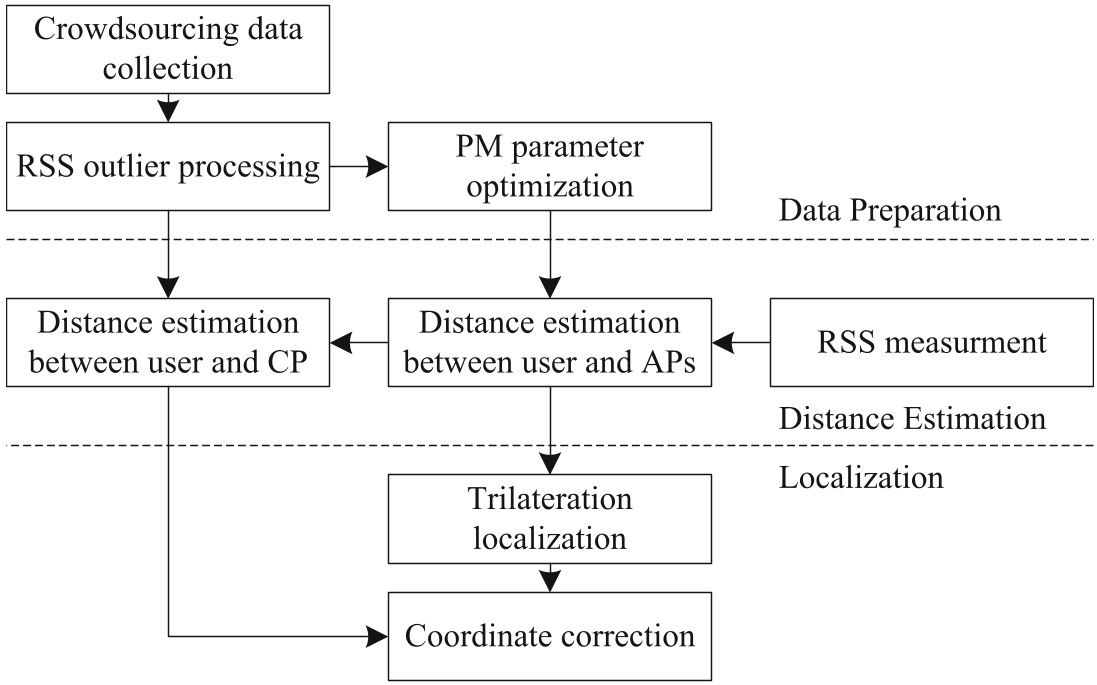 Figure 1: The overall workflow from data preparation to final localization correction.
3. Coordinate Correction (The Constraint Shift)
This is the "secret sauce." Since the system knows where the Crowdsourcing Points (CPs) are, it estimates the user's distance to the nearest CP. If the trilateration result is physically inconsistent with this estimated distance, the coordinates are mathematically "pulled" toward the CP to correct the error.
Experiments & Results
The study was conducted in a 24.9m x 28.0m office environment. The results highlight a classic case of diminishing returns for effort:
- Standard PM: 7.12m error (Poor).
- Optimized PM (Proposed): 3.78m error (Good).
- Fingerprinting (ANN): 2.55m error (Slightly Better).
However, the Fingerprinting method required 27,300 RSS samples across 91 locations. The Proposed System achieved comparable utility using data from only 7 Crowdsourcing Points.
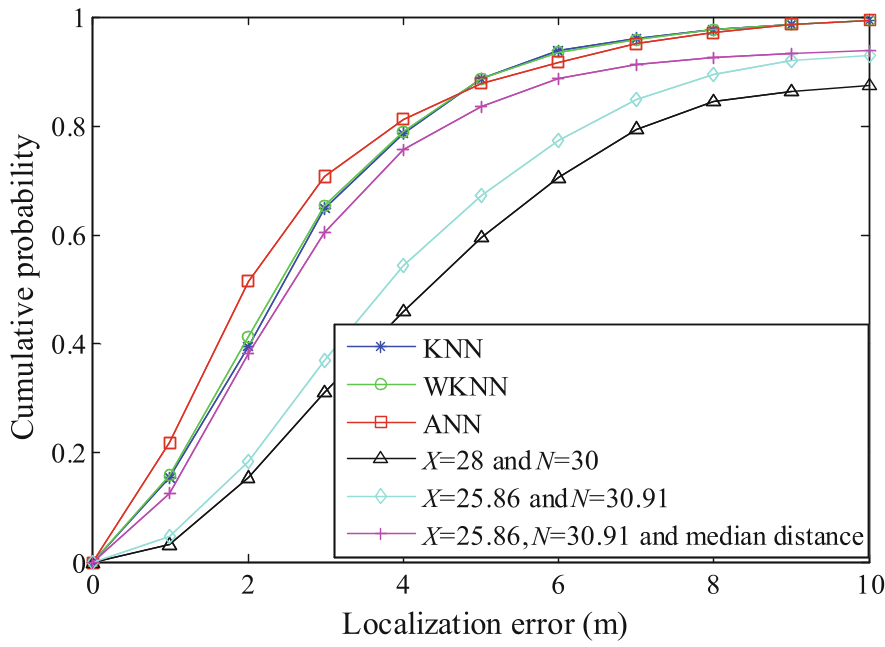 Figure 2: Cumulative Distribution Function (CDF) of localization errors, showing the proposed system significantly outperforming basic PM methods.
Critical Analysis & Conclusion
Takeaway
The paper proves that a "Physical Model + Sparse Correction" approach is the most pragmatic way to deploy indoor localization in new environments. It successfully mitigates the "Cold Start" problem of crowdsourced LBS.
Limitations
- Static Environments: The optimization assumes a relatively static path-loss coefficient. In highly crowded venues (like malls), the coefficient might fluctuate significantly over time.
- Device Heterogeneity: The paper uses a laptop for testing; however, different smartphones have different antenna gains, which might require additional calibration (RSS normalization) not fully addressed here.
Future Outlook
As we move toward Wi-Fi 7 and 6GHz bands, the multipath effects will become more complex. Integrating this crowdsourced PM optimization with Graph-based Semi-Supervised Learning could potentially reduce the number of required CPs even further, perhaps eventually requiring only one or two "anchors" per floor.