
Crowdsourcing the Airwaves: A Direct Approach to Scalable HetNet Deployment
Towards a crowdsourcing-based transmission paradigm in heterogeneous networks
This paper introduces a crowdsourcing-based transmission paradigm for Heterogeneous Networks (HetNets), where third-party small cell sites act as relays to assist Donor eNBs (DeNB). The framework utilizes a multi-hop Stackelberg game-based incentive mechanism to motivate self-interested third parties while achieving State-of-the-Art spectrum efficiency.
TL;DR
To combat the sky-high costs of deploying small cells, this paper proposes a crowdsourcing paradigm where third-party sites (individuals or businesses) act as relay nodes (RNs). By framing the interaction as a multi-hop Stackelberg Game, the authors provide a mathematical blueprint for incentivizing these self-interested relays to maximize overall network spectrum efficiency.
Background: The CAPEX/OPEX Bottleneck
As data traffic explodes, MNOs are forced to densify networks using Heterogeneous Networks (HetNets). However, deploying thousands of small cells is a financial nightmare. The "lightRadio" era has made portable small cells affordable, but these distributed resources remain underutilized. If MNOs can't afford to build everywhere, why not pay third parties to use their existing infrastructure?
Methodology: Recursive Stackelberg Games
The core innovation lies in treating the transmission as a multi-stage recruitment process.
1. The Hierarchical Model
The network is modeled as a sequence of "Crowdsourcers" and "Crowdsourced" entities:
- DeNB (Macro Cell): The ultimate crowdsourcer who initiates the task when users' requirements aren't met.
- Relay Nodes (RNs): Self-interested entities that optimize their transmission power based on the rewards offered.
2. Game Theory at the Core
The authors solve for two types of equilibria:
- Nash Equilibrium (NE): Ensuring that for a given reward, no relay has the incentive to unilaterally change its transmission power.
- Stackelberg Equilibrium (SE): Allowing the "Leader" (the DeNB or the previous hop RN) to pick a reward that anticipates the "Followers'" optimal response.
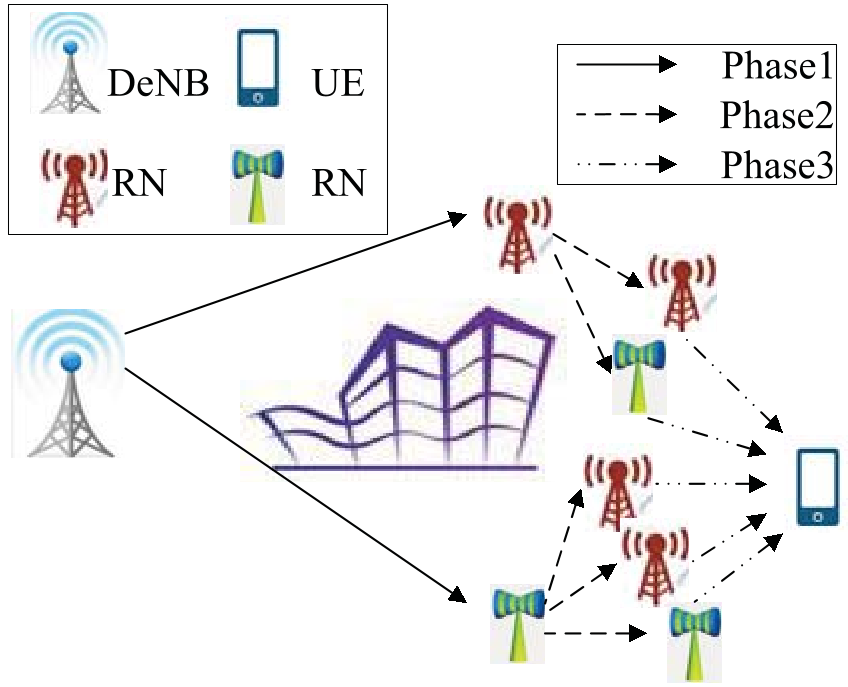 Fig 1: The multi-hop cooperative transmission model where each hop acts as a decision layer.
Why It Works: The Physics of Incentives
The utility functions balance Spectrum Efficiency (for the operator) against Power Consumption (for the third party).
- Operator Utility:
- Relay Utility:
The paper proves that the utility functions are concave, guaranteeing a unique and stable Stackelberg Equilibrium. This means the operator doesn't have to guess; they can calculate the exact minimum reward needed to achieve maximum throughput.
Experimental Validation
Using WINNER II channel models, the authors compared their crowdsourcing paradigm against direct transmission.
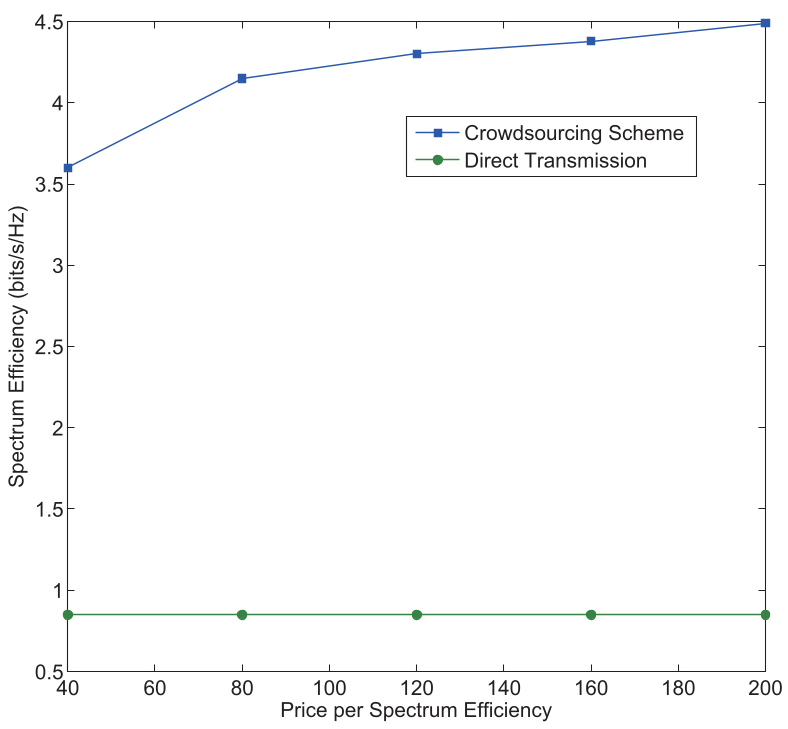 Fig 2: The simulation setup involving two hops of third-party relays.
Key Findings:
- Efficiency Gains: Spectrum efficiency of the DeNB is significantly higher than direct transmission, as the multi-hop relays bridge the "coverage holes" that usually limit macro cell performance.
- Accuracy: The game-theoretic formula derived a reward of 27.7955, which aligned perfectly with the empirical optimal observed in simulations (see Fig 3 below).
 Fig 3: Validation of the DeNB utility vs. reward, showing the clear peak at the predicted SE.
Critical Insight & Conclusion
This paper shifts the perspective of network deployment from infrastructure-centric to economy-centric. By treating signal relaying as a commodity that can be crowdsourced, MNOs can scale HetNets elastically.
Limitations: The current model assumes relatively static Channel State Information (CSI). In highly mobile environments, the latency involved in recalculating Stackelberg Equilibriums across multiple hops might become a bottleneck. Future work should explore AI-driven reward prediction to handle high-speed mobility.
Takeaway: The future of 6G isn't just better hardware—it's better economic protocols that turn every WiFi router and enterprise small cell into a potential extension of the global mobile network.