
Crowdsourcing and Big Data: Reshaping the Landscape of Modern Education
Practices of crowdsourcing in relation to big data analysis and education methods
This paper explores the integration of crowdsourcing, big data analysis, and ICT-driven educational methods. It categorizes crowdsourcing types and demonstrates how collective intelligence can be harnessed for tasks ranging from scientific data transcription to collaborative learning in higher education.
TL;DR
This research investigates the intersection of Crowdsourcing, Big Data, and ICT-based Education. It argues that the digital revolution has enabled a paradigm shift from traditional "outsourcing" to a distributed problem-solving model that leverages the collective intelligence of online communities. By integrating crowdsourcing into education, we can solve complex data problems (like Citizen Science) while fostering collaborative learning skills.
The Core Motivation: Why Machines Aren't Enough
As we transition deeper into the Information Society, we face an explosion of "Big Data." While algorithms are powerful, they often fail at tasks requiring high-level context or pattern recognition—such as reading 19th-century naval logbooks or interpreting the emotional nuances of a political rally on Twitter.
The authors argue that the "Wisdom of Crowds"—the idea that a large group of diverse, independent individuals can outperform a single expert—is the essential bridge between raw Big Data and actionable insights.
Methodology: The Mechanics of Collective Intelligence
The paper categorizes crowdsourcing into four functional pillars, illustrated by the framework below:
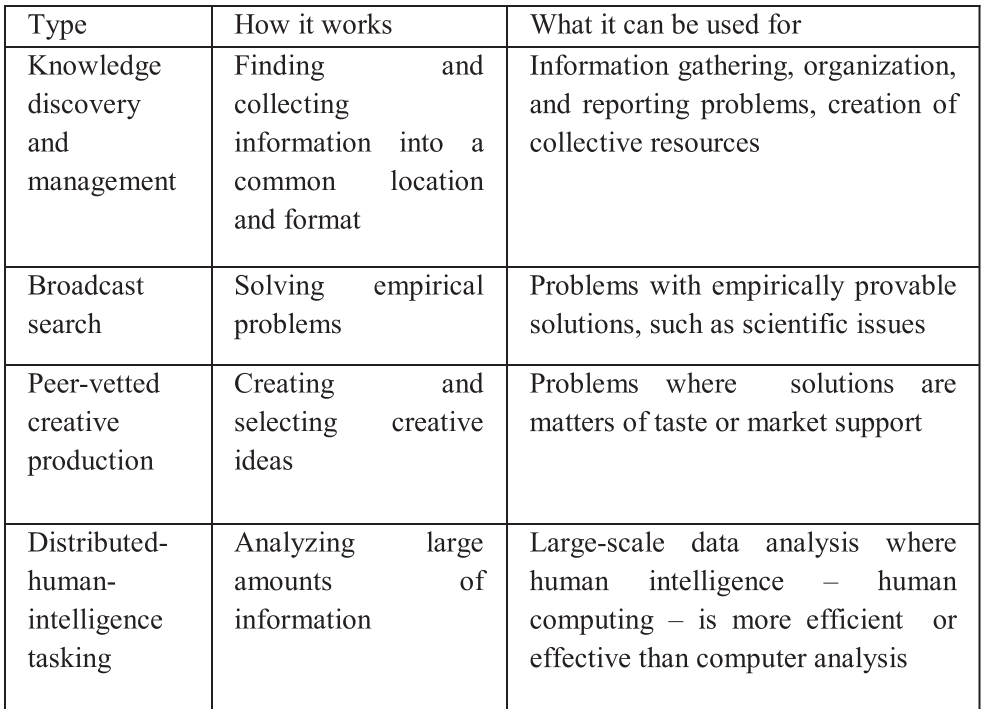
- Knowledge Discovery: Storing and organizing information into collective resources (e.g., Wikipedia).
- Broadcast Search: Crowdsolving empirical scientific challenges.
- Peer-vetted Production: Using the crowd to filter taste-based or market ideas.
- Distributed Human Intelligence: Large-scale data analysis where human cognition is faster or more accurate than AI (e.g., the VizWiz app for the blind).
Crowdsourcing in Practice: From History to the Classroom
The authors provide compelling evidence of how this methodology transforms research into "Citizen Science."
1. Scientific & Cultural Impact
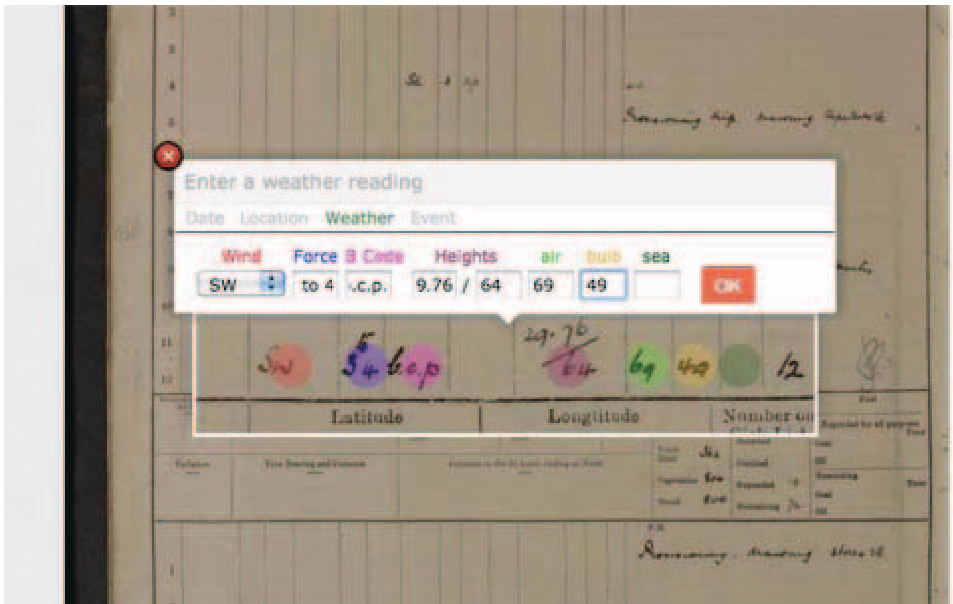
Projects like Transcribe Bentham and Old Weather allow non-professionals to contribute to high-level scientific research. In the Old Weather project, volunteers transcribe British Royal Navy logbooks to help meteorologists reconstruct global weather patterns that computers cannot yet decipher from handwritten scripts.
2. The Collaborative Education Model
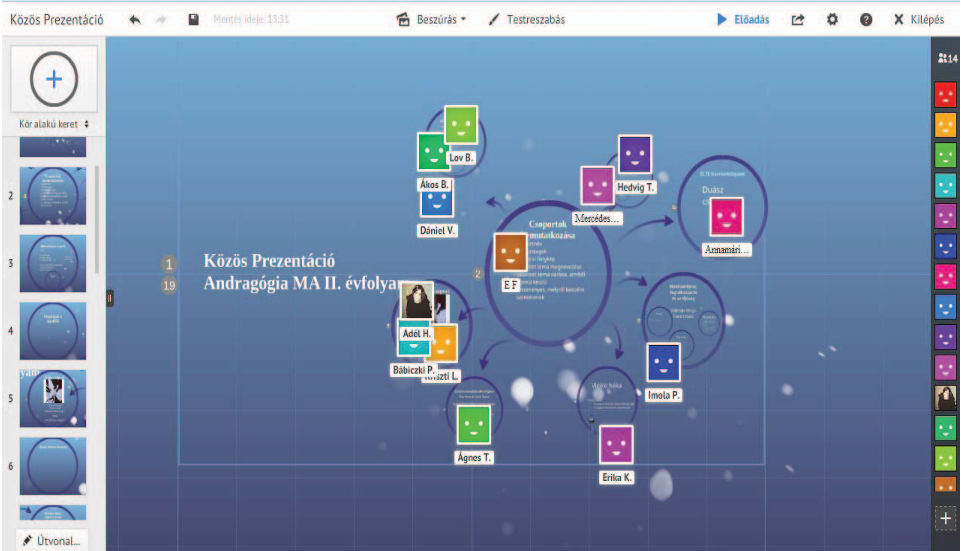
In the classroom, crowdsourcing takes the form of Dynamic Joint Online Presentations. Tools like Prezi, Trello, and Google Drive allow for a "mind-map" style of learning where students and teachers collaborate in real-time.
Empirical Findings: The "Tradition" Bottleneck
Despite the high availability of technology (88.3% of students own laptops), the survey results highlight a significant resistance to change:
- 69.8% of students still prefer taking notes by hand in a notebook.
- 60.3% would rather study from physical books than electronic devices.
- Only 33.9% expressed a willingness to attend a fully online university.
This suggests that while the hardware infrastructure (ICT) is present, the cognitive and behavioral competencies for online collaborative learning are still under development.
Critical Insight: The Limits of the Crowd
The paper does not shy away from the risks of crowdsourcing, citing:
- Quality Erosion: Without constant monitoring, the output can degrade.
- Complexity Overload: If the effort to manage the crowd exceeds the benefit, the model fails.
- Ethical Concerns: Terms like "Digital Slavery" or "Click Servitude" highlight the potential for exploitation of volunteer labor.
Conclusion & Future Outlook
Crowdsourcing is a natural partner for Big Data. As platforms become more seamless, we will see the rise of "Professional Crowds" and interdisciplinary collaboration. To succeed, the "New Generation" must not only be oriented toward infocommunication but also develop the culture of handling complex online connections.
Takeaway for Educators: The goal isn't just to use digital tools, but to design tasks that facilitate "Collective Intelligence" where the final group output is demonstrably superior to any individual's effort.