
Breaking the Silence: A Blockchain-Powered Shield Against Corruption
Crowdsourcing and Blockchain-Based E-Government Applications: Corruption Mapping
The paper proposes a digital framework for corruption mapping in Morocco, title "Corruption Mapping," which integrates Crowdsourcing and Blockchain technology. It enables citizens to securely report corrupt acts via a decentralized application, utilizing Smart Contracts for validation and a GIS-based dashboard for real-time visualization of corruption risks.
TL;DR
Corruption thrives in the shadows of centralized bureaucracy. This paper introduces a decentralized framework that leverages Blockchain and Crowdsourcing to empower Moroccan citizens to report corrupt acts anonymously and securely. By using Smart Contracts to validate claims and a Mapping Dashboard to visualize risks, the system aims to turn individual reports into a collective force for transparency and governmental accountability.
The Motivation: Why Centralized Portals Fail
Existing anti-corruption portals often suffer from a "trust deficit." When a citizen reports a bribe through a government-controlled server, the data is subject to:
- Manipulation: Corrupt officials within the central entity can delete or alter records.
- Lack of Transparency: Citizens often have no way to track if their report led to any actual legal investigation.
- Privacy Risks: Centralized databases are honeypots for data breaches, potentially exposing whistleblowers to retaliation.
The authors argue that for an anti-corruption tool to be effective, it must be independent of the very institutions it monitors.
Methodology: The Five-Layer Trust Architecture
The proposed system is not just a website; it is a full-stack decentralized application (DApp) structured into five functional layers:
- Data Layer: Organizes reports into blocks, starting from a "Genesis Block," ensuring a chronological and immutable chain of evidence.
- Security & Privacy Layer: Uses the Elliptic Curve Digital Signature Algorithm (ECDSA) and PKI to encrypt whistleblower identities. Only the reporter holds the key to their true identity.
- Consensus Layer: Handles the agreement between network nodes (miners) to validate blocks. The paper experiments with PoW, PoS, and PoC to find the balance between security and energy efficiency.
- Contract Layer (The Intelligent Filter): This is the "brain" of the system. Two smart contracts are used:
- Objectivity Analysis: Evaluates the whistleblower's credibility and manages access control.
- Criminalization Code: A digital legal code that checks if the submitted transaction matches the legal definition of corruption.
- Business Layer: Provides the user interface for claiming, tracking, and visualization.
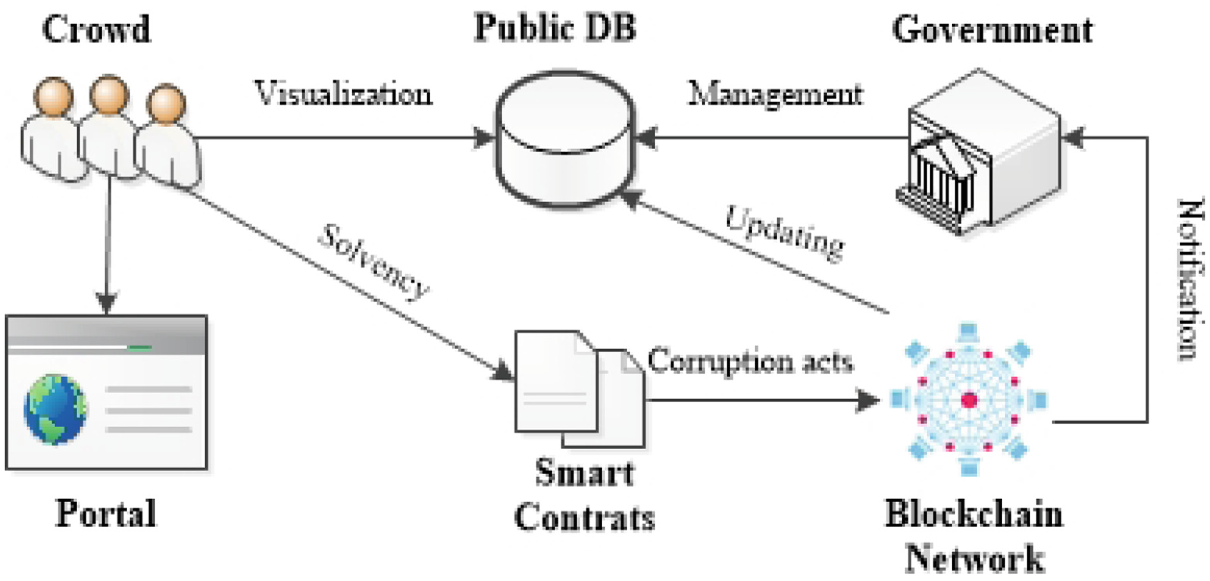 Figure 1: The horizontal and vertical integration of the blockchain components.
Seeing the Scourge: Data-Driven Mapping
One of the core contributions is the Corruption Mapping dashboard. By aggregating thousands of validated reports, the system generates a heatmap of "hot zones" where bribery is most frequent. This provides high-level visibility for policy makers and NGOs to target specific regions or administrative departments for reform.
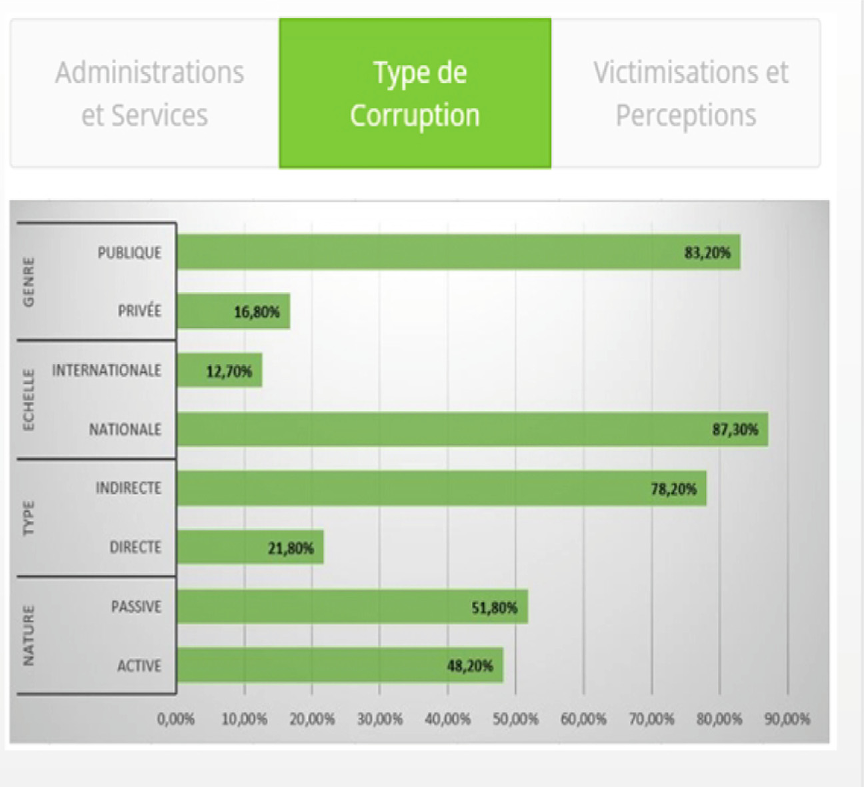 Figure 2: Visualizing corruption risks by type and frequency across Moroccan regions.
Experimental Performance
The authors tested the system using the Flask framework and SmartPy. A critical observation was the relationship between claim throughput and block generation time.
- Optimal Performance: At 20 claims/minute, the block generation time is at its most efficient (~1400s).
- Scalability Limit: As throughput hits 50 claims/minute, individual validation delays increase significantly (~907s), suggesting a need for more powerful consensus mechanisms or Layer-2 scaling in future iterations.
| Consensus Algorithm | Transaction Validation (s) | Block Generation (s) |
|---|---|---|
| PoW | 760.5 | 2223.8 |
| PoS | 787.9 | 2461.2 |
| PoC | 689.0 | 2114.2 |
Table 1: Performance comparison showing Proof of Capacity (PoC) as a strong candidate for low-latency reporting.
Critical Analysis & Future Outlook
The paper successfully demonstrates a "Proof of Concept" for a localized digital democracy tool. However, its effectiveness in the real world depends on Oracle reliability—how the digital contract "knows" what happened in the physical world remains a challenge. If a user submits a fake video or photo, the system requires robust decentralized verification (like a "jury" of other users) which is a suggested direction for future research.
Conclusion: This work shifts the anti-corruption paradigm from "requesting information" from the state to "producing information" by the citizens, secured by the immutable nature of the blockchain. It is a vital step toward a more transparent E-Government landscape in Morocco.