
Crowdsourcing and Deep Learning: A Synergistic Approach to Auto-Karyotyping
Crowdsourcing for Chromosome Segmentation and Deep Classification
This paper introduces a hybrid pipeline for automated human chromosome karyotyping, combining crowdsourced segmentation with deep learning-based classification. The authors utilize non-expert workers to handle complex chromosome segmentation and implement a hierarchical Convolutional Neural Network (CNN) to categorize segmented chromosomes into 24 types.
TL;DR
In the world of cytogenetics, "Karyotyping" remains a bottleneck—a manual, expert-heavy process of identifying chromosomal abnormalities. This paper proposes a clever solution: leveraging non-expert crowds to handle the "grunt work" of segmentation and using Deep Learning with physical preprocessing (like straightening chromosomes) to automate classification. The result? A jump in accuracy from 68.5% to 86.7%, significantly reducing the cognitive burden on doctors.
Problem & Motivation
Chromosomal analysis is vital for detecting genetic disorders like Down syndrome or leukemia. However, metaphase spread images are messy. Chromosomes overlap, bend, and clump together. Experts spend hours manually outlining them.
Previous automation attempts (rule-based or geometric) failed because they couldn't handle the high variability of real-world samples. The authors realized that while high-level classification needs specialized knowledge, identifying the boundaries of a "rope-like" object is something a non-expert can do—if given the right tools and QC (Quality Control).
Methodology: The "Human-Machine" Pipeline
The architecture of this system is split into two distinct phases: Crowdsourcing for data generation and Deep Learning for execution.
1. The Crowd as a Scalable Annotator
To avoid "worker fatigue" (where a worker gives up seeing 46 items to draw), the authors partitioned images into 3x3 grids. They implemented a Spammer Identification algorithm based on "Agreement with the Mode": This ensures that workers who consistently mismatch the segment count of their peers are filtered out, maintaining high data integrity without needing an expert to check every box.
2. Physical Preprocessing: Straightening & Normalization
Chromosomes are non-rigid. A bent chromosome looks different to a CNN than a straight one. The authors introduced a modified straightening algorithm:
- Bending Centre Detection: Using horizontal projection vectors to find the "thinnest" point.
- Stitching: Rotating two arms into a vertical position and merging them.
- Reconstruction: Filling lost pixels using mean values based on horizontal "bands" (mimicking the physical banding patterns of chromosomes).
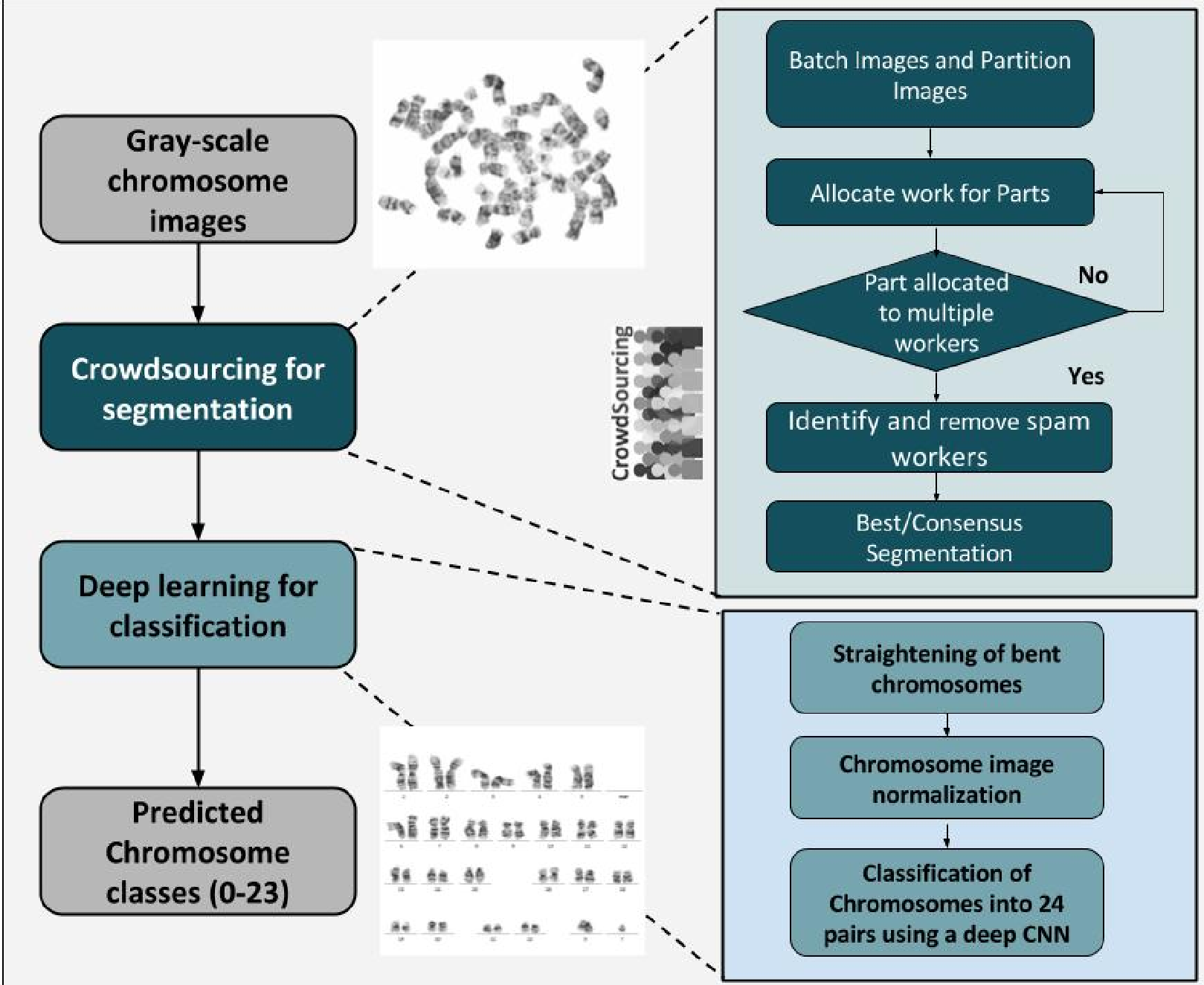 Figure 1: The proposed hybrid pipeline, from raw grayscale image to labels 0-23.
3. Deep Classification Network
The final classification is handled by a deep CNN with four blocks (Conv + ReLU + Dropout + MaxPool), culminating in a 24-unit Softmax layer representing the human chromosome types (1-22, X, and Y).
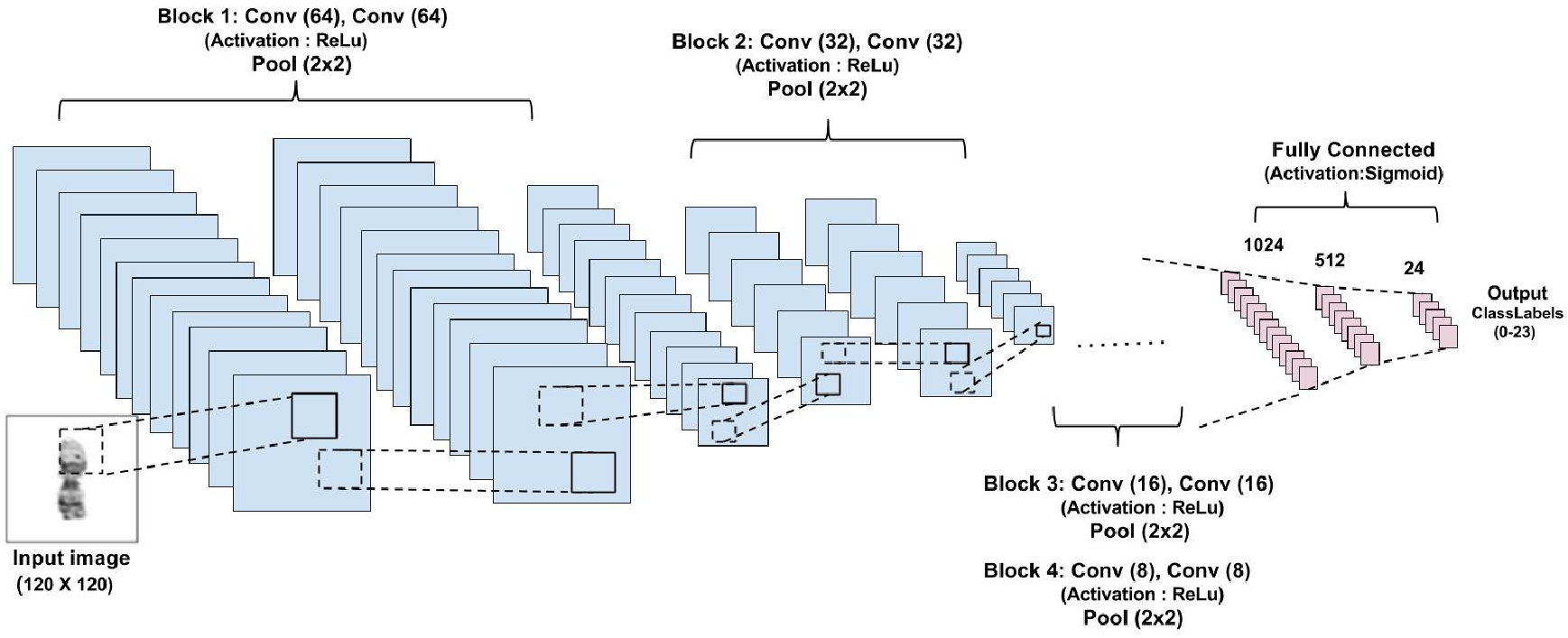 Figure 2: The hierarchical CNN architecture used for classification.
Experiments & Results: The Power of Preprocessing
The most striking result from this study is the impact of domain-specific preprocessing.
- Raw Data Only: 68.5% Accuracy.
- With Straightening and Length Normalization: 86.7% Accuracy.
This nearly 20% improvement underscores a key lesson in AI for biology: while Deep Learning is powerful, "feeding the model" with data that respects the physical properties (constant medial axis, specific banding) of the biological subject is a massive force multiplier.
Furthermore, the authors showed that data from non-experts could train a SegNet model to separate overlapping pairs with 97%+ accuracy, proving the crowd's value in generating training sets for future end-to-end automation.
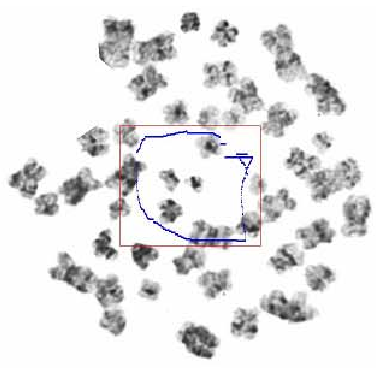 Figure 3: Examples of crowd-sourced markings and the filtering of "Spam" responses.
Critical Analysis & Conclusion
Takeaway
The paper effectively bridges the gap between expert-starved clinical settings and the data-hungry nature of Deep Learning. By breaking the task into "boundary identification" (Crowd) and "feature recognition" (CNN), they create a sustainable workflow.
Limitations & Future Work
- Complex Clusters: While the system handles simple overlaps, dense clusters with more than two chromosomes still pose a challenge.
- Active Learning: Future iterations could use Active Learning to identify only the most ambiguous chromosomes for the crowd to label, further reducing costs.
- Translocations: Detecting diseased cells with structural changes (translocations) remains the "Holy Grail" that will require even more specialized training data.
In conclusion, this work serves as a blueprint for how medical institutions can leverage the global "crowd" to bootstrap sophisticated AI diagnostic tools.