
vSlua: Tapping the 2.4M-Strong Crowd to Solve Enterprise Service Requests
Crowdsourcing from the Community to Resolve Complex Service Requests
The paper introduces vSlua, an Action Design Research project that leverages the 2.4 million-strong VMware Community to resolve real-world Technical Service Requests (SRs). By anonymously mirroring customer issues in community forums, the study evaluates the "collective intelligence" capability of a crowd to handle enterprise-level technical support.
TL;DR
VMware tested the power of its community by feeding real, anonymous customer support tickets (Service Requests) to its public forums. The result? The crowd solved nearly half of all issues, often delivering solutions faster than the official SLA response time, though its effectiveness waned as technical complexity spiked.
Executive Summary
In the world of enterprise IT, complexity doesn't just grow; it compounds. For a giant like VMware, this means an ever-increasing mountain of Service Requests (SRs). The vSlua project explores a radical "Value-First" proposition: Can we use the collective intelligence of 2.4 million community members to assist Technical Support Engineers (TSEs)? By applying Action Design Research (ADR), the authors proved that the "smartest people in the room" are often the ones working for someone else.
The "Complexity Pyramid" vs. Support Bottlenecks
The motivation for this study stems from a simple physical reality: as product suites like vCloud or vSphere expand, the internal engineering team becomes a finite resource facing infinite permutations of technical failure.
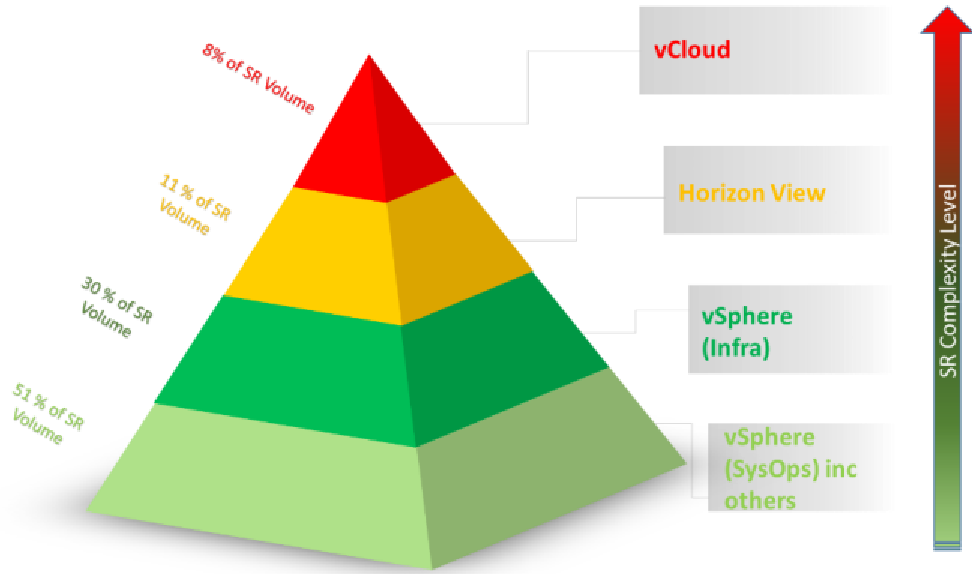 Figure 1: The increasing complexity of VMware product pillars vs. the volume of Service Requests.
The research identifies three core motivators that drive a crowd to help: Money, Love, and Glory. In the VMware context, "Glory" (badges/guru status) and "Money" (potential employment) serve as the primary Inductive Bias for the community’s participation.
Methodology: The vSlua Experiment
The researchers didn't just observe; they intervened. Over two iterations, ten TSEs posted 130 threads.
- Anonymity: The community never knew they were solving active support tickets.
- Dual Tracking: Internal TSEs worked the ticket through official channels, while the community worked the same problem on the forum.
- Complexity Mapping: Tickets were categorized from L1 (Simple SysOps) to L5 (High-Complexity specialized issues).
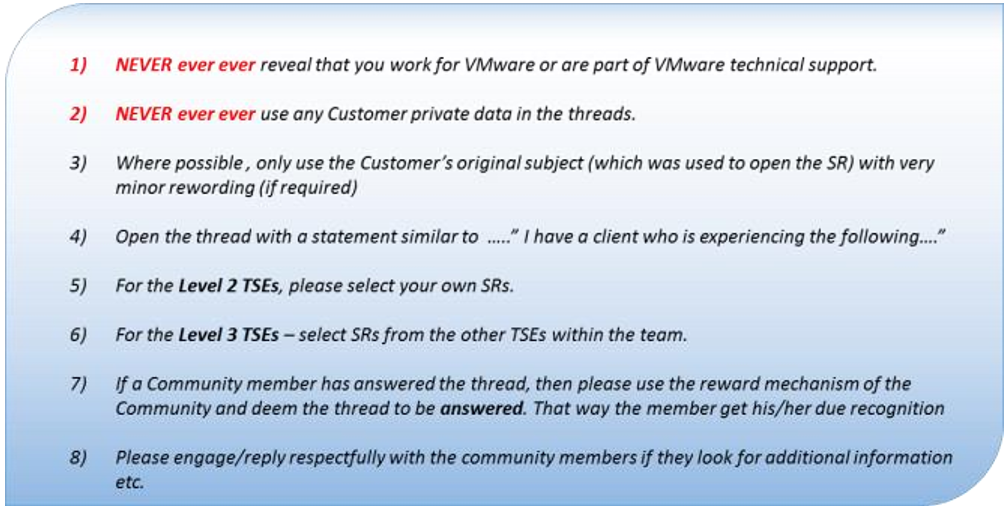 Figure 2: The strict operational protocol for the vSlua experiment.
Key Insights: Speed, Success, and the "Complexity Wall"
The data revealed a clear threshold for collective intelligence:
- The Complexity Wall: For L1 and L2 (Low complexity), the success rate was an incredible 87-88%. However, for L3 and L5 (Medium to High complexity), the crowd's performance plummeted, struggling to hit even 40%.
- Faster than the Clock: When the community could solve a problem, they did it with blistering speed. 68% of resolved cases were finished within 6 hours.
- SLA Disruption: Perhaps the most impressive finding was that 71% of community-solved SRs were resolved before the customer was even scheduled to receive their initial contact from official support.
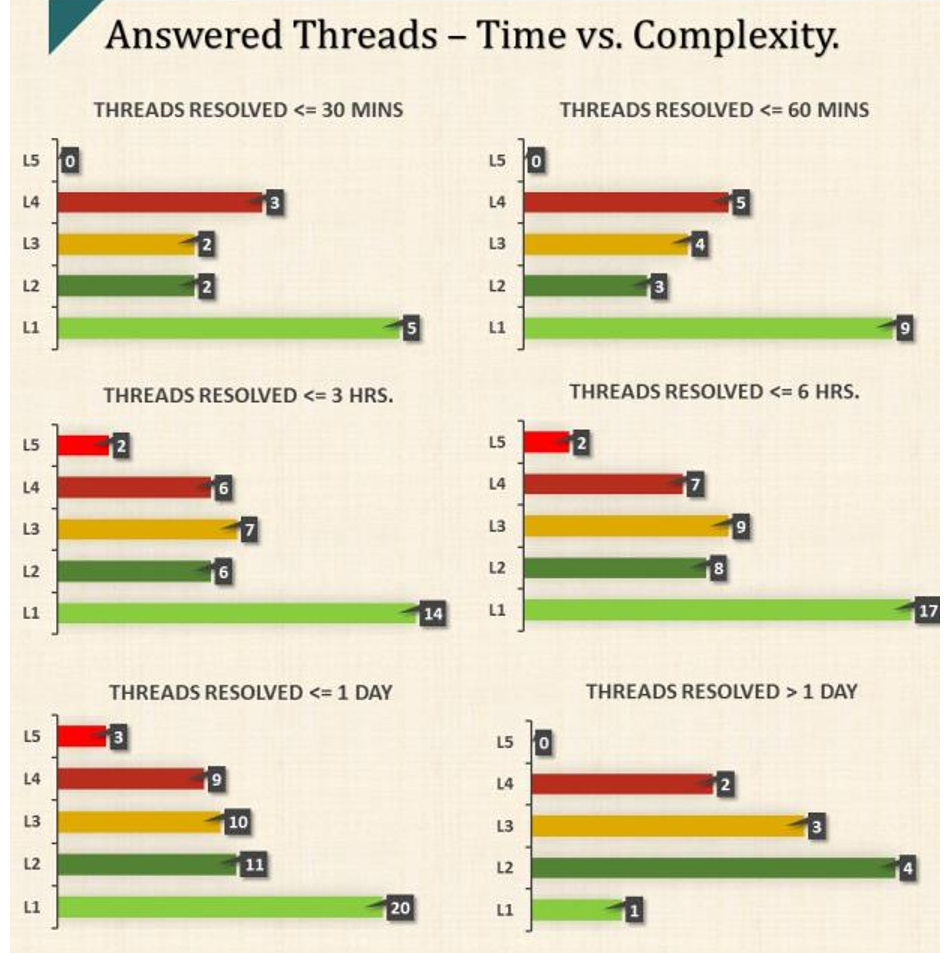 Figure 3: The sharp decline in crowd effectiveness as problem complexity increases.
Critical Analysis & Takeaways
The vSlua project demonstrates that crowdsourcing is not just for "easy" micro-tasks like labeling images. It is a viable strategy for Tier 1 and Tier 2 technical support.
The SOTA Comparison
While traditional support models rely on linear scaling (more customers = more hired engineers), the vSlua model suggests an exponential scaling opportunity. By offloading 87% of low-level noise to the community, expert engineers can focus entirely on the "L5" high-complexity problems that the crowd cannot solve.
Limitations
- The Expertise Gap: The crowd struggles with issues requiring specialized environment access or proprietary internal documentation.
- Privacy Risks: While this study used anonymized data, real-world application requires rigorous PII (Personally Identifiable Information) scrubbing before posting to public forums.
Conclusion
The VMware Community acts as a massive "pre-processor" for technical support. If an organization can foster a healthy ecosystem of contributors motivated by "Glory" and "Love," they can effectively resolve nearly half of their support volume faster than their own internal teams. The future of enterprise support likely lies in this hybrid model: Crowd-accelerated, Expert-refined.