
Towards High-Performance NLP: Boosting Annotation through Team Cooperation
Towards Crowdsourcing and Cooperation in Linguistic Resources
The paper explores the integration of "cooperation" into existing crowdsourcing taxonomies for linguistic resources. It introduces a team-based collaborative framework and validates its efficacy through a case study on OpenCorpora, a Russian morphological annotation project.
TL;DR
Linguistic resources are the bedrock of NLP, yet gathering high-quality data from volunteers remains a bottleneck. This paper demonstrates that cooperation—moving from solitary labeling to team-based "guild" structures—significantly increases the volume of data annotated. By analyzing the OpenCorpora project, the author proves that being in a team drives users to perform better than working alone.
Background: Beyond the Lone Labeler
In the academic coordinate system, this work resides at the intersection of Human-Computer Interaction (HCI) and Natural Language Processing (NLP). It functions as both a theoretical taxonomy update and an empirical validation of social motivation in data science.
The Motivation: Why Gamification Isn't Enough
Existing crowdsourcing taxonomies usually categorize work into:
- Games with a Purpose (GWAPs): High attractiveness, but expensive to design.
- Mechanized Labor (MLab): Efficient, but suffers from low user engagement (e.g., Mechanical Turk).
- Wisdom of the Crowd (WotC): High usefulness, but prone to "edit warring" and inconsistent activity.
The author identifies a missing link: Cooperation. In modern gaming (e.g., Dota 2, Destiny), the shift has moved from "Player vs. Player" to "Guild vs. AI" or "Team vs. Team." The author asks: Can we leverage this "us against the world" mentality to label Russian morphological data?
Methodology: The Team-Based Framework
The study evaluates cooperation based on three dimensions:
- Attractiveness: How engaging is the process?
- Usefulness: Does the volunteer benefit from the result?
- Difficulty: How hard is it to implement the mechanism?
The author utilized OpenCorpora, where users annotate Russian text. They introduced a feature allowing users to form teams. These teams then competed on leaderboards based on the number of annotated examples and error rates.
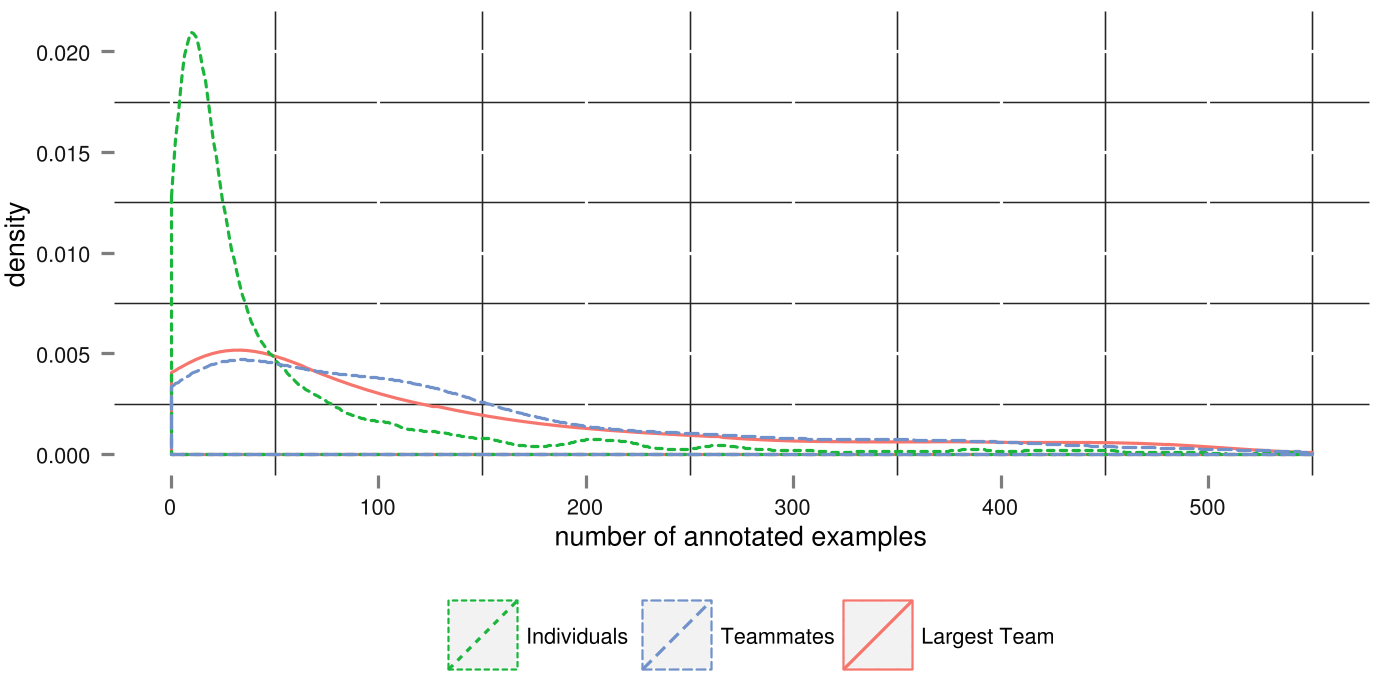 Figure 1: Comparison of activity distribution between individuals and teammates.
Experiments & Statistical Inference
To avoid the pitfalls of skewed data (where a few "super-users" might hide the average behavior), the author employed a Randomization Test (25,000 iterations).
The Key Findings:
- Teammates > Individuals: Users in teams consistently annotated more than those working solo. The null hypothesis (that there is no difference) was rejected with .
- The "Big Team" Effect: A single large team of 170 members provided massive throughput, though their activity spiked following news coverage and social momentum.
- No Significant "Elite" Team Advantage: Interestingly, members of the largest team weren't necessarily more productive than members of smaller teams; the simple act of belonging to any team was the primary driver.
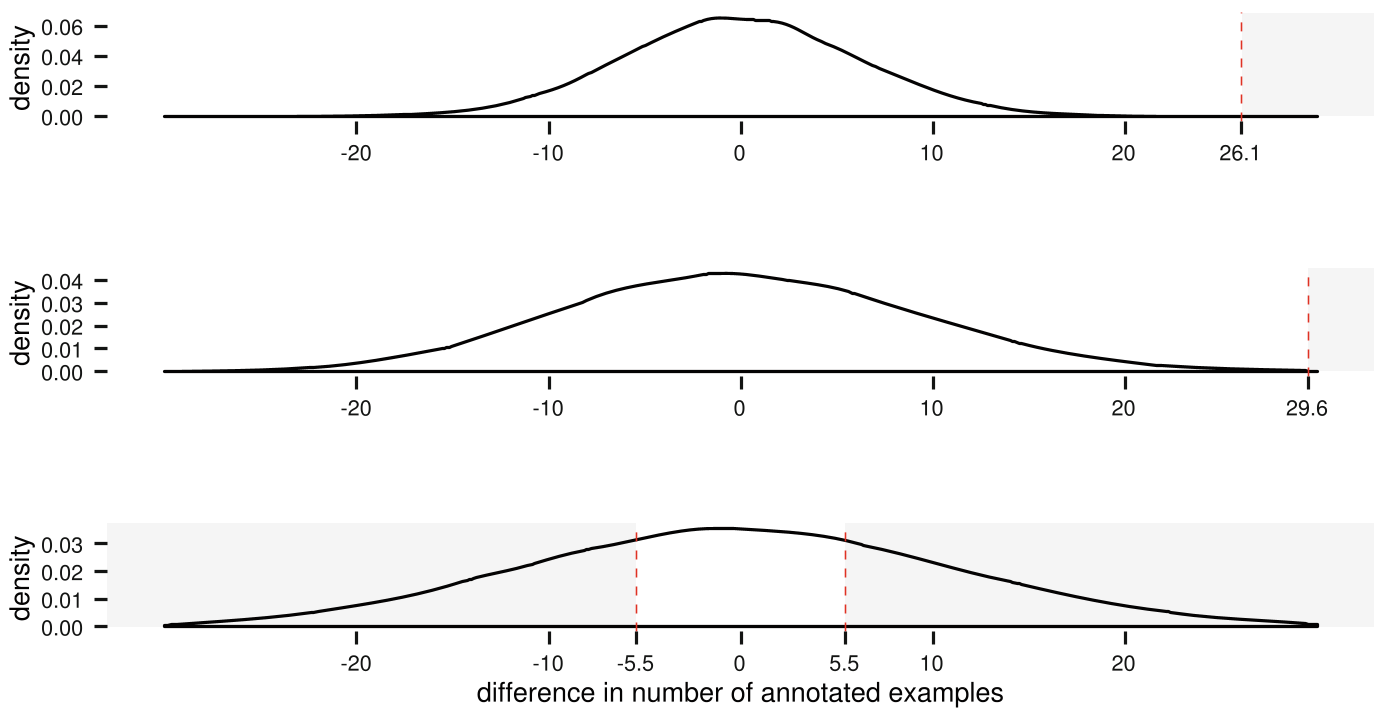 Figure 2: Simulation of differences in means for various user groups.
Critical Analysis & Future Outlook
Takeaway
The paper successfully argues that social identity is a more sustainable fuel for crowdsourcing than purely individual rewards or points. For developers building linguistic resources, the "team" feature is a low-cost, high-impact implementation.
Limitations
The study is observational, not causal. It is possible that "highly motivated people" are simply more likely to join teams, rather than the team making them motivated. Further randomized controlled trials (RCTs) would be required to prove the psychological causality.
The Future
As we move into the era of LLMs, where high-quality human-in-the-loop (HITL) feedback is more critical than ever, shifting from "micro-tasks" to "community-building" might be the key to sustainable AI development.